GitHub Automates Accessibility Issue Triage With AI
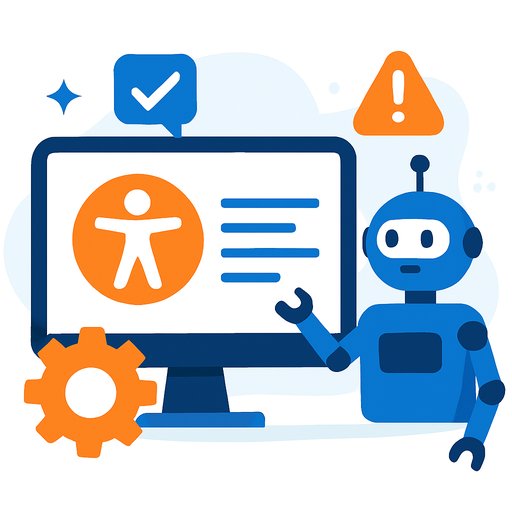
GitHub has built an automated workflow that converts accessibility feedback into prioritized engineering work using AI analysis and human review. The system, built on GitHub Actions and GitHub Copilot, centralizes reports from support tickets, social media, and discussion forums, then categorizes them by Web Content Accessibility Guidelines violations and severity.
The problem GitHub solved was straightforward: accessibility feedback arrived fragmented across multiple channels with no clear ownership. Teams managing navigation, authentication, and shared components couldn't see the full picture. Reports piled up without standardized tracking.
How the workflow operates
When feedback arrives, a custom issue template captures structured metadata-source, affected component, and user-reported barriers. Creating the issue triggers a GitHub Action that sends the report to Copilot for analysis.
Copilot classifies WCAG violations, assigns severity levels, identifies affected user groups (screen reader users, keyboard users, low-vision users), and recommends which team should handle the fix. It auto-fills roughly 80 percent of the structured metadata and posts a summary comment. A second Action parses that comment to apply labels, update status, and assign ownership.
Human reviewers validate Copilot's work on a first-responder board. They correct severity levels and category labels when needed. Those corrections feed back into the prompt files, improving future AI outputs. Once validated, the issue moves to resolution: immediate documentation updates, direct code fixes, or assignment to the appropriate service team.
Results after deployment
GitHub reported measurable changes. The percentage of accessibility issues resolved within 90 days jumped to 89 percent from 21 percent. Overall resolution time dropped more than 60 percent year over year. One internal team resolved 4x as much feedback in 90 days with the new workflow.
The approach also provides visibility into recurring accessibility patterns. Feedback loops continuously refine how the AI classifies issues and evaluates severity.
Why this matters for managers
This is a practical example of how AI Agents & Automation handle operational work at scale. The system didn't eliminate human judgment-it standardized the intake process and reduced the time humans spend on routine classification.
For managers overseeing large engineering organizations, the model shows how to coordinate cross-cutting concerns like accessibility across multiple teams. AI for Management applications like this one reduce bottlenecks by automating triage while keeping humans in control of priority decisions.
The workflow also created a feedback loop: corrections to AI outputs improve future analysis, which means the system gets better as teams use it. That's different from one-time AI analysis-it's continuous refinement built into operations.
Your membership also unlocks: