
AI news ·
GitHub launches accessibility scanner, CLI updates and open-source toolkit on Global Accessibility Awareness Day
GitHub added AI-powered accessibility tools on May 22, including a Copilot-based scanner that flags code violations before deployment. The update also redesigned its Pull Request environment and CLI for screen-reader and keyboard users.
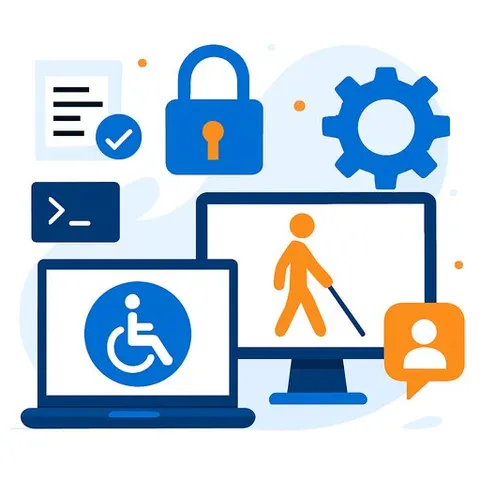
GitHub Expands Accessibility Tools for Developers With Disabilities
GitHub announced a new accessibility strategy on May 22, introducing AI-powered tools and redesigned interfaces to help developers with disabilities work at the same productivity level as other users. The company said it is embedding accessibility throughout its platform and the broader open-source ecosystem.
The centerpiece is an open-source accessibility scanner that uses GitHub Copilot to automatically detect violations of web accessibility standards before code deployment. The tool integrates into developers' CI/CD workflows and suggests AI-generated fixes, reducing the time and cost of accessibility improvements.
Tools for Design and Development
GitHub released a Figma Annotation Toolkit that lets designers document accessibility requirements during the UI/UX design process. Designers can specify which elements should be read by screen readers and define tab navigation order, preventing accessibility gaps when code is handed to developers.
The company restructured its Pull Request environment to strengthen keyboard navigation and screen-reader compatibility. The platform now preserves users' positional context during page navigation and includes adjustable line spacing to reduce visual fatigue.
GitHub also added multidimensional data descriptions for charts and graphs, enabling screen-reader users to understand data visualizations more effectively.
Command Line and Search Updates
GitHub CLI now supports screen-reader mode, high-contrast themes, and colorblind-friendly UI options. The screen-reader mode optimizes terminal output so assistive technology can interpret results more clearly. This shift reflects how AI development environments increasingly rely on command-line interfaces.
GitHub introduced natural-language semantic search that lets users enter issues in plain language and retrieve related projects based on contextual understanding. The feature is designed to reduce cognitive load for developers searching across repositories.
Open Source Accessibility Work
GitHub hosted its first Open Source Assistive Technology Hackathon on May 21-22 at its San Francisco headquarters. The event brought together open-source maintainers, developers with disabilities, and assistive technology users to work on 16 accessibility-focused projects, including tools for visually impaired students to interact with tactile graphics and AI-powered PDF conversion.
These changes address a gap in development tools. Most platforms were built without accessibility in mind, forcing developers with disabilities to work around limitations rather than with built-in support.
Developers working with Generative AI and LLM tools like Copilot will benefit from these accessibility improvements as the platform evolves. Those building code in team environments should review the updated AI Coding resources to understand how these features integrate into modern development workflows.