E-commerce Sales Surge Six Times Faster Than Stores as AI Reshapes Beauty Shopping
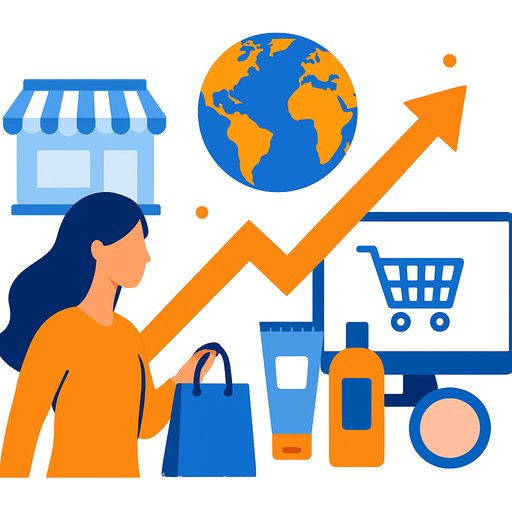
The global beauty market grew 10% year-over-year, with online sales expanding at six times the pace of in-store purchases, according to NielsenIQ's State of Beauty 2026 report. The shift signals a fundamental change in how consumers discover and buy beauty products.
Nearly half of consumers-49%-already receive product recommendations from generative AI. More than 50% are exploring AI-enabled shopping tools as part of their regular purchasing process. These tools streamline decision-making and personalize recommendations without requiring consumers to articulate detailed preferences.
Social Commerce Drives Immediate Sales
Social platforms have become primary shopping destinations. Fifty-three percent of consumers now purchase through social commerce, with 22% buying directly via TikTok Shop. In China, livestream shopping dominates beauty, accounting for 70% of sales on platforms like Douyin.
This shift changes the sales funnel. Content consumption and purchase happen simultaneously, turning engagement into conversion in real time.
What Consumers Actually Want
Intentionality defines today's beauty buyer. Fifty-two percent will pay more for convenience. Forty-nine percent prioritize locally made products, signaling demand for authenticity and traceable sourcing. Sixty-three percent consider mental wellness essential to their beauty choices.
Brands that treat these as features rather than marketing angles are winning. Consumers can distinguish between genuine value and messaging.
What This Means for Marketing Teams
The complexity of the purchase path has increased. Beauty brands now compete across retail stores, AI for Social Media platforms, AI recommendation engines, and livestream channels simultaneously.
Success requires three things: presence across digital channels where consumers already shop, transparent product information that AI systems can interpret and recommend accurately, and data-driven decisions about where to allocate budget. Brands that show up clearly and consistently across these ecosystems capture disproportionate share.
For marketing professionals, this means understanding AI for Marketing-not as a futuristic concept, but as an immediate operational requirement. AI recommendation systems now mediate discovery for half your potential customers. Social commerce platforms have become direct sales channels, not awareness channels. The metrics that matter are different.
The data comes from NielsenIQ's analysis of point-of-sale transactions across 52 markets and nine product categories, supplemented by consumer panels and web scraping to capture the full range of purchasing behavior.
Your membership also unlocks: