Government moves to AI-enabled CCTV for real-time monitoring and safety
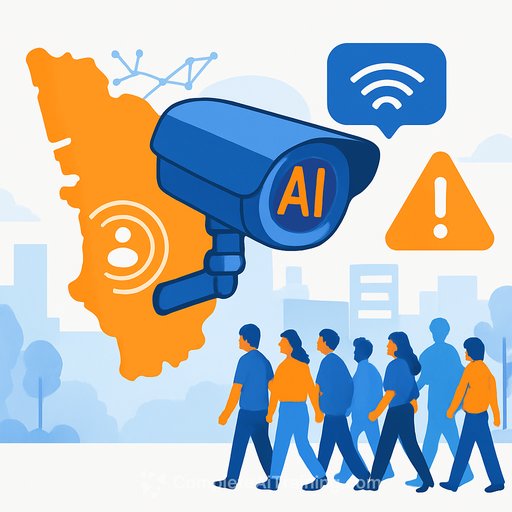
The State government is rolling out an integrated, AI-enabled CCTV tracking and monitoring system across departments, autonomous bodies, and public institutions. A tender floated by Info-Tech Corporation (ITG) calls for a secure, centralized, web-based platform that pulls live camera feeds and runs advanced analytics to support faster decisions and better oversight.
The objective is straightforward: improve situational awareness, strengthen public safety, and enable data-driven management of facilities. Authorised users will get dashboards (see Design), real-time alerts, and reports to supervise assets and activities with greater clarity and speed.
What the integrated system includes
- Live monitoring: Central view of camera feeds across government sites.
- Face detection and recognition: Process both live streams and recorded footage to identify enrolled individuals.
- Footfall and crowd analysis: Count entries/exits and study movement patterns for planning and crowd control.
- Object tracking: Track specified objects across frames for security use cases.
- Smoke and fire detection: Video-based detection with alerts for faster incident response.
Central platform for oversight
The software will consolidate CCTV infrastructure across government locations into one secure portal. Departments can access camera-wise views, configure rules, and review analytics without juggling multiple tools. This reduces blind spots and helps standardize monitoring practices at scale.
Face recognition and data fields
The system will support enrollment of facial data with associated details such as name, mobile number, Aadhaar number, address, and other department-defined attributes. It is essential to set clear access controls, audit trails, and data retention rules before onboarding sensitive data.
Align policies and user permissions with current data protection requirements and departmental SOPs. For reference, see the Digital Personal Data Protection Act overview from MeitY here, and UIDAI resources on responsible Aadhaar usage here.
Crowd insights for planning
Camera-wise configuration allows departments to define regions of interest and classify movements as entry or exit. This supports crowd management in public offices and event locations, and informs staffing, queue design, and facility upgrades based on actual footfall patterns.
Faster response with smoke and fire detection
Video-based smoke and fire detection will raise real-time alerts to authorized personnel. The goal is minimal response time-link alerts to your existing escalation paths so teams can act without delay.
What departments should do now
- Inventory and coverage: Map all cameras, locations, ownership, and purpose. Identify priority feeds for monitoring.
- Network readiness: Validate bandwidth, storage, and uptime targets for live video and analytics.
- Access control: Define who can view, search, export, and enroll data. Enforce role-based access and MFA.
- Data governance: Set retention periods, audit logging, and deletion workflows-especially for facial data.
- Legal and notices: Review consent/notice requirements for surveillance areas and update signage.
- SOPs and drills: Standardize alert handling, escalation, and incident reviews. Run periodic drills.
- Training: Train operators on dashboards, analytics, and privacy-by-default practices.
Implementation checkpoints for admins and bidders
- Interoperability: Support diverse camera makes/models and open standards where possible.
- Reliability: Set targets for uptime, failover, and storage redundancy; test regularly.
- Security: Encrypt data in transit/at rest, enforce least-privilege access, and monitor admin activity.
- Accuracy and bias checks: Periodically test face recognition accuracy across demographics and lighting conditions.
- Alert quality: Track false positives/negatives for smoke/fire and tune thresholds to reduce noise.
- Latency: Measure time from event to alert and optimize paths to responders.
- Lifecycle management: Plan updates, camera health checks, and end-of-life replacement.
Continuous monitoring of CCTV infrastructure
Long-term effectiveness depends on continuous evaluation of camera health, analytics performance, and user compliance. Establish monthly reviews of system metrics, incident outcomes, and training needs, and adjust configurations as on-ground realities change.
Upskilling your team
If your department is building internal capability for AI-enabled operations and analytics, you can explore role-based learning resources on the AI Learning Path for Data Scientists.
Your membership also unlocks: