Google and Taiwan Accelerate Public Health with AI Risk Prediction
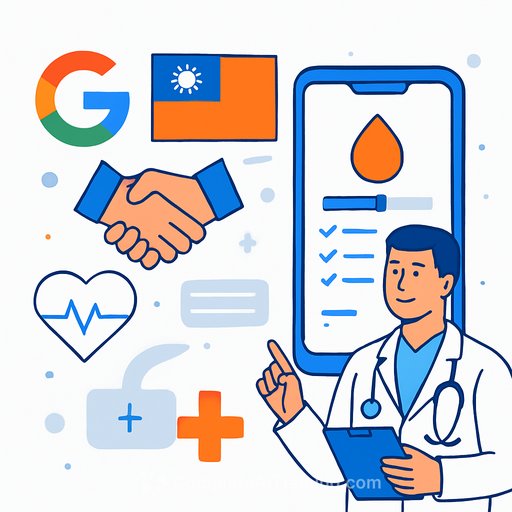
Taiwan and Google are moving fast on preventative care. The National Health Insurance Administration (NHIA) is using over two decades of securely aggregated data to flag health risks earlier and at national scale. The standout result: an AI-on-DM model that assesses diabetes risk in 25 seconds per case, up from a 20-minute manual review.
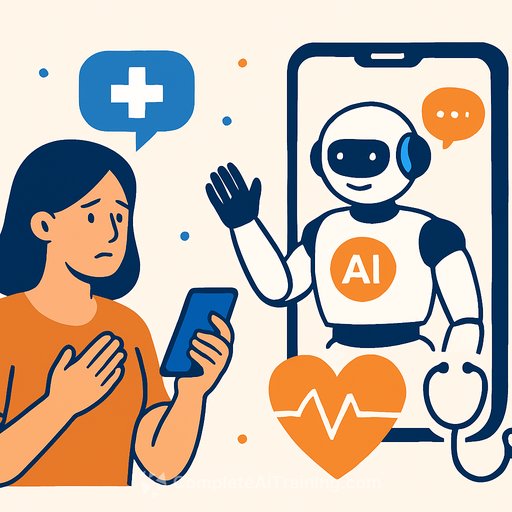
"Finding health risks earlier can make all the difference," said Amy McDonough, Managing Director, Strategic Health Solutions at Google Health. That mindset now extends into the NHIA's app, where a Gemini-powered assistant will offer personalized, secure guidance to 10 million users based on established clinical guidelines.
What changed
The old workflow required around 20 minutes of manual effort per patient. Screening 20,000 people took 40 professionals roughly three weeks. With Google Cloud's concurrency, NHIA's AI-on-DM completes each assessment in 25 seconds and can screen populations in under 90 minutes.
This isn't replacing clinical logic-it digitizes it. The system surfaces patterns for clinicians to review so they can act before complications set in.
Why it matters
Diabetes complications are expensive and life-altering. Catching risk early gives care teams time to intervene with lifestyle coaching, tests, and medication adjustments. It also frees clinicians from repetitive triage, so they can focus on the cases that actually need them.
Key metrics at a glance
- 14,400x faster diabetes risk assessment: 20 minutes down to 25 seconds
- Population-scale screening in under 90 minutes for 20,000 people
- 10 million citizens gaining in-app, Gemini-powered health insights
- $1M grant from Google.org to the Digital Humanitarian Association: 300 centers, 240,000 health check-ins, 200 caregivers trained
How it works (simplified)
- Data foundation: Securely aggregated NHIA data spanning 20+ years strengthens risk signals while protecting privacy.
- Digitized clinical logic: Established rules guide risk scoring; clinicians stay in the loop for validation and action.
- Cloud concurrency: Parallel processing on Google Cloud enables near-real-time throughput.
- Patient-facing assistant: Gemini generates guideline-based guidance inside the NHIA app, tuned for clarity and safety.
For healthcare leaders
- Start with one high-burden condition (as NHIA did with diabetes) and expand to hypertension and hyperlipidemia.
- Define clear intervention pathways for each risk tier-no dead ends after a flag.
- Track outcomes: time-to-intervention, A1C reductions, hospitalization rates, and follow-up adherence.
For IT and data teams
- Map critical data fields, quality-gate them, and document lineage. Reliability beats volume.
- Stand up a secure, auditable pipeline for model input/output with role-based access and immutable logs.
- Design for concurrency from day one: batch windows, autoscaling, and queue backpressure controls.
For developers
- Operationalize "clinician-in-the-loop" reviews with clear escalation and feedback capture.
- Instrument everything: latency, drift, false positives/negatives, and guideline adherence.
- Ship small, verify often-pilot cohorts, A/B workflows, and post-deployment monitoring.
Privacy, safety, and trust
Risk scoring follows established clinical logic, with clinicians validating high-stakes calls. Data is securely aggregated and governed. Patient-facing guidance sits inside the official NHIA app, reducing fragmentation and keeping sensitive data within trusted rails.
Impact beyond diabetes
NHIA plans to extend the same framework to hypertension and hyperlipidemia. The approach creates a repeatable model for other public health systems: strong data foundation, digitized clinical logic, cloud-scale processing, and a consumer channel that closes the loop.
Why technologists, clinicians, and policymakers should care
This project shows how to translate clinical rules into scalable workflows without drowning staff in alerts. It balances speed with oversight and delivers guidance where people already are-the national health app. It also sets up underserved communities with more consistent access to expert support.
Learn more
- Taiwan National Health Insurance Administration (NHIA)
- Google Health
- AI for Healthcare
- AI for Government
Your membership also unlocks: