Defying Code Gravity: Inside Google's Antigravity for Builders
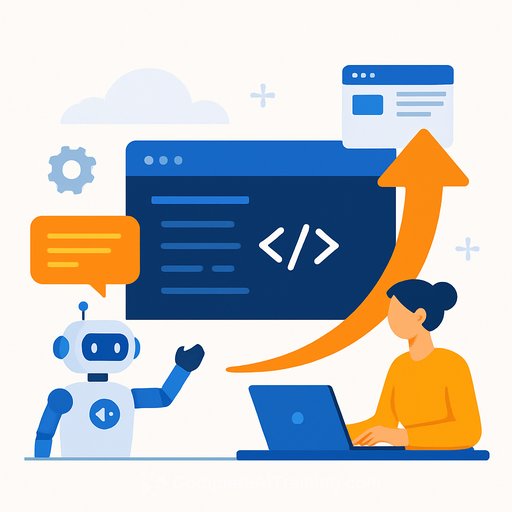
Google's Antigravity is a new agent-first development environment that hands real coding work to AI agents across your editor, terminal, and browser. It leans on Gemini 3 for reasoning and uses Gemini 2.5 for system interactions, while staying open to other models. The goal: move engineers from "typist" to "orchestrator," with AI producing, testing, and verifying code end to end.
The public preview went live across major OSes and drew heavy demand. Google has tweaked rate limits as usage spiked, as noted on the Google Blog. Early posts and demos show agents shipping full-stack apps from plain English prompts with minimal hand-holding.
What you can offload today
- Full-stack scaffolds: frontend, backend, DB migrations, auth, payments, and deploys.
- Bug triage with self-healing attempts and verification in a live or headless browser.
- Asset creation for marketing or product pages (images, copy, basic layouts) tied to app builds.
- CI-friendly tasks: test generation, coverage chasing, package updates, and infra scripts.
How the agent core actually works
Antigravity splits work between an editor (synchronous) and an agent manager (asynchronous). You issue a high-level goal-"ship a revenue-ready e-commerce app"-and the system decomposes it into steps, executes, and checks results.
The browser subagent can spin up headless sessions and full-screen recordings so outputs aren't guesses. That visual feedback loop gives the agent context it can use to confirm behavior, not just render predictions.
Model flexibility without lock-in
While Antigravity leans on Gemini 3 Pro for planning and Gemini 2.5 for computer actions, it also supports other models, including Anthropic's Claude series and open-source options inspired by competing stacks. This makes it viable in mixed-model shops and future-proofs your strategy.
In practice, teams are using it to turn natural language specs into production-ready repos, then asking the agent to patch bugs, add features, and deploy. It's less autocomplete, more autonomous execution with checkpoints.
Adoption, demand, and rate limits
The free preview triggered strong interest, which led to rate limit adjustments. Reports also note that paid plans (AI Pro, Ultra) may receive priority as capacity constraints appear in busy hours, according to coverage from outlets like Android Central.
Bottom line: expect queues at peak times. For pilots, plan around them and cache artifacts the agent produces so you don't burn tokens redoing the same steps.
Origin story and toolchain fit
Industry chatter ties Antigravity's editor lineage to a fork of Windsurf (itself derived from Visual Studio Code) after a reverse acquihire move. That heritage helps with familiarity, though some extension behavior may differ and require validation.
The pitch is broader than an IDE. Think agent processes moving across editor, shell, browser, and cloud accounts-able to verify actions with recordings, not just logs.
Constraints you should plan for
- Rate limits: free tiers may stall lengthy jobs; queue long tasks and batch prompts.
- Verification: the agent can check its work, but edge cases still need human review.
- Security and IP: scope credentials, mask secrets, and run the agent in sandboxes.
- Model drift and variance: pin versions and keep reproducible plans, diagrams, and acceptance tests.
- Extension parity: if you depend on niche VS Code extensions, test them early.
Pilot plan for your team
- Pick a thin-slice product: e.g., a small storefront with auth, payments, and a simple admin.
- Write a one-page spec with acceptance tests. Feed that, not vague prompts.
- Stand up a clean repo, CI, and a staging environment the agent can access.
- Provide a secrets policy (scoped tokens, throwaway keys). Log agent actions.
- Track metrics: time-to-first-PR, cycle time, defect rate, rework, and on-call noise.
- Run a red team pass on the shipped app before exposing real data.
Where Antigravity slots into your stack
- Editors: familiar feel for code navigation and diffing; test extension compatibility.
- Terminals: scripted workflows hand off cleanly to agents for repeatable runs.
- Browsers: headless and recorded sessions create auditable proof of behavior.
- Cloud: wire limited-scope service accounts; log every change the agent makes.
Industry signals to watch
Tutorials and hands-on reviews point to fast setup and meaningful automation, with caveats around edge cases and rate limits. Coverage on the Google Blog and tech media underscores strong interest and evolving capacity policies.
Enterprises are eyeing cross-tool autonomy for larger teams: fewer handoffs, more verified steps, and clearer audit trails. Expect security reviews to focus on data flows, recordings, and dependency chains pulled by the agent.
What's likely next
More artifacts (plans, diagrams, and state sync) to reduce rework. Deeper reasoning to tackle multi-service changes without bouncing back to the user for every nuance.
Stronger enterprise controls, better multi-model mixing, and closer links to cloud services. Some speculation points to AR or new UI surfaces for live app verification.
Skills to level up
- Writing crisp specs and acceptance tests the agent can act on.
- Agent safety patterns: sandboxing, least privilege, audit logging.
- Prompt-to-PR workflows with reproducible plans and checkpoints.
If you're building your AI engineering skill stack, this certification path is a useful anchor: AI Certification for Coding.
The takeaway for builders
Antigravity pushes AI from "suggestion" to "execution with proof." Treat it like a capable junior engineer: give clear specs, check the work, and keep guardrails tight.
Teams that pilot with small, revenue-linked projects will learn the fastest. Keep what works, automate the boring parts, and review the rest with a sharp eye.
Your membership also unlocks: