Google's biggest AI hardware engineering hub outside the US lands in Taiwan - what product teams should do next
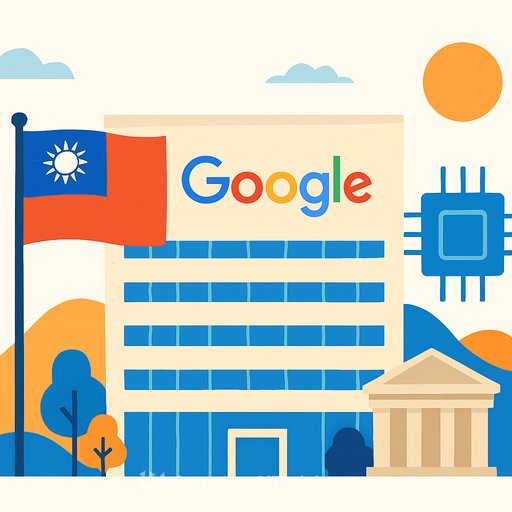
Google has opened a new AI infrastructure hardware engineering centre in Taiwan. It's now the company's largest AI hardware hub outside the US - a clear vote of confidence in Taiwan's role across chips, systems, and supply.
This move leans on Taiwan's core strength: advanced manufacturing anchored by TSMC and a dense network of component and server partners. More importantly for product teams, the tech built and validated in Taipei will feed into Google data centres worldwide and ripple through partner hardware and tooling.
Why Taiwan matters for your roadmap
- Proximity to TSMC and server/component vendors compresses prototyping and validation cycles. Expect faster hardware iteration and tighter spec alignment across accelerators, memory, boards, and racks.
- Google's Taipei work informs data centre designs that power its products at global scale. Improvements in power, thermals, and reliability there can set expectations your customers will feel.
- Supply confidence increases for AI infrastructure parts sourced in Taiwan. That can reduce lead-time volatility for teams planning GPU, TPU, NIC, and storage-heavy builds.
Strategic signals from leaders
Google's engineering leadership said technology developed and tested in Taipei is deployed across its global data centres - the infrastructure behind devices and services billions rely on. Taiwan's president welcomed the move as proof of long-term commitment, pointing to the island as a key hub for secure, trustworthy AI. The U.S. representative in Taipei called it the start of a new era of opportunity between the two economies.
Security and compliance implications
Taiwan has highlighted risks tied to using certain foreign AI systems, including Chinese-developed platforms such as DeepSeek. For product orgs, that means tighter vendor checks, model governance, and clearer data boundaries. If your product touches sensitive data, expect more scrutiny around provenance, model selection, and inference hosting locations.
- Reassess third-party AI services and SDKs for data handling, auditability, and export-control exposure.
- Map where inference and training happen. Align with company policy for geofencing, logs, and model updates.
- Document fallbacks if a provider becomes non-compliant with internal or regional rules.
What this could change for product development
- Hardware choices: New reference designs and component stacks can shift BOMs for AI features, on-device inference, and edge gateways.
- Performance targets: Data centre improvements often reset latency, throughput, and cost baselines your customers expect.
- Vendor strategy: Dual-source inside Taiwan's ecosystem where feasible to reduce single-point failures while keeping logistics simple.
- Reliability: Expect more mature thermal, power, and monitoring patterns to flow from Google's validation efforts. Borrow those patterns early.
Action plan for the next 90 days
- Audit your AI hardware dependencies (accelerators, interconnects, memory, PSUs, racks). Flag items with Taiwan-based suppliers and identify second sources.
- Sync with vendors on capacity and lead-time expectations for 2026 build plans. Lock options now for long-lead parts.
- Align product benchmarks with the latest data centre metrics (latency, energy per inference, MTBF). Adjust SLAs and internal OKRs.
- Strengthen model governance: review supplier models, licensing, fine-tuning pipelines, and red-teaming cadence.
- Co-locate validation: if you ship hardware, consider running thermal and power tests with partners in Taiwan to shorten feedback loops.
- Scenario-plan: geopolitical tension and natural hazards remain real. Build inventory buffers for critical parts and define reroute playbooks.
Risks to track
- Geopolitical pressure across the strait and related export controls affecting advanced chips and AI systems.
- Seismic risk impacting fabrication and logistics timelines; ensure suppliers have recovery procedures and data centre failover paths.
- Policy shifts around AI security and cross-border data flows that can reclassify vendors or models overnight.
Helpful references
Level up your team
If you're updating your AI product strategy and need focused training, explore role-based learning paths to speed up adoption across PM, design, data, and engineering.
Bottom line: Google planting a bigger AI hardware flag in Taiwan is good news for build velocity and supply predictability. Product teams that tighten supplier ties, stress-test security choices, and reset performance targets now will ship better, sooner.
Your membership also unlocks: