AI-Driven Cybercrime Is Moving Faster Than Your Playbooks. Here's How Ops Adapts
- Threat actors are using LLMs in active operations to evade detection and generate malicious functions on demand.
- Signature-based protections are losing ground as attacks morph and self-modify.
- AI makes phishing and social engineering more convincing across email, SMS, and voice.
- Shift prevention efforts to training people and strengthening process, not buying more tools.
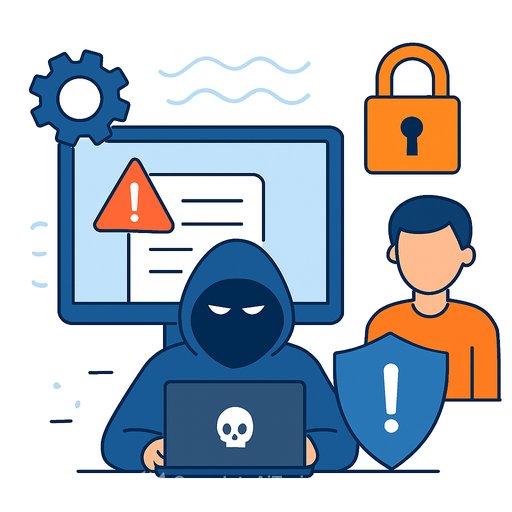
A new report from Google's threat team confirms a clear shift: government-backed groups and cybercriminals are deploying AI-enabled malware in live campaigns.
Attackers are using LLMs like Gemini to write scripts, obfuscate code, and produce malicious functions on cue. They even pose as students or researchers to coax models into revealing blocked details. AI now touches every stage of their workflows.
Why your signatures won't save you
Underground forums are selling illicit AI tools that let low-skill actors scale up fast. As one field CISO and CTO put it, there will still be a place for signature-based tools, but as adversaries push self-changing attacks, those detections help less.
This is the pattern: fewer static indicators, more behavior that mutates mid-attack. That means your detection and response need to shift closer to behavior, process, and people.
Machine speed, human targets
Robeson Jennings at ZeroFox says the quiet part out loud: AI is pushing cybercrime from manual to machine speed. Models probe defenses, personalize lures, and dodge safeguards in seconds. The tells you relied on are fading.
Example: the PROMPTLOCK family uses Go-based ransomware and calls an LLM to generate Lua scripts at runtime. That can trigger recon, exfiltration, and encryption on Windows and Linux. Early days, but the direction is clear-more autonomous, more adaptive.
The bigger risk isn't "AI malware." It's social engineering, multiplied by AI. John Coursen of Fortify Cyber calls it a force multiplier for the oldest trick: manipulate trust so people act against their interests. No typos. Native-level fluency in any language. A voicemail that sounds exactly like your CFO or your spouse.
How threat actors bypass guardrails
According to the report, attackers use pretexts in prompts to sidestep model safety. One example: framing a request as a capture-the-flag exercise to extract exploit help. The lesson for Ops is simple-assume AI-generated content can look legitimate, feel urgent, and pass quick sniff tests.
Humans, not software, are the frontline
The market for illicit AI services has matured, and many are built to supercharge phishing at scale. That's where most losses happen.
Over six in ten U.S. adults say they get weekly scam outreach, according to survey data. The FBI's Internet Crime Complaint Center reports heavy losses tied to phishing and related frauds. See the public stats at the IC3 site: ic3.gov.
The Ops playbook for the next 90 days
1) Verification beats persuasion
- Set a company-wide rule: never verify a request on the same channel it arrived. Email → call. SMS → Slack. Voicemail → direct dial-back.
- Make this visible in finance, HR, IT help desk, executive assistants, and vendor management.
2) Dual control on high-risk actions
- Require two-person approval for wire transfers, vendor banking changes, gift card purchases, and identity resets.
- Put it in the workflow (ticketing or ERP), not a side conversation.
3) Train for the attacks you'll get this quarter
- Run monthly phishing drills that include SMS, voice, and messaging apps. Add deepfake voice scenarios.
- Teach "pause and verify," not "spot the typo." AI has removed the old tells.
4) Add deepfake friction
- Create callback numbers that staff must use for urgent approvals.
- For families and executives, use a simple, weird, non-public safe word. No safe word, no action-hang up and call back.
5) Reduce blast radius
- Enforce MFA, conditional access, and least privilege. Shorten token lifetimes for critical apps.
- Segment finance and admin accounts. Disable legacy protocols.
6) Make attacks obvious
- Tag all external email. Warn on lookalike domains. Quarantine first-time senders with invoice attachments for review.
- Lock down SaaS API tokens and alert on anomalous downloads and mass-sharing events.
7) Prepare for wire fraud and account takeover
- Write short runbooks with exact steps, contacts, and bank recall procedures. Tabletop them.
- Pre-stage legal and comms templates to shave minutes when it counts.
8) Shrink your digital footprint
- Scrub org charts, personal emails, and executive travel from public sites. Review LinkedIn posts that reveal roles, projects, or vacation windows.
- Coach teams to limit oversharing-attackers build convincing pretexts from tiny details.
9) Upgrade detection philosophy
- Favor behavior analytics and anomaly detection over pure signatures. Watch for self-modifying scripts and unusual child-process trees.
- Collect evidence early: command histories, script logs, model API calls where possible.
10) Set metrics Ops can run
- Time-to-verify for high-risk requests. Report rate of suspected phishing. Completion rate for drills.
- Quarterly review of vendor banking changes and executive approvals.
What the report means for your team
AI has made cybercrime faster and more convincing. The fix is process and people. If you run Operations, you control both.
Start with out-of-band verification, dual control, and drills that reflect how attacks happen now. Keep tech focused on behavior, not static indicators. For a deeper grasp of how LLMs are used in practice, review Google's threat updates: Google Threat Analysis Group.
Upskill your team on AI fluency
Your people don't need to be security engineers, but they should understand how prompts, voice clones, and tooling change the game. If you're building a training track by role, you can explore practical AI courses here: Complete AI Training - Courses by Job.
Final note from the front lines: verification beats urgency. Every time.
Your membership also unlocks: