Google Launches AI Tools to Support Global Mental Healthcare
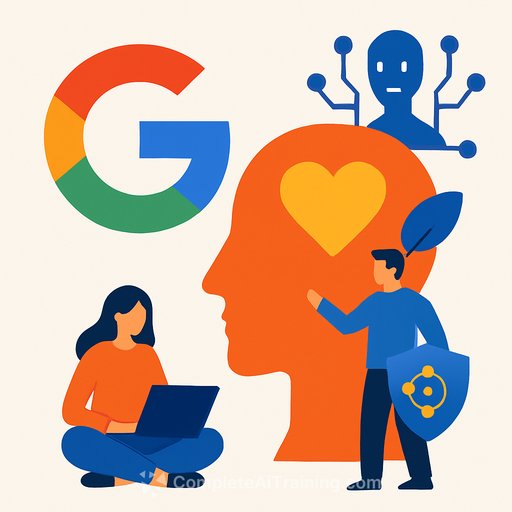
Google has introduced two new AI-driven initiatives focusing on improving mental health care, particularly for conditions like anxiety and depression. These efforts are designed to assist clinicians and enhance treatment outcomes through practical tools and long-term research.
Two Key Initiatives
The first is a field guide developed with Grand Challenges Canada and the McKinsey Health Institute. This guide helps mental health organizations implement AI to expand evidence-based treatments, improve clinician training, personalize patient support, streamline workflows, and enhance data collection.
The second initiative is a multi-year research partnership involving Google for Health, Google DeepMind, and the Wellcome Trust. This collaboration aims to explore new AI applications in mental health over time.
Food for Thought
- Balancing Immediate Needs with Future Innovation
Google's dual approach addresses current clinical requirements while investing in future breakthroughs. The field guide offers actionable strategies for clinicians today, while the research partnership lays groundwork for tomorrow’s treatments. This balance reflects proven methods in healthcare AI, combining practical use with ongoing innovation. Partnering with respected organizations also helps build trust and tackle ethical concerns early on. - Managing the Human-AI Therapeutic Relationship
Research indicates that AI can effectively provide validation and psychoeducation but lacks the empathy and contextual understanding that human therapists offer. AI cannot yet replace the nuanced interactions of a human clinician, especially during crises. Google's approach positions AI as a tool to support, not replace, mental health professionals. Clear guidelines on AI’s appropriate use and its limitations will be critical, especially for vulnerable groups wary of misdiagnosis and discomfort with AI involvement. - Addressing Ethical Concerns Proactively
Data privacy, algorithm transparency, and bias are major ethical challenges in AI mental health tools. Studies highlight how demographic factors influence perceptions of AI, and how children and adolescents face unique risks from AI interactions. Google’s partnerships suggest a commitment to embedding ethical standards into development, ensuring AI complements human care while protecting patient safety and privacy.
For healthcare professionals interested in expanding their AI knowledge and skills, exploring specialized courses can be valuable. Resources like Complete AI Training's latest AI courses offer practical learning paths tailored to various healthcare roles.
Your membership also unlocks: