Google's AlphaGenome targets the "grammar" of DNA to probe disease risk
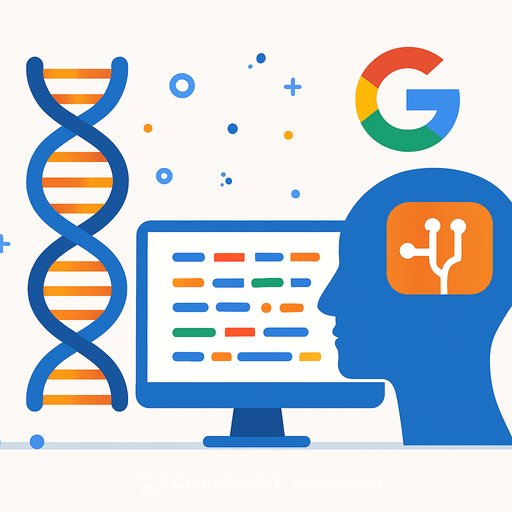
Google has introduced AlphaGenome, a deep learning model built to read long stretches of non-coding DNA and predict how they control gene activity. For researchers, that means faster ways to pinpoint functional elements, simulate variant effects, and prioritize experiments for difficult-to-treat genetic diseases.
As Pushmeet Kohli of Google DeepMind put it, we've had the "text" of the human genome for years - three billion letters of A, T, C, and G - but reading its grammar has been the roadblock. Only about 2% of DNA encodes proteins; the rest, once called "junk," is now known to steer when and where genes turn on, and by how much.
What the model does differently
AlphaGenome was trained on public data profiling non-coding DNA across hundreds of human and mouse cell and tissue types. The model analyzes long DNA segments - up to a million letters - while keeping prediction resolution high, avoiding the usual trade-off between sequence length and detail.
- Predicts regulatory outcomes along DNA, including transcription start/stop signals.
- Estimates RNA production levels across contexts and cell types.
- Compares mutated vs. reference sequences to estimate variant effects on regulation.
- Maps candidate functional elements that likely modulate gene expression.
DeepMind scientist Ziga Avsec said long contexts are "required to understand the full regulatory environment of a single gene." That context window matters for distal enhancers, promoter logic, and combinatorial interactions that short-sequence models tend to miss.
Why it matters for science and research teams
For variant interpretation, AlphaGenome can help triage loci by predicted functional impact before you spend bench time. For regulatory genomics, it supports hypothesis generation on enhancer-promoter wiring and context-specific expression control. For disease biology, it offers a way to simulate how non-coding changes might shift gene output in relevant tissues.
Ben Lehner, who tested the model but wasn't involved in its development, said it "does indeed perform very well," while cautioning that "AI models are only as good as the data used to train them." Robert Goldstone added that it's "not a magic bullet," noting that gene expression is shaped by environmental factors that a model can't see.
Access, adoption, and next steps
According to Google, more than 3,000 scientists in 160 countries have already tried AlphaGenome, and the tool is available for non-commercial use. "We hope researchers will extend it with more data," Kohli said - a clear nudge toward broader community benchmarks and multi-omic integration.
Practical ways to fold this into your workflow:
- Variant-to-function screening: prioritize variants for MPRA, reporter assays, or CRISPR perturbations based on predicted regulatory impact.
- Target nomination: identify putative enhancers or silencers tied to disease loci before investing in fine-mapping.
- Context selection: compare predicted effects across tissues or cell types to guide model system choice.
- Design refinement: use predictions to narrow CRISPR guide candidates for regulatory element editing and validation.
AlphaGenome sits alongside Google's broader scientific AI efforts, including AlphaFold - recognized in 2024's chemistry Nobel - signaling a push to link sequence, structure, and regulation. The big gap now is data quality and breadth. High-coverage, condition-specific assays and better labels will set the ceiling for what these models can predict.
Further reading
If you're building AI fluency across your lab or institute, you might find this learning path useful: AI Learning Path for Data Scientists.
Your membership also unlocks: