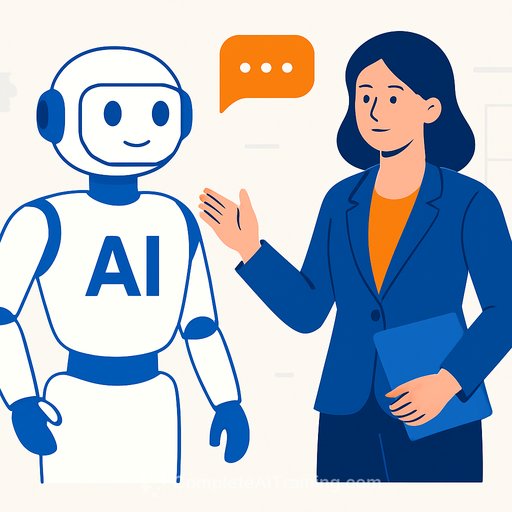
Govern AI like staff
Agentic AI is showing up in government workflows. Not as a demo, but as a digital worker that pulls data, triggers actions, and influences decisions across your systems.
That shift raises a simple leadership test: if this "worker" can do things staff do, are you governing it with the same expectations you place on staff accounts?
Treat agentic AI as a digital team member
Earlier tools drafted text. Agentic systems act. They log into business apps, comb through records, and return results through chat, workflows, and APIs.
Once connected, they surface content that used to be buried in archives or only visible to specialist teams. That can be useful, but only if access is intentional, limited, and recorded.
The emerging oversight gap
The problem isn't the model. It's visibility. Many agencies don't know precisely where sensitive data sits, how it is connected, and which identities (human or machine) can touch it.
After years of migration and modernisation, legacy databases, old file shares, and archives often remain reachable "just in case." Some are switched off until someone needs them, then quietly brought back online. That's how sensitive records resurface without warning through an AI query.
Before you let agents roam, answer two questions: What do we hold, and where is it stored? If you can't answer that, you're betting your privacy posture on luck. See the Australian Privacy Principles for baseline expectations on handling personal information (OAIC APPs).
Same risk, different speed and scale
Whether a human or an AI agent, the core risk is the same: unauthorised access and misuse of sensitive information. What changes is how fast issues spread and how hard they are to explain.
Agents move across systems, blend sources, and produce outputs that look convincing-even when wrong or overexposed. That's why the standard should be simple: govern AI like staff. Not because it's human, but because it can act on behalf of one.
What strong oversight looks like
- Clear ownership and accountability: Every agent needs a business owner and a technical owner. Define its purpose, data scope, and monitoring plan. No owner, no deployment.
- Defined access and least privilege: Give the agent only what it needs for the job. Broad access "just in case" is how accidental exposure happens.
- Secure identities and authentication: Use managed service accounts, rotate tokens and API keys, and separate development from production. Apply the same MFA/conditional access posture you use for privileged users. Align with practices like the Essential Eight where applicable (ASD Essential Eight).
- Auditability and traceability: Log what the agent accessed, when, from where, and what it did with it. You need an evidence trail that explains outcomes.
- Human oversight for higher-risk actions: Automate low-risk tasks (summaries, metadata extraction, internal drafting). Require human approval for actions that change records, share externally, or affect citizens.
A practical starting checklist
- Map what the agent can reach, including legacy systems that are still connected.
- Identify where sensitive information sits and how an agent could surface it.
- Define the agent's job and limits-what it can do, and what it must never do.
- Implement logging and monitoring. Treat agent activity like other privileged activity.
- Test realistic "what could go wrong?" scenarios before go-live and after each change.
- Update policy and procurement with baseline requirements for identity, access, logging, and accountability.
Who needs to move first
CIOs, CISOs, records managers, and data owners should align on a single control set for AI agents. One policy. One pattern. Applied everywhere.
If your agency is scaling pilots, start with a narrow, well-defined use case. Prove access controls and auditability, then expand. Avoid platform sprawl by standardising on identity, secrets management, and logging early.
Build oversight into the design
Agentic AI can lift service delivery and reduce administrative drag. But the benefits only stick if oversight is built in from day one, not bolted on after an incident.
Ask this before you scale: Are our AI agents managed with the same expectations we apply to employees? If yes, proceed with confidence. If you're unsure, that uncertainty is the risk.
For deeper implementation guidance and playbooks tailored to public sector teams, see AI for Government and the AI Learning Path for CIOs.
Your membership also unlocks: