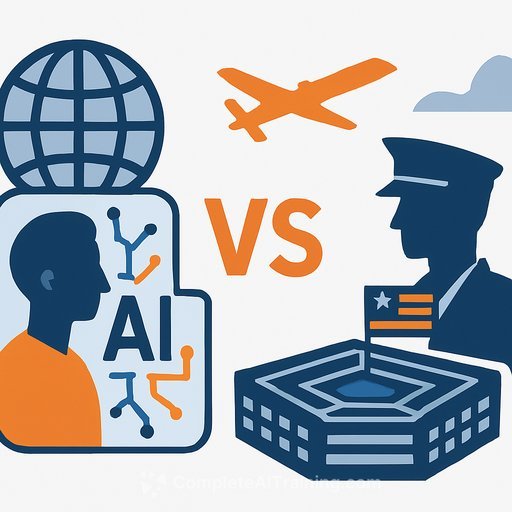
Government Legal Teams Face a Choice: Consumer AI or Secure Platforms
Government attorneys are under pressure to adopt AI tools to improve efficiency, but using the wrong platforms can expose agencies to serious security and compliance risks. The challenge is real: 42% of legal professionals cite security concerns as a barrier to AI investment, while 13% identify data security as the most significant downside of using AI.
For government legal teams handling sensitive case files, agency documents, and protected constituent data, the stakes are higher than they are for private practitioners. The wrong tool choice can compromise data protection obligations tied to public-sector work.
Consumer AI tools carry real legal consequences
The accessibility of platforms like ChatGPT has made adoption seem straightforward and inexpensive. But recent court cases show what happens when generic AI enters legal work:
- A federal attorney cited fabricated ChatGPT-generated cases in court filings
- A California lawyer was fined $10,000 for using AI-generated false quotes
- Wyoming attorneys faced discipline for submitting filings with fictitious citations
These cases demonstrate that accessibility does not equal reliability. Consumer AI tools are not built for legal precision or professional security standards.
What "free" platforms don't protect
Consumer AI platforms introduce risks that government agencies cannot accept:
- User inputs may be viewed or reused internally by the platform
- Encryption practices are often unclear
- Data retention policies are indefinite
- Compliance gaps exist with GDPR, HIPAA, ABA confidentiality rules, and federal standards
When case information or constituent data is involved, these gaps move from theoretical to unacceptable.
Professional-grade platforms meet federal standards
Government legal teams leading in AI adoption are choosing platforms that meet rigorous certifications: ISO/IEC 42001:2023 (the first global standard for AI Management Systems), FedRAMP (Federal Risk and Authorization Management Program), and SOC 2 Type 2 compliance.
FedRAMP establishes a unified framework for assessing, authorizing, and continuously monitoring cloud services used by federal agencies. For government lawyers, this means solutions that meet rigorous federal standards for data protection, system integrity, and operational resilience.
Security enables operational advantages
Government legal teams are finding that professional-grade AI offers practical benefits beyond security:
- Stronger confidence in technology choices built to meet government-level expectations
- Reduced exposure to avoidable risk, from data handling to unverified AI outputs
- Improved accuracy and workflow efficiency with AI designed specifically for legal reasoning
- A secure path to modernization without compromising professional or ethical standards
These advantages are shifting the conversation from whether to use AI to which solutions can be deployed responsibly.
Evaluating tools for your agency
As government legal teams incorporate AI into research, analysis, and drafting workflows, the focus is on tools built with verified content, guardrails, and compliance in mind.
Key evaluation criteria include whether the platform is built on vetted legal content, whether it has been trusted by federal courts, and whether it meets the security certifications your agency requires.
Learn more about AI for Legal and AI for Government to understand how secure AI adoption fits into broader agency modernization efforts.
Your membership also unlocks: