AI-based diagnostic tools are boosting TB and diabetes care across India
India's public health system is moving AI from concept to clinic. The Health Ministry has named AIIMS Delhi, PGIMER Chandigarh, and AIIMS Rishikesh as Centres of Excellence to build and scale solutions for frontline use, the Minister of State for Health and Family Welfare, Prataprao Jadhav, informed the Lok Sabha.
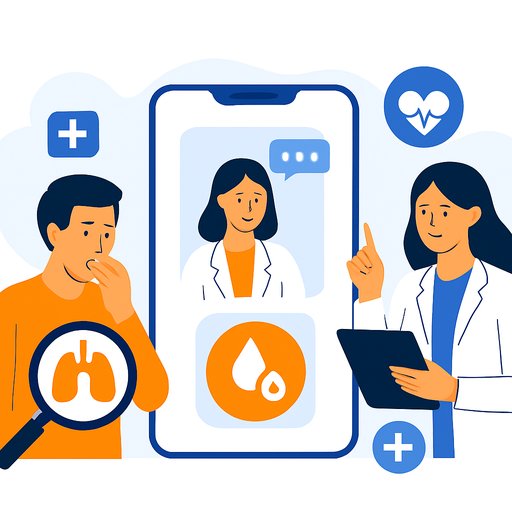
Three solutions are already in routine workflows: an AI-enabled Clinical Decision Support System (CDSS) inside eSanjeevani, a Diabetic Retinopathy screening tool (MadhuNetrAI), and an Abnormal Chest X-ray Classifier. Early results show faster triage, more consistent data capture, and better case detection in the field.
What's live right now
- MadhuNetrAI (Diabetic Retinopathy): Enables non-specialist health workers to screen using retinal fundus images. Classifies DR by standard grades to prioritise urgent referrals. Implemented at 38 facilities across 11 states; over 14,000 images screened, benefiting 7,100 patients.
- "Cough Against TB" (CATB): Community screening for pulmonary TB using AI-based cough analysis. In deployed geographies, reported an additional 12-16% yield over conventional screening. Used to screen more than 1.62 lakh individuals (about 162,000) between March 2023 and November 30, 2025.
- CDSS in eSanjeevani: Streamlines symptom entry and supports clinicians with AI-based differential diagnosis. From April 2023 to November 2025, 282 million consultations benefited from standardised data capture across Health and Wellness Centres.
- Abnormal Chest X-ray Classifier: Supports quick triage by flagging potential abnormalities for follow-up and specialist review.
Why this matters for public health officials
- Earlier case finding: Faster identification of DR and TB reduces delays and avoids avoidable complications.
- Triage that saves time: Clear prioritisation moves urgent cases to specialists without clogging referral pathways.
- Consistent records at scale: CDSS-driven data standards improve comparability across facilities and states.
- Smarter resource use: Workload and specialist time are focused where the need is highest.
Governance and compliance are built in
The Ministry reports adherence to key policies and standards, including AI Governance Guidelines by MeitY, ICMR's Ethical Guidelines for AI in Biomedical Research and Healthcare, the Information Technology Act 2000, the Digital Personal Data Protection Act 2023, and the Health Ministry's Information Security Policy.
For quick reference, see MeitY and the ICMR Bioethics resources.
Immediate actions for state and district teams
- Appoint a nodal officer for AI-enabled health services to coordinate with the CoEs and program divisions.
- Map facilities that can run DR screening and X-ray triage; confirm power, connectivity, fundus cameras, and X-ray digitisation where applicable.
- Integrate workflows for referrals: define who validates AI flags, referral turn-around times, and how follow-ups are closed in program records.
- Train frontline workers on device use, image quality, symptom entry in eSanjeevani, consent, and data handling.
- Track the right metrics: screen volume, AI-flag rates, additional yield for TB, referral completion, time-to-diagnosis, and patient outcomes.
- Enforce privacy: standard consent language, access controls, audit logs, and incident reporting aligned to DPDP and Health Ministry policy.
- Budget for continuity: device upkeep, connectivity, helpdesk support, and periodic model validation checks.
Where this is headed
With Centres of Excellence guiding development and deployments, these tools are moving from isolated pilots to routine service delivery. The focus now is on steady scale-up, clean data pipelines, and tight referral loops so that each deployment translates to measurable outcomes on the ground.
Upskilling your team
If your department is planning AI-linked initiatives and needs role-based upskilling, explore curated options here: AI courses by job role.
Your membership also unlocks: