Graphwise launches GraphRAG to ground AI answers with a knowledge graph
Standard RAG pipelines keep missing the mark in production. On Feb. 16, Graphwise released GraphRAG-a knowledge-graph-driven approach that injects the missing context into retrieval so agents and other AI apps can deliver accurate, auditable answers.
RAG connects LLMs to enterprise data, but most projects stall because the system can't reliably pull the right facts at the right time. Alternatives are emerging-some add instructions and examples to retrieval-yet the core issue remains: context. GraphRAG tackles that by using a knowledge graph as a semantic backbone.
Why RAG stalls in production
Many AI initiatives never clear the pilot phase. Beyond organizational hurdles, the biggest blocker is data: too little signal, too much noise, and no shared meaning across systems.
As one analyst put it, agents "desperately need reliable context." Knowledge graphs provide that context by unifying data, content, and concepts with standards-based semantics so applications can reason over relationships, not just match keywords.
How GraphRAG works
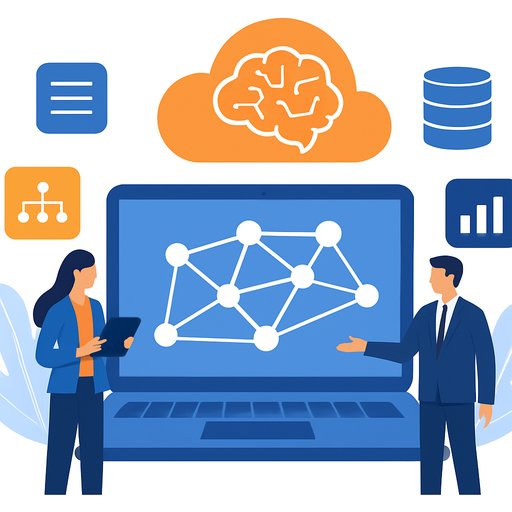
GraphRAG unites LLMs, enterprise data, a structured knowledge graph, and multiple search methods (similarity and keyword) to prioritize relevant facts over superficial matches. The result: grounded responses, higher answer quality, and less time chasing false positives.
Graphwise leadership describes the market's "Prototype Plateau"-pilots that look good in demos but fail under real workload. Their goal with a "Semantic Backbone" is to shift retrieval from probability-driven guesses to explicit, logic-based relationships.
Key features
- Semantic Metadata Control Plane: Centralizes consistent metadata to raise accuracy and reduce hallucinations by grounding responses in enterprise definitions.
- Explainability & Provenance Panels: Show how answers were formed, with traceability to sources for QA and compliance.
- Visual debugging & monitoring: Trace error paths and cut mean time to resolution for data/retrieval issues.
- Low-code interface: Let domain experts adjust AI logic without Python-heavy changes.
- Built-in templates: Governance defaults and query expansion patterns that would otherwise require R&D lift.
- SKOS-like enrichment: Capture domain terminology so the system understands synonyms and variants, delivering the right results regardless of phrasing. See the W3C specification for SKOS.
Analysts highlight the Control Plane and SKOS-style enrichment as standouts. They make the entire data estate more discoverable while giving non-technical teams meaningful levers to improve answer quality.
Why this matters for IT, engineering, and product
- Higher retrieval precision: Contextual linking beats brute-force similarity alone.
- Lower risk: Provenance and explainability support audits and regulated use cases.
- Faster troubleshooting: Visual traces reduce time spent debugging opaque RAG pipelines.
- Business control: Low-code logic and SKOS enrichment let product and ops teams tune outputs without deep ML work.
- Better CX: For agents like customer support, the system brings in customer-specific and case-specific facts, not generic answers.
Getting started: a practical rollout plan
- Pick a narrow, high-stakes workflow (e.g., claims handling, field service triage) to measure impact quickly.
- Define your semantic model: align key entities, relationships, and metadata that your answers must reference.
- Connect priority data sources and enforce provenance so every answer can be traced to its origin.
- Enrich domain language with SKOS-style synonyms, acronyms, and product codes.
- Set evaluation criteria: groundedness, source coverage, latency, and developer MTTR for retrieval errors.
- Operationalize guardrails via templates and governance before expanding to more use cases.
Market context
Graphwise formed in 2024 from the merger of Ontotext and Semantic Web Company, with headquarters in New York City and Sofia, Bulgaria. Competitors include graph specialists like Neo4j and TigerGraph and cloud providers offering graph capabilities through AWS, Google Cloud, and Microsoft.
Analysts note Graphwise's differentiation: pairing knowledge-graph tooling with AI features-explainability, provenance, and domain intelligence-aimed at getting generative applications into production with fewer surprises.
Roadmap to watch
Planned updates include stronger platform memory beyond session scope (user preferences and ongoing context) and AI-assisted automation such as metadata augmentation and schema generation. The theme: reduce manual effort while improving personalization and governance.
Recommended next steps from industry watchers: develop multi-layer context graphs, expand integrations with data/AI providers, and ship industry-specific templates to simplify adoption for vertical teams.
Resources
Your membership also unlocks: