Federal Government's AI plan 'abandons' safety guardrails
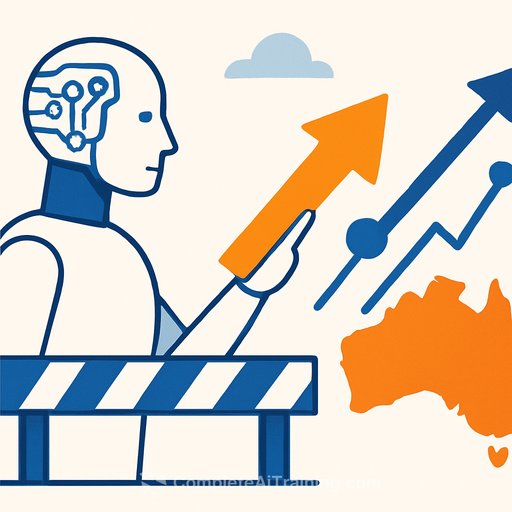
Australia has stepped into the AI race with a national plan that pivots from new AI-specific laws to a growth-first approach under existing regulations. The message: build a strong local AI industry, protect workers through current rules, and adjust as we learn.
That is a clear shift from last year's proposal for mandatory, AI-specific guardrails. Instead, the plan banks on an AI Safety Institute from 2026, a $30m body to watch the tech and advise on where tighter action might be needed.
Global context: two models, two speeds
Governments are choosing their lane. The European Union pushed a risk-sensitive framework with its AI Act, while the US released a more bullish plan focused on innovation. Australia is leaning closer to the US approach-move fast, use existing laws, build capability.
Calls for caution haven't gone quiet. At the UK's AI Safety Summit in 2023, Elon Musk called AI "one of the biggest threats" and questioned whether it can be controlled. Meanwhile, OpenAI's valuation swelled as generative tools moved from concept to office staple.
What the plan says
The Federal Government wants an inclusive AI economy that "works for people, not the other way around," while making Australia an attractive place to invest. Minister Tim Ayres says AI is reshaping how Australians work, learn and connect, and that the plan will be refined as the tech matures.
Key feature: no new AI-specific guardrails for now. Instead, agencies and industry are expected to apply privacy, workplace, safety and anti-discrimination laws to AI use cases. The AI Safety Institute will advise where stronger responses are needed.
Pushback and praise
Greens Senator David Shoebridge argues the plan leaves Australians exposed: "Australians deserve real protections, not glib assurances that pretend our existing laws are up to the task of this new tech." Unions share concerns about worker surveillance and job loss, though they welcome a stated focus on rights.
Business groups counter that Australia already has strong legal protections. The Business Council's Bran Black says a full gap analysis should come before expanding laws, warning against chilling investment or slowing adoption. The Minerals Council of Australia (MCA) backs a light-touch approach, pointing to proven AI uses in predictive maintenance, exploration analytics, inspection and automation.
What this means for government agencies
With no new guardrails yet, public sector leaders will need to operationalise "safe enough" under current laws. Here's a pragmatic checklist you can use now.
- Run an AI inventory: identify every AI-assisted tool, from copilots to risk scoring systems, and classify by impact on people, services and data.
- Gate high-impact uses: require approvals for decisions affecting rights, benefits, or public safety; keep humans in the loop with clear override paths.
- Apply existing laws by design: privacy (data minimisation, consent where required), workplace and safety obligations, and anti-discrimination testing before deployment.
- Demand transparency from vendors: model cards or equivalent documentation, evaluation reports, security attestations, and change logs for model updates.
- Set testing and audit standards: pre-release testing on local data, protected attribute checks, red-teaming for misuse, and audit trails for significant decisions.
- Protect your data: define data residency, retention, and access controls; ringfence sensitive datasets and ban training on restricted information.
- Worker safeguards: consult early, avoid intrusive monitoring, and document fair-use rules for performance tools.
- Procure with conditions: include bias, privacy, uptime, and incident response SLAs; require kill-switches and rollbacks for faulty updates.
- Stand up incident response: define what counts as an AI incident, who responds, how you notify affected users, and how you learn from it.
- Upskill teams: brief executives on risk trade-offs; train practitioners on evaluations, prompt hygiene, and safe operations.
Where capability can scale fast
Mining has already shown practical wins-maintenance, exploration analytics, inspection, and automation. Those patterns transfer to public priorities: asset management for infrastructure, safety analytics in transport, triage and admin support in health and education, and logistics for defence.
The takeaway for agencies: start with low-risk, high-volume workflows. Measure throughput, error rates, and cost-to-serve. Redeploy time saved into frontline delivery.
Worker impacts are real-and manageable
The ACTU notes some employers have used AI to replace roles or intrusively monitor staff. Their stance: workers are open to AI when it's fair, transparent and doesn't erode wages or conditions.
For public sector teams, be explicit: publish use policies, set boundaries on monitoring, and involve staff in tool selection and testing. Make augmentation the default and prove it with metrics.
The window between now and 2026
The AI Safety Institute begins work in 2026. Until then, the plan relies on existing law and agency judgement. That creates room for leadership-and risk if oversight lags.
Practical move: establish an internal AI review board now. Start small, document results, and raise the bar as confidence grows. By the time national guidance tightens, your standards will already be working.
Helpful resources
- European Union AI Act (official portal)
- UK AI Safety Summit 2023
- AI courses by job role (for team upskilling)
- Popular AI certifications
Australia doesn't need a movie hero to storm in on a motorcycle. It needs clear standards, competent delivery, and honest measurement. If agencies move first on the basics, the country can capture the gains while keeping faith with the people who rely on our services.
Your membership also unlocks: