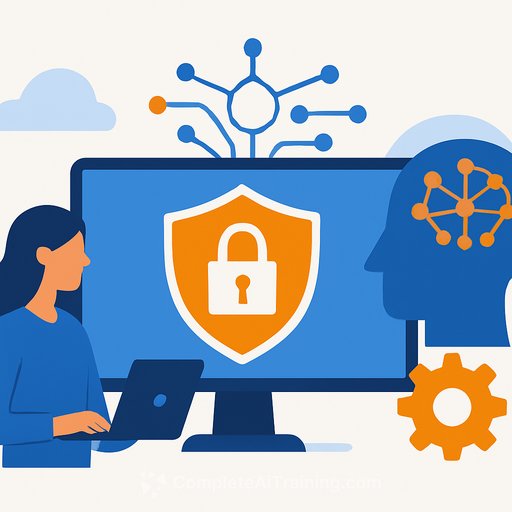
Agentic AI in the SOC: Speed at scale, risk at scale
Autonomous security agents like XBOW and Aardvark from OpenAI have moved from demos to daily workflows. They gather context, test hypotheses, and push investigations forward in seconds instead of hours. That's a real edge for operations teams tasked with uptime, cost, and risk.
The tradeoff: more autonomy means more machine identities and a larger attack surface. We've seen a fourfold rise in identity-based threats year over year, and 43% of security leaders report an incident involving their AI tools in the last 12 months. The upside is real. So is the exposure.
The insider threat, reinvented
Agents need access to docs, cloud resources, and internal tools to do useful work. If their privileges get less scrutiny than a human employee, they become high-value targets.
A compromised agent can act "normally" while exfiltrating data or sabotaging workflows. It doesn't have to break rules-just operate inside its allowed scope using valid credentials and whitelisted patterns. Traditional monitoring often misses this because it looks legitimate on the surface.
Govern agents with strict access
Treat every agent like an intern. Start with minimal permissions and expand only after it proves reliability. Sensitive actions-data exports, deletions, config changes-should require human approval. Keep high-risk tasks out of reach for autonomous execution.
- Apply least privilege with role-based access. Use tokenized service accounts and short-lived credentials.
- Enforce MFA on elevated flows the agent triggers. Record sessions. Use command and API allow-lists.
- Build guardrails: per-agent allow/deny lists for data sources, tools, and destinations.
- Route sensitive actions through auditable, tamper-resistant approval workflows.
If you use zero trust principles, extend them to agents. The model is the same: verify explicitly, limit blast radius, and monitor continuously. See NIST's Zero Trust guidance for alignment here.
See what your agents are doing
Governance is half the job. The other half is visibility. Baseline normal behavior per agent: which APIs it calls, what data it touches, typical volumes, and how often it runs privileged tasks.
- Use anomaly detection to flag spikes in exports, out-of-scope access, unusual tool use, or odd timing patterns.
- Ship unalterable logs to your SIEM with tight time sync. Retain long enough to support investigations.
- Tag every action with agent ID, model/version, prompt hash, tool call, and approval reference.
For design and testing guardrails, the OWASP guidance for LLM applications is a solid reference point here.
Use agents to harden defenses
Put agents on defense tasks with narrow scopes and strict oversight. Have them hunt continuously, run controlled attack simulations, triage alerts, and stress-test controls. Keep humans in the approval loop for sensitive actions.
- Set up peer monitoring: watcher agents that score policy adherence and flag risky behavior from other agents.
- Introduce a staging environment for new agents and a red-team agent to probe for misconfigurations.
Assume compromise. Plan the response.
Agents operate at machine speed using valid permissions. Your playbook needs to be faster than their failure modes. Pre-approve actions so responders don't wait for sign-offs.
- Kill switch: disable the agent's service account, revoke tokens/keys, and pause its queues and webhooks.
- Auto-rotate credentials and secrets the agent could access. Invalidate sessions.
- Audit the last N hours of actions. Snapshot affected data. Restore known-good state if needed.
- Notify data owners. File the incident. Capture artifacts for forensics.
- Fix the root cause: tighten scopes, add missing approval gates, and update tests to prevent recurrence.
Operator checklist
- Inventory: every agent, owner, scope, credentials, environments, and tool chain.
- Data boundaries: define redlines (PII, secrets, finance, legal holds) and enforce allow/deny lists.
- Approvals: exports, deletions, code/config changes, vendor calls, and cross-tenant moves.
- Controls: short-lived creds, MFA on elevated flows, session recording, immutable logging.
- Reviews: quarterly access recerts, tabletop drills, and production fail-safes.
Metrics that matter
- Time to detect agent misuse
- Time to disable a compromised agent and rotate credentials
- % of agent actions requiring human approval (and approval latency)
- Weekly drift from behavioral baseline
- Credential age distribution and key rotation coverage
- True-positive rate and cost per investigation assisted by agents
30-60-90 day rollout
- 30 days: inventory agents and privileges, route logs to SIEM, add allow-lists, require approvals for sensitive actions.
- 60 days: establish per-agent baselines, enable anomaly alerts, move to short-lived creds, sandbox new agents.
- 90 days: run a red-team exercise against an agent, drill the kill-switch playbook, deploy peer monitoring, review KPIs.
Agentic AI gives defenders and businesses real speed, but that speed cuts both ways. Apply security basics with discipline, watch every agent like a new hire, and use AI to check AI. Teams that balance speed with tight controls will turn agents from a risk into an advantage.
If your operations team is building or overseeing agent workflows and needs upskilling, explore role-based AI training options here.
Your membership also unlocks: