FAIR, SPARK, and a State-Led Path to Responsible AI in K-12
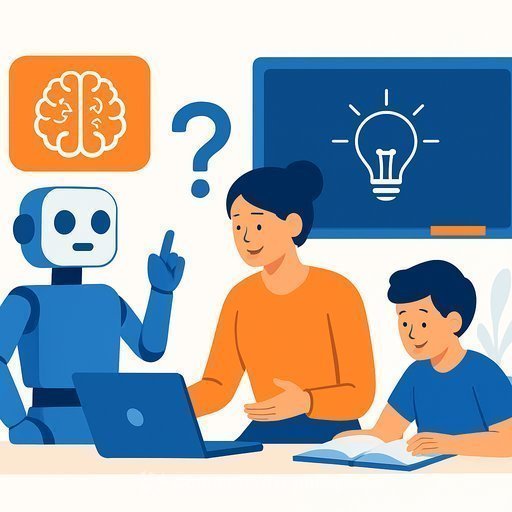
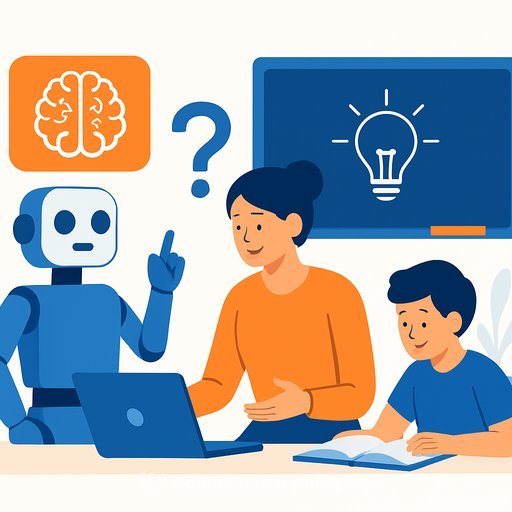
AI can help teachers personalize learning, give real-time feedback, and cut down administrative work so instruction gets the focus it deserves. It can widen access to quality resources and support engagement when used with care.
But there's a gap. We don't have long-term evidence on generative AI's impact on student outcomes or early cognitive development. We also lack clear guardrails, transparency, and data protections fit for minors.
Here's a practical plan to move forward: a federal Framework for AI Responsibility (FAIR) in Education Act, a Governor's Conference to drive state leadership, and a national SPARK Center to support K-12 deployment, training, and ongoing evaluation.
The Challenge and the Opportunity
Successful classroom tech depends on reliable infrastructure and end-user readiness. Current federal actions encourage AI adoption but don't provide implementation guidance, funding for local infrastructure, or guardrails to protect privacy and reduce bias.
Students need AI literacy the way they once learned search skills: how it works, where it fails, and how bias shows up. Guardrails aren't about blocking access; they're about safe, responsible use that protects privacy, fairness, and well-being-especially for minors. Districts and PD leaders can begin with targeted professional pathways such as the AI Learning Path for Training & Development Managers to align training with implementation goals.
More Data Needed
After COVID-19 disruptions, the latest National Assessment of Educational Progress shows declines in science, reading, and math since 2019. AI won't fix this on its own.
Short-term studies show promise, but results vary by context. Early learners face risks like overreliance, unknown effects on deeper learning, and possible "empathy gaps" from chatbot use. We need longitudinal research, algorithm transparency, and strong data security practices before scaling; researchers and practitioners can explore AI Research Courses that focus on these evaluation methods.
- See national results: NAEP (The Nation's Report Card)
- Guidance on AI risks and fairness: FTC on AI
Federal Support and Coordination Are Paramount
States should lead implementation, but consistent federal coordination is key for civil rights, data, and long-term trend analysis. If federal responsibilities shift or funding for education research tightens, we risk fragmented standards and weaker evidence on AI's effects.
Cuts to STEM education research would undercut our ability to assess impact and build effective tools for classrooms. This is the wrong moment to pull back.
Implementation Requires Community Involvement
Federal frameworks only work if teachers are trained and communities guide the fit. States and districts need to set standards, define metrics, and evaluate in context-partnering with groups like NSTA, CSTA, and NSF-backed initiatives such as EducateAI and NAIRR.
Even the best resources depend on educators who understand how to apply them. Professional development must come first.
Recommendations
1) Framework for AI Responsibility (FAIR) in Education Act
Congress should pass a comprehensive act that funds research, sets guardrails, and supports state-led execution in K-12 and higher ed. Core components:
- Commission a National Academies (NASEM) study on AI's impacts across K-12, higher ed, and informal learning, including learning outcomes, cognition, psychological effects, and ethics-with recommendations for AI literacy and teacher training.
- Direct the CoSTEM subcommittee under OSTP to issue academic integrity guidance within 270 days on plagiarism, authorship, reliability, reproducibility, and bias in the age of AI.
- Require algorithm transparency for tools used with minors: training data sources, testing guardrails, and key design decisions that influence learning and equity.
- Fund secure infrastructure for AI use in schools, including cybersecurity (with FCC-aligned efforts) and acceleration of the Broadband Equity, Access, and Deployment program.
- Mandate coordinated federal-state-local monitoring and evaluation, increase funding for teacher PD (with emphasis on STEM), and stand up the SPARK Center.
2) Governor's Conference: State-Led Design of the SPARK Center
Host a national convening focused on AI in education and the community-driven design of the SPARK Center. Governors can share lessons, coordinate policy, and identify where federal standardization helps and where state flexibility is essential.
- Participants: Governors (or proxies), educators from local districts, teacher unions and associations, CSTA/NSTA leaders, TeachAI representatives, and NSF-funded researchers.
- Outcomes: a deployable SPARK roadmap; shared teacher-training resources; potential federal guidelines; pilot projects via the NGA Center for Best Practices; and a feedback loop from classrooms to policy.
3) Supporting Pedagogy and AI Readiness in K-12 (SPARK) Center
The SPARK Center will be a federally managed resource to help communities set standards, track outcomes, and share what works. One-size-fits-all won't work; SPARK helps districts adapt based on local goals and constraints.
- Monitor and evaluate AI use across districts; compile best practices and toolkits.
- Support teacher PD, equity audits, algorithm transparency reviews, and data privacy protocols.
- Provide responsive support when AI deployments miss the mark or create unintended issues.
What District and School Leaders Can Do Now
- Form a cross-functional AI working group (instruction, IT, legal, counseling, family engagement).
- Start small pilots with clear use cases (feedback, differentiation, workflow) and strict data protections.
- Set metrics upfront: learning outcomes, time saved, engagement, and equity indicators.
- Run 60-90 day review cycles; adjust or pause based on evidence.
- Require vendor transparency on training data, guardrail testing, accessibility, and privacy.
- Prioritize early learners' well-being; limit unsupervised chatbot use and track effects on attention and retention.
- Adopt consent and clear communication for families; give opt-out options.
- Provide ongoing training tied to real classroom tasks and local curriculum goals.
Need structured training options for your team? Explore curated AI courses by job role: Complete AI Training.
Conclusion
AI can support better teaching and learning-but only with clear guardrails, proof of impact, and community control. Pair state leadership and local decision-making with federal resources, transparency, and steady evaluation.
Keep instruction teacher-led, make privacy non-negotiable, and let evidence guide scale. That's how we use AI to help every student-without compromising equity or trust.
Your membership also unlocks: