Publishing Houses Face A.I. Detection Crisis as Debut Authors Bear the Burden
Major publishers are now canceling book releases over concerns that manuscripts contain artificially generated content, creating a new obstacle for debut authors already struggling to land deals. The panic intensified last month when Hachette pulled "Shy Girl," a horror novel by Mia Ballard, from U.S. release after finding evidence of A.I. involvement. The publisher had previously released the book in the United Kingdom after Ballard self-published it.
The fallout extends beyond the canceled title. Antonio Bricio, an engineering consultant in Guadalajara, Mexico, completed his first novel-a science fiction thriller about a government conspiracy-and spent months revising it after 20 literary agents rejected his initial queries. When he learned about the Hachette cancellation on social media, he grew anxious about how his work might be perceived.
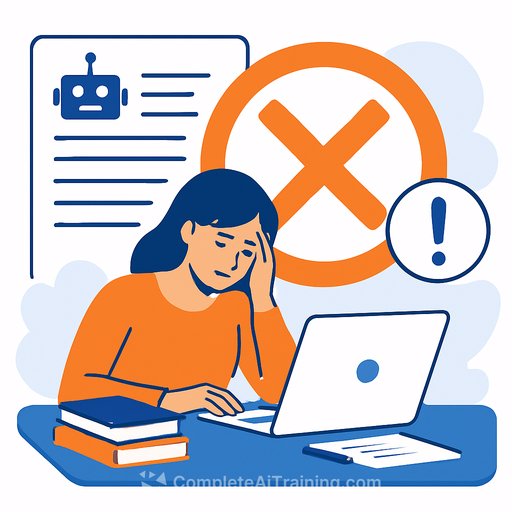
Bricio said he does not use A.I. to write, except occasionally to translate individual words or phrases from Spanish to English using DeepL. Still, he decided to test his manuscript against an A.I. detector. He paid for a subscription to Originality.ai and uploaded a chapter. The tool flagged it as 100 percent likely to contain A.I.-generated content.
The problem is straightforward: A.I. detection tools produce false positives, and publishers lack reliable ways to verify authorship. Authors who write cleanly or use minor A.I. assistance for translation now face suspicion. Agents and publishers, wary of releasing potentially A.I.-generated books, may increasingly avoid taking risks on unknown writers.
For debut authors, the timing compounds an already difficult market. Bricio's experience suggests that even writers producing original work must now defend their authorship against unreliable detection systems.
Learn more about generative AI and LLM technology or explore resources on A.I. for writers to understand how these tools are reshaping the publishing industry.
Your membership also unlocks: