
AI news ·
Halifax publisher Nimbus rejects generative AI in book creation
Halifax publisher Nimbus banned generative AI for its books. The firm, which releases 50 Atlantic Canadian titles annually, says automation violates human authorship.
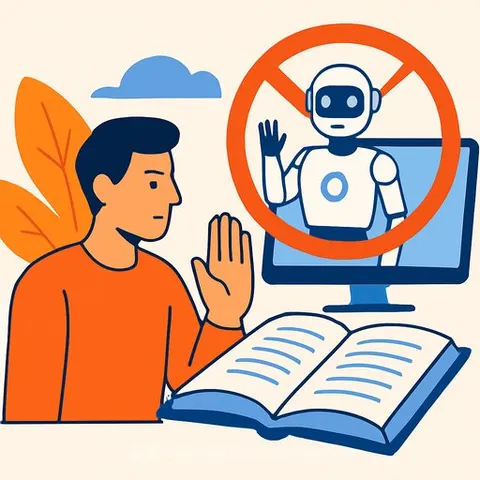
Halifax-based publisher Nimbus Publishing has formally banned the use of generative artificial intelligence in creating text, artwork, and editorial materials for its books. The policy marks a hardline stance in an industry where authors increasingly turn to automation, raising fresh questions about intellectual property and the definition of human authorship.
nimbus publishing draws a hard line
Whitney Moran is the managing editor at Nimbus Publishing and Vagrant Press. The company publishes approximately 50 Atlantic Canadian titles annually and is taking a strict position against automation in the creative process.
"As soon as you start engaging with generative AI to help you even do an outline, I don't feel like the work is yours anymore," Moran said. She noted that using automation to write conflicts with the publisher's core mission to share human stories. Publishers bear the responsibility of protecting authors' intellectual property, not just distributing their words.
"It's so disrespectful to other writers to just kind of mine the information that's out there," Moran said. "If that's the way you're going to go, then we're not the publisher for you."
contrasting approaches to book production
While Nimbus enforces a strict ban, other industry figures are adopting Generative AI and LLM tools to overcome practical barriers. Olivier Blais, co-founder and chief technology officer at Quebec-based Moov AI, is currently writing a book about corporate AI implementation.
As a francophone, Blais finds writing in English difficult. He combines his own bullet points and structural outlines with AI writing capabilities to produce text closer to standard book formatting.
However, Blais acknowledges the long-term risks to the market. "I think it will be bad for the industry because it will reduce the overall quality of what's being written and published," he said.
That degradation in quality is already affecting retail. Paul MacKay, who manages the King's Co-op Bookstore in Halifax and stocks new books at Trident Booksellers & Cafe, believes readers are growing tired of automated content on shelves.
retail pushback and industry gaps
Neither bookstore will knowingly sell a book created with artificial intelligence. MacKay said the issue extends beyond the final text quality; the technology displaces editors, cover artists, and other publishing staff.
MacKay pointed to earlier this year when Hachette Book Group canceled the release of Mia Ballard's novel Shy Girl after reports emerged that automation was used in its creation. "We really need to rely on publishers to be clear about their stance and what they will do for this sort of thing," MacKay said.
Without widespread industry regulation, publishers are left to draft their own rules. Moran noted that Nimbus recently discovered a word search book in its fall 2026 distribution catalogue, published by MacIntyre Purcell Publishing Inc., used automation to generate and scramble puzzle words.
"At this point we're still distributing those titles but we will not be using it for our own titles," Moran said. As the technology continues to grow in popularity, Nimbus plans to hold out as long as possible.
why this matters for writers
As publishers and retailers establish their own policies, writers must proactively declare their use of automation. Relying on undisclosed tools risks alienating editors who prioritize human authorship and strict copyright protection.
Professionals exploring AI for Writers should expect transparency requirements to become a standard part of the submission process. Clear communication about your drafting methods will determine whether a publisher views your workflow as a helpful aid or a breach of contract.