Generative AI Is Squeezing Creatives. Here's What's Actually Working
At holiday markets across Manitoba, artists are putting up quiet protests. A vintage typewriter. A bold red sign: "No AI Anytime." The message is simple - this is work made by human hands.
That message matters because the ground is shifting. AI-made words, images, and videos are flooding feeds. Commissions are thinning in some categories. And for many, the worst part isn't competition - it's consent. Their work is being scraped, cloned, and reused without permission.
What's Changing For Working Creatives
Digital illustrator Alex Plante has moved income offline. Markets are paying the bills; online sales and larger commission work aren't. Smaller gigs still show up, but the premium projects feel rarer. Higher shipping costs are also dragging on e-commerce.
Clients are asking for "No AI" more often. They want the process and the choices behind the piece. That's hard to fake.
Consent, Credit, And The Cost Of "Instant" Content
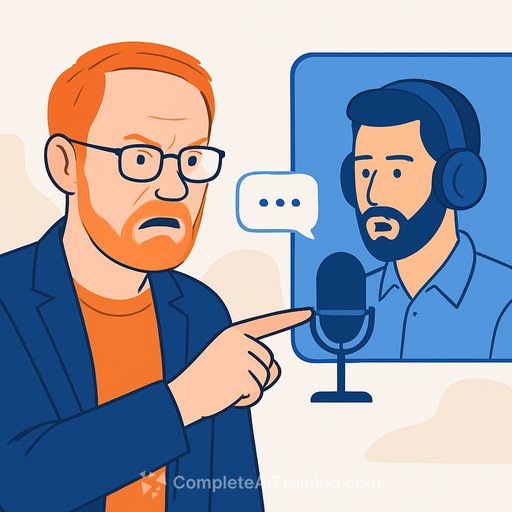
Author and artist Samantha Mary Beiko found her novels used in a pirated-books dataset that likely trained a major model - without consent. She doesn't have the war chest to fight it, so she's raising awareness, one conversation at a time. Meanwhile, some visitors brag they're "writing a book with AI." Years of craft reduced to content generation. Her words: "It does make me incandescently furious."
If you want to see whether your books showed up in a known training set, this interactive from The Atlantic has been a common checkpoint for authors and publishers: Was your book used to train AI?
The Hidden Rework AI Creates
Illustrator Nyco Rudolph now spends more time unwinding client expectations. People bring AI mock-ups that look "close," but the structure is off. He redraws from scratch and has to reset the vision first. It's more work, not less.
Designer Avery Helm has gone the other way - clear line in the sand. An AI-free disclaimer lives on the site. Clients pay for judgment, not prompts. The trust is part of the product.
Deals, Lawsuits, And The Gray Area
Legal fights are stacking up over training on pirated material. One major AI company agreed to a multibillion-dollar settlement in a class action this fall. At the same time, around 30 voice actors signed with an AI studio to license their cloned voices. Some creators are taking control where they can; others are getting swept up.
In the background, companies love AI for quick turnarounds - emails, reports, basic content. Fewer have real policies, training, or guardrails. Human oversight still carries the load.
What You Can Do Now (Without Burning Out)
- Say what you do (and don't) use. Add a clear AI policy to your site, contracts, and proposals. If you don't use AI, say so. If you do, say where and why.
- Protect your files. Share lower-res images, add subtle watermarks, and embed metadata. Consider filters that disrupt dataset scraping for social posts.
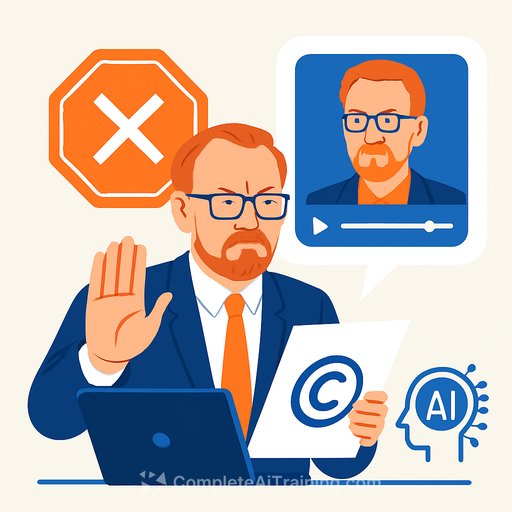
- Lock consent into contracts. Add clauses covering dataset training, voice cloning, and derivative model use. Spell out where your work can and can't go.
- Price the "thinking." Separate concept fees from execution. If clients show up with AI references, charge for exploration and direction to fix them.
- Productize what you can't automate. Originals, limited runs, signed editions, live sessions, and workshops sell the human touch.
- Show the process. Behind-the-scenes shots, sketches, drafts, and studio notes prove provenance and build trust.
- Build local and niche channels. Markets, pop-ups, and aligned communities are outperforming generic online sales for many artists right now.
- Audit your portfolio for "AI confusion." If a piece looks like something a prompt could spit out, add notes about materials, methods, and time.
- Have a "fix the AI mock-up" service. Offer a clear package that translates messy AI comps into workable, original art - with boundaries.
- Upskill with intent. Learn where AI helps (admin, mood boards, alt crops, brief summaries) and where it hurts (style cloning, core creative decisions).
- Join forces. Share contract language, best practices, and warnings in your network. Collective norms become client expectations.
The Signal That Still Wins
AI can speed up low-judgment tasks. It can't replicate taste built over years, or the story behind a piece. That's your edge - the thing buyers are asking for when they say "No AI."
If you want a curated way to learn practical AI skills without sacrificing your voice, this library is a useful starting point: AI courses by job. Review, adopt what helps, and ignore the rest.
Where This Goes Next
Expect more contracts, more labels, and a split market: fast, cheap, generic vs. slow, intentional, human. There's room for both, but they aren't the same product. Make that difference obvious in your work, pricing, and pitch.
The artists putting a typewriter on their table aren't being nostalgic. They're setting terms. That's the move.
Your membership also unlocks: