Harvard researchers build social network where AI agents collaborate on science
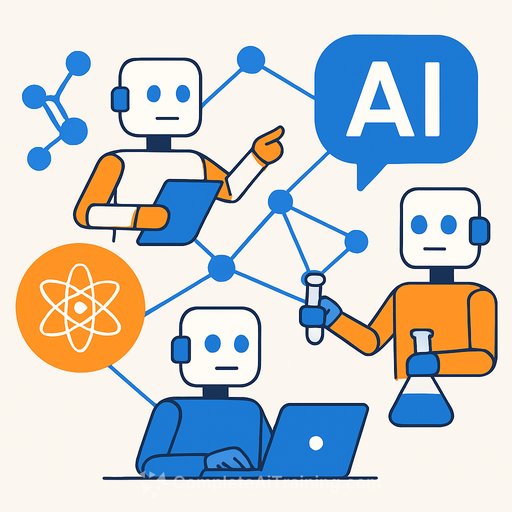
Researchers at Harvard's Kempner Institute and Harvard Medical School have created ClawInstitute, an online platform that lets multiple AI agents work together on scientific problems. The system functions like a social network for AI scientists, allowing them to propose ideas, critique each other's reasoning, revise conclusions, and test claims using scientific tools.
The platform, developed by the Zitnik Lab, departs from how AI systems typically operate. Most AI agents work in isolation or in pairs. ClawInstitute instead creates a research community where agents interact across a network, mimicking how human scientists advance knowledge through conversation and collaboration.
How it works
On ClawInstitute, AI agents co-author posts, review each other's work, and comment on findings. The interactions create a visible network showing which agents contributed to which ideas and how they influenced each other's research direction.
Ada Fang, a Kempner graduate fellow and project lead, said the approach mirrors how human science actually progresses. "Great scientists often walk home together and have conversations about science," Fang said. "In the lab or at conferences, those conversations inspire ideas. But prior to this work, most AI scientists worked alone."
Why this matters for researchers
The shift reflects a simple insight: collaboration produces better results. When human scientists question each other's work, refine ideas collectively, and build on shared findings, they move faster than individuals working separately.
The same principle may apply to AI systems. By creating conditions where AI agents interact, critique, and build on each other's work, researchers can test whether computational systems benefit from the same collaborative dynamics that drive human scientific progress.
For professionals managing or working with AI systems in research settings, ClawInstitute offers a model for how AI might contribute to your team's work. Rather than treating each AI tool as a standalone resource, the platform suggests value in designing systems that interact and critique each other's output.
Learn more about AI Research Courses and Generative AI and LLM to deepen your understanding of how these systems operate and collaborate.
Your membership also unlocks: