AI, Ethics, and the Soul of Public Relations
AI is no longer a side tool in communications; it's baked into how teams research, write, distribute, and measure. Yet the adoption-to-governance gap is glaring: 91% of organizations allow AI in communication activities, but only 39.4% have a responsible AI framework in place.
That gap is where trust erodes. In PR, trust is the product. If we don't build standards into daily work, the tools we use will quietly set standards for us.
What the profession has already agreed on
Two anchors emerged over the past few years and they're worth internalizing, not just endorsing:
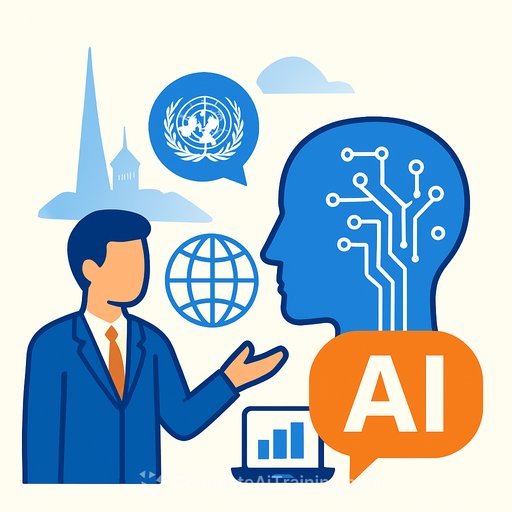
- IPRA's Five AI and PR Guidelines: disclose AI use, attribute sources, protect confidential and copyrighted material, require human verification, and prevent/correct misinformation. See the organization: IPRA.
- Global Alliance's Venice Principles: seven principles for responsible AI, later affirmed through the Venice Pledge and co-signed globally. See the organization: Global Alliance.
These aren't technical manuals. They're ethical baselines for how we communicate when machines sit inside our workflows.
Why this is urgent in Africa
Where data is sparse and context is rich, AI can miss nuance and reinforce bias-especially against local languages, histories, and cultures. When that happens, credibility cracks from the inside.
- Ethics first: align AI use with global professional codes; speed can't trump integrity.
- Human-led governance: maintain oversight for privacy, bias, and disinformation; be transparent like a public forum, not a black box.
- Responsibility: own outputs through fact-checking and continuous learning; in high-stakes media climates, vigilance is non-negotiable.
- Transparency: disclose AI involvement; in storytelling cultures, clarity sustains trust amid deepfakes and synthetic media.
- Education and voice: upskill practitioners and participate in global policy discussions; don't just adopt rules-help write them.
- Human-centered outcomes: use AI to serve the common good-jobs, health, climate resilience, inclusion-guided by shared progress.
The gap between principle and practice
Saying "we use AI responsibly" is easy. Operationalizing it is the work.
One 2025 PRWeek-Boston University survey found 71% of professionals use AI for innovation, while ethical lapses persist in 55% of firms without governance policies. Translation: tools help, but guardrails decide whether they help your reputation-or hurt it.
The 3H Model: Head, Heart, Hand
Think of AI as augmented intention. It absorbs patterns, magnifies biases, and mirrors blind spots. Without direction, it can drift; with clarity, it amplifies your best work.
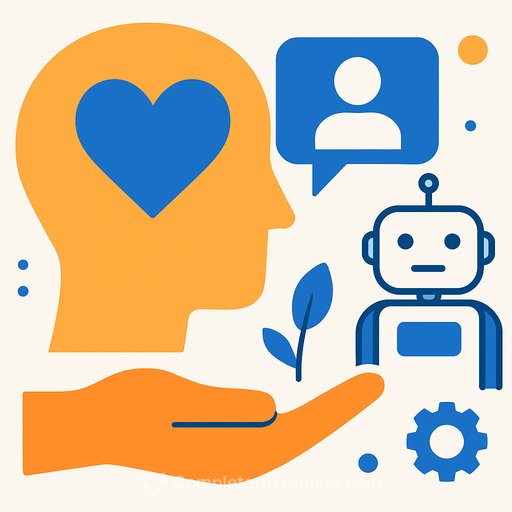
- Head - the mind before the machine. AI drafts; humans decide. It detects patterns; humans assign meaning. As Antonio Damasio said, "We are not thinking machines that feel; we are feeling machines that think."
- Heart - the soul within the system. AI processes data; humans process dignity. Cultural sensitivity, empathy, and transparency keep innovation from crossing the line into arrogance.
- Hand - the human in the loop. Execution without accountability is reckless. The Facebook-Cambridge Analytica scandal wasn't a tech failure-it was a human failure.
Turn the 3H Model into daily workflows
- Head: Plan with intention
- Define approved use cases (research, first drafts, media analysis, audience insights).
- Set a "machine-to-human ratio" for every deliverable (e.g., AI draft + two human reviews).
- Establish a data policy: what goes in, what never goes in (client secrets, personal data, embargoed info).
- Document model sources and versioning for audit trails.
- Heart: Protect dignity and context
- Run bias checks for culture, gender, region, and language; require local validation on sensitive work and consult Translation resources.
- Disclose AI involvement in content that reaches the public.
- Mandate source attribution for AI-retrieved facts and quotes.
- Pre-approve synthetic media use; label it clearly.
- Hand: Execute with accountability
- Require human sign-off on all external outputs.
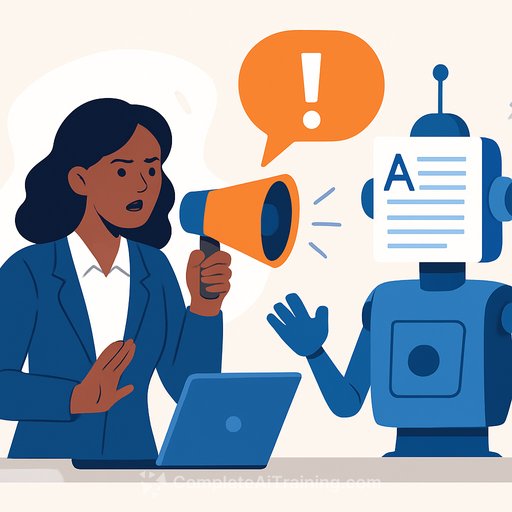
- Set a misinformation protocol: detect, pause, correct, and explain publicly.
- Audit vendors for data practices, IP, and safety policies.
- Track incidents and learnings; update SOPs quarterly.
Governance checklist for this quarter
- Publish an AI disclosure and attribution policy on your site and newsroom.
- Create data guardrails: ban sensitive inputs; whitelist secure tools.
- Stand up a verification pipeline: fact-checking, source logs, and human approval gates.
- Run a bias and cultural accuracy review on key markets and languages.
- Establish a deepfake and synthetic media response playbook.
- Audit all AI-enabled vendors and renegotiate clauses on IP, privacy, and security.
- Upskill teams on prompt craft, verification, and ethics; measure capability gains monthly. For structured options, see Research.
- Report metrics to leadership: % content reviewed, incidents, corrections, and time saved with quality maintained.
Final thought
AI will influence PR whether we steer it or not. The difference between trust built and trust burned is simple: put humans in front of the machine, keep empathy at the core, and make accountability visible.
Principles set the guardrails; practice delivers credibility. Head plans, Heart guides, Hand executes-daily, not someday.
Your membership also unlocks: