Health Insurance Companies Are Clawing Back Payments Years Later. AI May Be the Reason.
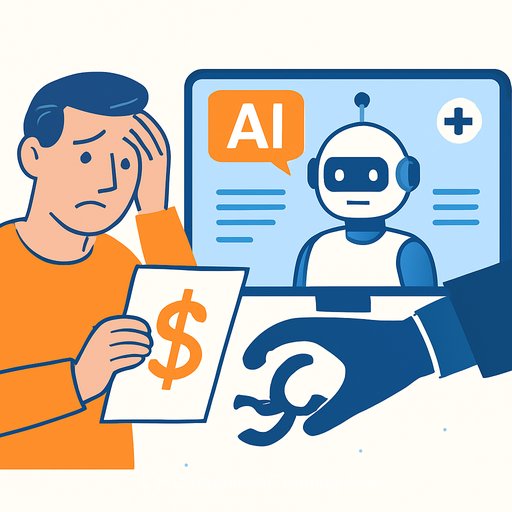
Insurance companies can demand patients pay far more for medical care months or years after the initial bill arrives. Complaints about these "claw backs" to Connecticut's Office of the Healthcare Advocate have doubled in the last two years, and hospital executives believe artificial intelligence is driving the surge.
Marcie DePra of Norwalk received a bill for $268 in December 2023 for cardiac testing at Stamford Hospital. In May 2025-17 months later-her insurance company sent a new explanation of benefits demanding $1,684. She owed more than six times the original amount.
"I had no idea that after the original EOB that they could go back and decide to reevaluate the process," DePra said.
How Claw Backs Work
A claw back occurs when an insurance company searches for claimed payment errors and demands money back from providers. Connecticut's state-regulated plans have an 18-month window for claw backs. Federally regulated plans typically have three years. But exceptions to these limits are broad enough that claw backs can reach back 13 years or more.
Kathy Holt, Connecticut's Healthcare Advocate, said the exceptions create problems. "Some of these exceptions that exist to the 18-month limit where the retroactivity can occur are just unfair. They're simply unfair," Holt said.
When an insurance company claws back a payment, it typically takes the money from the hospital. The provider then must pursue the patient for payment, often years after the original service.
AI's Role in the Trend
Holt believes insurance companies are using AI to review previous claims at scale. "We're seeing rather similar language across the board, so that's also concerning that they're not looking at each claim individually as it should be," she said.
Michael Veillette, the CFO of Stamford Hospital, agrees. "Physicians on the payer side couldn't possibly be generating this amount of volume, in terms of these retractions and claw backs and denials. You know it's machine-generated, algorithm-generated," Veillette said.
The volume is substantial. Stamford Hospital reports claw backs cost it between $15 and $20 million annually. Veillette believes insurers intentionally flood providers with denials to overwhelm their operations.
"They know because the data shows that most providers just can't keep pace with it," Veillette said. "They just unfortunately end up living with the fact that they're never going to get paid 100% of what they should get paid."
Insurance Companies Dispute the AI Connection
UnitedHealthcare, DePra's insurer, denied using AI in her case. "Claims can be adjusted to factor in new information such as updated provider contracts, as was the case with this claim," a company spokesperson said.
The company did not answer multiple questions about its broader use of AI. However, UnitedHealthcare's 2026 outlook report states the company will "continue to embrace new technologies and artificial intelligence" in claims processing.
After the I-Team's inquiry, UnitedHealthcare waived DePra's deductible, reducing her bill to $298. It took her two years of phone calls to reach that point.
What Patients Can Do
Holt said her office typically wins claw back cases after appeal. Connecticut residents can use the Office of the Healthcare Advocate for free to challenge disputed claims.
Stamford Hospital is now hiring additional staff to fight claw backs and has contracted with Ensemble Health, a company that helps hospitals combat payment denials across the country. Veillette hopes larger firms can invest in AI to counter the insurers' automated systems.
For professionals in insurance, the trend raises operational questions: as AI-driven claim reviews accelerate, how should companies balance efficiency with individual claim review? And what compliance risks emerge when similar language appears across thousands of claw back decisions?
Learn more about AI for Insurance and AI for Healthcare.
Your membership also unlocks: