
AI news ·
Health officials pitch AI as a fix for rural healthcare gaps, but evidence is thin
States plan to use part of a $50 billion federal rural health program to deploy AI for care and administration, though evidence it improves outcomes is thin. Fewer than 30 peer-reviewed studies on rural AI exist, and residents in Hot Springs, South Dakota, remain skeptical.
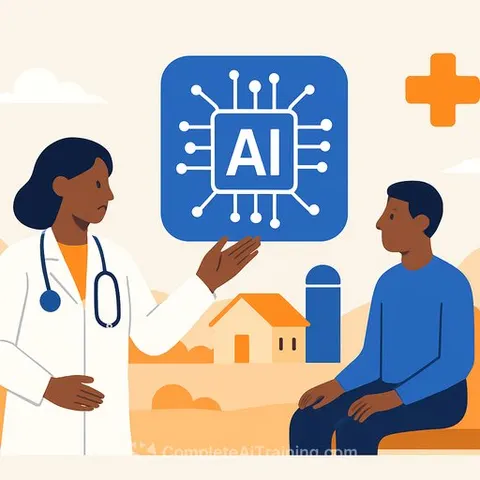
Federal health officials are betting that artificial intelligence can help close gaps in rural healthcare, and states are starting to spend billions of dollars to test that theory. Health secretary Robert F. Kennedy Jr. told a panel of U.S. senators that AI nurses can provide "concierge care" to rural patients, while Mehmet Oz, who leads the Centers for Medicare & Medicaid Services, has said "the best way to help some of these communities is going to be AI-based avatars" that connect rural patients to mental health services.
States are using funding from the $50 billion federal Rural Health Transformation Program, created last summer as part of President Donald Trump's One Big Beautiful Bill Act, to expand AI across rural health organizations. The program was meant to offset concerns about the law's impact on rural communities - the legislation is expected to reduce overall Medicaid spending by more than $900 billion over a decade.
But evidence that AI actually improves rural health outcomes is thin. A recent report from ARISE, a Stanford- and Harvard-led group that evaluates health-related AI, found the tools are being adopted rapidly despite being "poorly evaluated." Few studies track patient outcomes, and a recent academic paper found only 26 peer-reviewed studies about AI in rural healthcare published from 2010 through April 2025.
Residents in Hot Springs, South Dakota, population about 3,400, voiced the skepticism that federal planners may not be accounting for.
"I get artificial intelligence for certain things, but for personal healthcare - no," Tara Haffner said. She said she's worried about AI making mistakes and wants healthcare to stay between her and her doctor.
Roy Ehlers, another Hot Springs resident, put it more bluntly: "I'm old-fashioned. I don't believe in it. Technology is not my forte."
What states plan to do with AI funding
A KFF Health News review of states' plans for the Rural Health Transformation Program shows they are split between using AI for back-office work and for direct patient care. Some states want to automate time-consuming tasks like medical charting, coding, referrals, and prior authorization requests. Washington plans to use AI to "identify and recover" money the state is owed.
Mississippi wants to use predictive AI algorithms to "guide" emergency medics with "triage, routing, and treatment decisions." North Dakota's plans mention AI to "detect early signs of chronic disease and behavioral health conditions. New Hampshire wants AI that flags patients "at high risk of adverse drug events."
Utah officials said in their application they are interested in funding a controversial experiment in AI-powered prescription refill requests. Kentucky will explore AI chatbots to "deliver personalized nudges and education" through "health coaching, gamified incentives, and rewards." Several states plan to use AI to analyze patients' medical charts and remote monitoring devices to identify immediate or future health risks.
Phillip Mues, who oversees technology at Cherry County Hospital and Clinic in rural Valentine, Nebraska, said AI is already helping clinicians in ways that matter to staff. The clinic has been using AI scribes that record appointments and generate visit notes. He said surveys of clinicians after adoption show the scribes reduce burnout.
"It won't replace people, but I think it will help in rural communities," Mues said. He cautioned that it can't save enough money to prevent rural hospital closures.
Stephanie Keller, a Hot Springs resident, acknowledged AI's appeal for tracking fitness but not for facilitating her health. She wears a smartwatch for activity tracking, but she has no interest in embracing an AI chatbot that coaches her toward health goals: "I don't have the time to chat with AI every day."
Evidence is missing in both rural and urban settings
But even tools proven in urban hospitals may not work in rural ones. Qian Huang, assistant professor at East Tennessee State University's Center for Rural Health and Research, said the technology is usually tested at large academic hospitals and trained on data from urban patients, who may not have the same health issues or obstacles like lack of transportation.
Rural facilities also lack the infrastructure to adopt AI. Huang said they may not have hardware, internet speeds, or IT staff. Hospital clinicians may already be doing three jobs at once and have no time for AI training.
"In rural communities, trust and a personal relationship is essential," she said.
Jordan Everson, an assistant professor at Georgetown University's Department of Family Medicine, said facilities across the country are rushing to hire tools. "The risk of signing contracts that rural healthcare organizations come to regret is pretty high," he said.
CMS spokesperson Timothy Foster said the agency doesn't have AI-specific reporting requirements but is working on a form for states to report progress and outcomes. States like Connecticut will track how often AI-powered patient monitoring devices trigger accurate alerts. Texas will require organizations to track cost savings, while Wisconsin lists "patient outcomes" and "productivity and efficiencies" as possible metrics.
Huang said states need to share results after collecting them. "We do not have a lot of resources to waste on tools that don't work in some areas," she said.
Why this matters for healthcare professionals
For clinicians and administrators at rural facilities, AI tools are not coming gradually. The election will determine what governments, insurers, and vendors push into your practice. Before signing a contract or committing staff training time, ask what evidence marks the vendor's claims to rural settings - not just controlled academic trials. Track outcomes yourself: a tool that removes 20 minutes drafting notes may matter just as much as one that claims to reduce 911 calls. And given that most states track only adoption, not results, your facility may need to build that measure internally. AI is not a substitute for staffing or infrastructure, and no federal program will change that constraint alone.