The Healthcare Unicorn Cluster - The Largest and Most Defensible Vertical in AI
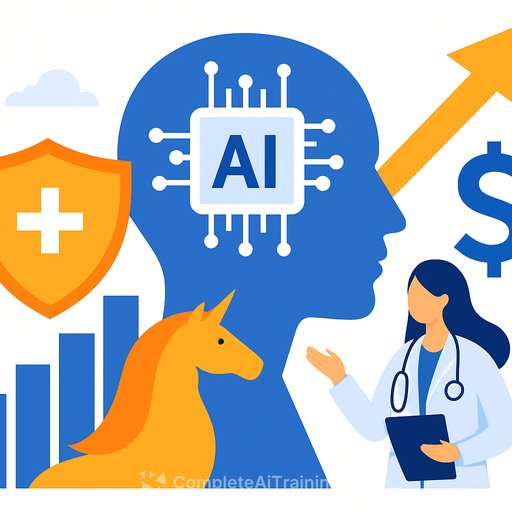
Healthcare isn't just adopting AI. It's where the biggest, most defensible AI companies are being built. With a projected $187B market by 2030 and 15+ unicorns already, this vertical will set the tone for applied AI over the next decade.
The kicker: regulation, usually seen as a blocker, is becoming the moat. Once clinical validation is earned, displacement slows and enterprise value compounds.
The Finding: Healthcare Is Now the Largest AI Vertical
- $187B projected AI-in-healthcare market by 2030
- ~37% CAGR across enterprise use cases
- 15+ unicorns - the biggest cluster across any AI vertical
- Regulation = moat through validation, safety, and trust
Why Healthcare Leads AI Value Creation
- Massive Inefficiency → Automation Ready: Notes, billing, coding, scheduling, triage, prior auth, care ops - all high-friction workflows with clear ROI.
- High Willingness to Pay: Providers and payers buy measurable outcomes: reduced burden, fewer errors, faster throughput, lower cost of care.
- Life-or-Death Stakes: Proven outcome gains are defensible and sticky.
- Labor Shortage: Nursing, primary care, and radiology gaps make AI a necessity, not a luxury. See physician shortage data from AAMC here.
- Data-Rich Workflows: Imaging, pathology, genomics, and structured clinical data make multimodal AI practical.
- Regulation as a Moat: FDA pathways, QMS, and post-market monitoring make validated products hard to replace.
The Healthcare AI Constellation - 15+ Unicorns and Growing
Category leaders, with approximate valuations:
- Clinical & Workflow AI
- Hippocratic - ~$2B
- Abridge - ~$1.8B
- Suki - >$1B
- Commure - >$1B
- Diagnostics
- Rad AI - >$1B (radiology)
- Veracyte - >$2B+
- Clearly - >$1B (cardiology)
- Care Coordination & Ops
- Viz.ai - >$1B
- Biofourmis - >$1B (remote care)
- Precision Medicine & R&D
- Tempus - $8B+
- Recursion - $3B+
- Digital Health Platforms
- Huma - $1B+
- Regard - >$1B
The cluster spans diagnostics, clinical notes, precision medicine, remote care, and hospital operations - and it's still expanding.
Healthcare AI Subcategories
- Clinical AI: Documentation, triage, decision support.
- Diagnostics: Imaging, pathology, genomics.
- Drug Discovery: Molecule generation, trial design.
- Remote Care: Telehealth, RPM, at-home monitoring.
- Operations: Billing, coding, scheduling, claim optimization.
- Precision Medicine: Genomics, personalized treatment plans.
Each subcategory can support multiple billion-dollar outcomes.
The Structural Implication
For Founders
- Go deep on one workflow. Earn trust with measurable clinical or financial outcomes.
- Build regulatory fluency early: QMS, data lineage, model monitoring, audit trails.
- Pursue the right pathway (e.g., AI/ML SaMD) and track FDA guidance here.
- Design for procurement: EHR integration, security (SOC 2), BAAs, uptime SLAs, privacy by default.
- Price on ROI. If you save hours or prevent adverse events, charge against that value.
For Investors
- Diligence clinical validation: endpoints, study design, real-world evidence, drift monitoring.
- Check the regulatory story: intended use, predicate strategy (if relevant), post-market plan.
- Look for durable data loops: unique datasets, feedback from clinical use, defensible integrations.
- Assess go-to-market friction: EHR footprint, compliance readiness, health system procurement cycles.
For Health Systems
- Start where ROI is obvious: ambient documentation, coding, scheduling, triage, imaging support.
- Run time-bound pilots with a baseline, target metric, and owner. Decide fast - scale or stop.
- Involve compliance and clinical leadership early. Require transparent metrics and monitoring.
- Plan for integration and change management. AI that saves minutes per clinician per day pays back quickly.
- Favor vendors with a clear regulatory pathway and quality management in place.
Bottom Line
Healthcare is now a structural pillar of applied AI. The mix of measurable outcomes, willingness to pay, and regulatory defensibility creates durable companies - and a long runway for value creation.
Get ongoing breakdowns of clinical AI, enterprise adoption, and the economic models behind these unicorns: This Week in Business AI.
If you're upskilling teams on AI for healthcare operations and clinical workflows, browse role-based programs: Complete AI Training - Courses by Job.
Your membership also unlocks: