AI in Healthcare: Hype, Corrections and the Signals That Matter
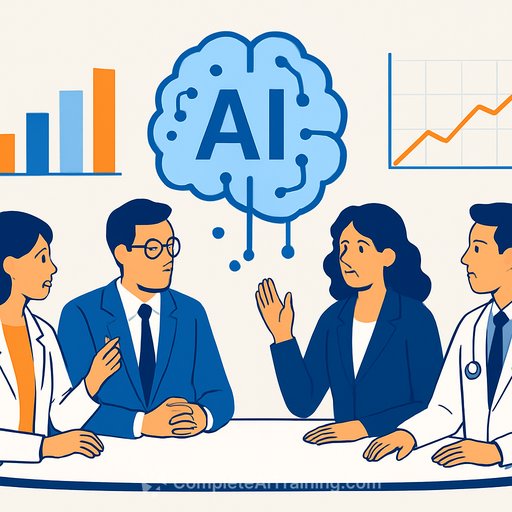
Is healthcare in an AI bubble? Most leaders say no - but they agree there is heat in the system. Some valuations and promises are ahead of what can be delivered today. The tech is real, the value is real, and a correction in certain pockets is more likely than a collapse.
Across imaging, revenue cycle, and clinical workflows, AI is moving from pilot talk to hard outcomes. Still, adoption will reward teams that focus on integration, ethics, and measured results - not just features and demos.
What leaders agree on
AI's utility is durable. Roland Rott (GE HealthCare) calls AI a "copilot," not a fad, with imaging and diagnostics set to be AI-enabled for good. Muthu Alagappan (Counsel Health) says the underlying value is higher than most people think, even if many individual companies won't make it.
We're early - and there will be a reset. Mudit Garg (Qventus) expects a classic cycle: excitement, disappointment, then scale. Neil Patel (Redesign Health) sees a separation forming between "AI features" and true AI-native businesses with moats and sound unit economics.
Trust, ethics, and usability decide winners. Julia Strandberg (Philips) points to a growing number of FDA-cleared tools and a maturity phase where the real question is: which deliver value in practice? Push tech that isn't equitable or clinically sound, and you burn trust.
Where the bubble pressure is
Duplicative products and easy features. Brijesh Patel (Pyx Health) sees capital clustering around lookalike tools - ambient notes, approvals, billing helpers - without unique value. Consolidation is coming in those segments.
Infrastructure and AGI/ASI bets. Marten den Haring (Lirio) and Richard Vincent (FundamentalXR) flag overheated spending on infrastructure and speculative bets tied to future general intelligence claims. The core innovations are solid, but hardware demand, hyperscale build-outs, and vendor-financed GPUs won't defy gravity forever.
Scaling reality vs enthusiasm. Eyal Zimlichman (Sheba Medical Center) calls it a "small bubble." Demand and enthusiasm outpace what AI can scale reliably right now, so timelines will stretch.
What's working right now
Imaging and diagnostics with AI "copilots" that cut reading time, reduce backlogs, and elevate consistency are delivering measurable gains. This is where sustained investment and open ecosystems (partnerships, acquisitions, standards) are paying off.
Operational automation - throughput optimization, bed management, and resource allocation - is proving out in health systems that tie AI to clear metrics like length of stay, time-to-discharge, and appointment utilization.
Documentation and revenue cycle tools are helpful where they reduce clicks, increase clean claims, and free up clinician time. The bar is rising: buyers now expect verified accuracy, smooth EHR integration, and strong privacy safeguards.
Don't ignore the human element
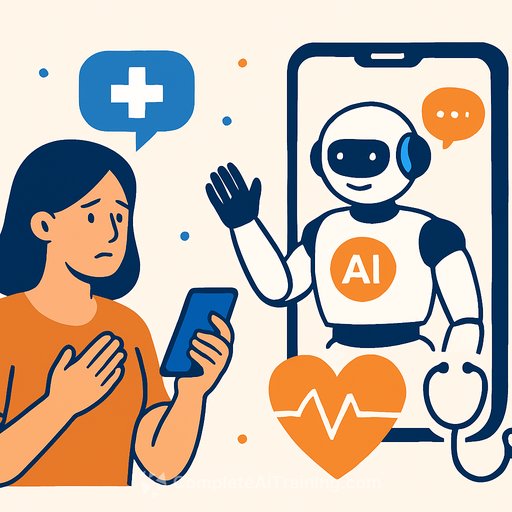
Claire Rudolph (WellTheory) draws a hard line: there is a bubble in the belief that AI can replace human care. Patients, especially those with chronic and autoimmune conditions, need to feel seen. Empathy and presence matter in adherence and outcomes.
AI can guide, surface risk, and speed decisions. It can't replace the connection that makes care stick. Teams that reduce human touch to cut costs will struggle to show lasting results.
Practical checklist for providers and payers
- Define one high-friction use case with a clear owner and decision-rights. No "AI everywhere" projects.
- Workflow-first Design: prove the tool removes steps or reduces time in the EHR. Count clicks and minutes saved.
- Trust and equity: test performance across demographics. Publish accuracy and drift monitoring methods.
- Measure what matters: staffing hours returned, throughput gains, backlog reduction, error rate, and net cost to serve.
- Procurement guardrails: require real-world evidence, HIPAA/PHI controls, data retention limits, and a rollback plan.
- Own your data story: establish data quality checks, feedback loops, and a plan for model updates.
- Start small, scale fast: 8-12 week pilots with clear exit criteria, then expand by service line if targets are met.
- Upskill teams: give clinicians and operators lightweight AI training so adoption isn't blocked by fear or confusion.
How to spot "AI feature" vs a durable business
- Integration: runs inside existing workflows and EHRs with minimal toggles or new screens.
- Defensible data: access to unique datasets, feedback loops, or model-enriched labels that compound over time.
- Audited outcomes: third-party or peer-reviewed results showing impact on time, cost, quality, or access.
- Unit economics: pricing tied to value (per visit, per case, per throughput gain), not seats that go unused.
- Safety: monitoring for drift, bias, and failure modes with clear escalation paths.
Signals of near-term consolidation
- Multiple vendors selling similar ambient scribe, utilization review, or billing assistants with minimal differentiation.
- Tools that "demo well" but miss ROI targets or require heavy manual review that cancels claimed time savings.
- Vendors with infrastructure-heavy burn and limited healthcare revenue, dependent on cheap capital.
What to watch over the next 12 months
- Imaging: continued gains as AI-enabled triage, detection, and workflow tools scale across sites.
- Operations: bed flow, OR scheduling, and throughput algorithms that tie directly to financial outcomes.
- Care navigation: precision outreach that improves retention and engagement in high-need populations.
- Market correction: tighter funding, roll-ups in lookalike categories, and a higher bar for evidence.
Leader perspectives, in their words
"AI is here to stay... the core shift of imaging and diagnostics being AI-enabled is here to stay." - Roland Rott, GE HealthCare
"We're entering a critical maturation phase... AI adoption is built on trust." - Julia Strandberg, Philips
"The hype might burst, but the underlying value won't... personalization drives retention, engagement and outcomes." - Antoine Pivron, Withings Health Solutions
"Valuations have run ahead of fundamentals... true AI-native businesses will separate from features." - Neil Patel, Redesign Health
"Yes and No... most AI companies will not succeed, but the next winners will be AI companies." - Punit Singh Soni, Suki
"We're in a small bubble... progress will be slower than people imagine." - Eyal Zimlichman, Sheba Medical Center
"Not a technology bubble, but a bubble forming around AGI/ASI infrastructure bets." - Marten den Haring, Lirio
"The long arc is clear... expect a period of disappointment before scale." - Mudit Garg, Qventus
"Market bubble yes, technology bubble no... the froth will dissipate; the value will persist." - Richard Vincent, FundamentalXR
"There's a bubble in the idea AI can replace human care... empathy can't be automated." - Claire Rudolph, WellTheory
Bottom line
Healthcare isn't in an AI collapse story. It's in a maturity story. Expect a cull in copycat tools and speculative infra, and steady wins where AI compresses time, removes steps, and improves consistency - with guardrails.
If you're buying or building, anchor on workflow fit, trusted data, and audited outcomes. If you're selling, prove time saved, capacity gained, and cost avoided - or expect tough procurement rooms and shorter runways.
Want your team to level up on practical AI skills by role? Explore a curated set of programs here: AI courses by job.
Your membership also unlocks: