How Healthcare Organizations Are Actually Using AI Today
Healthcare providers are deploying AI to handle administrative work, identify at-risk patients earlier, and free clinicians to focus on direct care. The applications are concrete and spreading across clinical decision-making, operations, and patient engagement.
The shift centers on a simple premise: AI handles what humans shouldn't have to. Provider organizations have spent years collecting data through analytics platforms. The bottleneck was never information-it was the staff capacity to act on it.
Clinical Decision Support
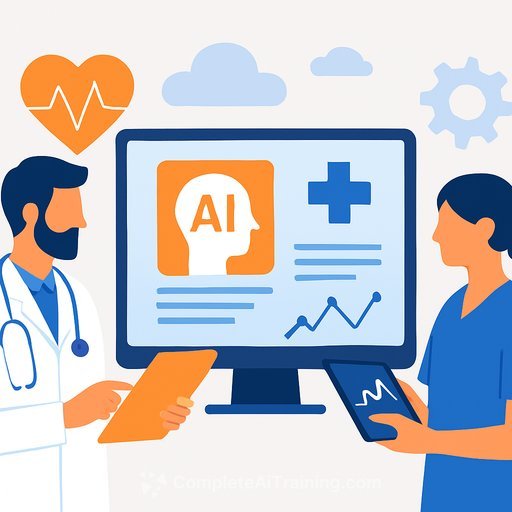
Clinicians now use AI tools to synthesize patient histories that would otherwise require sifting through dozens of documents across multiple systems. AI extracts relevant clinical context-recent condition changes, medication updates, social determinants, risk indicators-and presents a unified picture at the point of care.
In oncology, AI assists with documentation and treatment planning by analyzing biopsy images and molecular tumor profiles to help doctors and patients understand prognosis and treatment likelihood. These tools reduce the cognitive load of processing complex data, enabling faster decisions.
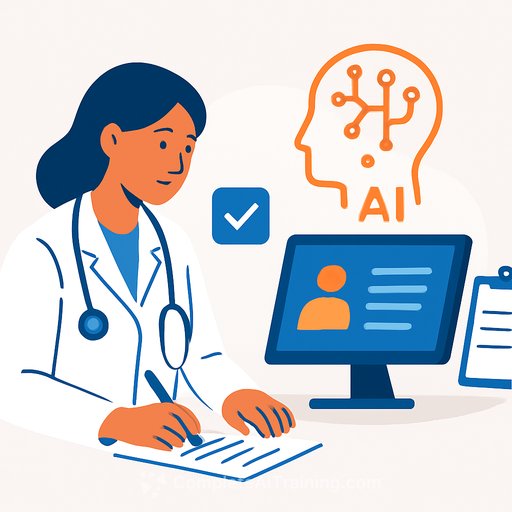
Ambient documentation and EHR-embedded decision support shift work from manual creation to verification. Providers review and approve AI-drafted notes rather than writing them from scratch. The effect is measurable: at a time when 59% of oncologists report burnout symptoms, tools that reduce administrative burden matter for clinician retention and capacity.
Predictive analytics flag high-risk patients before symptoms escalate. AI identifies patients at risk for sepsis, unplanned readmission, or delayed discharge by analyzing clinical status, functional needs, and post-acute placement availability. Early intervention reduces unnecessary acute care days.
Operational Efficiency
Hospitals are embedding AI directly into workflows to move beyond static dashboards toward actionable decisions. AI now supports patient placement, discharge prioritization, task orchestration, and resource coordination-areas where manual processes and fragmented information historically slowed operations.
In home care, AI predictive models flag compliance risks before they become problems, preventing gaps in care and protecting funding. Smart scheduling tools analyze caregiver skills, availability, and client preferences to ensure every authorized hour is used effectively. AI also detects patterns that cause billing issues, such as missed clock-ins and GPS discrepancies.
Revenue cycle management benefits from AI-supported chart abstraction, quality reporting, and billing compliance. Organizations reduce manual work in these areas and catch revenue leakage earlier.
Discharge prioritization models and digital twins allow operators to simulate scenarios and choose high-impact actions while keeping humans in control. The result: improved patient access, shorter length of stay, reduced boarding times, and financial gains without adding beds or staff.
Patient Engagement and Access
AI-enabled digital guides offer 24/7 patient support as they progress through treatment. These clinician-informed tools extend the provider-patient connection through constant engagement and clarity.
In language services, AI-enabled interpretation handles routine, high-volume interactions and triages patient needs in real time while escalating to human interpreters for nuance and clinical complexity. The result is faster access and more equitable care without compromising quality.
Virtual agents support appointment preparation, navigation, and follow-up. Wearables and ambient sensing gather real-time context about patients-such as nighttime bed exits that signal sleep disruption-surfacing insights clinicians might otherwise miss.
AI can identify patients who might remain invisible in the EHR. A patient struggling to articulate what matters clinically benefits from tools that gather background information and present it to providers in structured form.
The Trust Factor
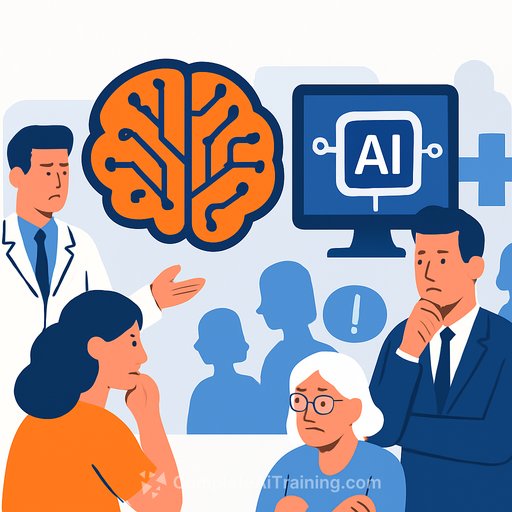
Organizations seeing real value pair AI tools with strong education and change management. Clinicians need to understand how to trust and use these systems in daily workflows.
The most effective applications support rather than dictate clinical decisions. AI surfaces information and recommendations, but clinicians retain judgment. This distinction is essential to earning trust and achieving scale across an organization.
Nearly 70% of home care workers are willing to spend extra time recording observations to improve outcomes. When AI tools help gather that data and turn it into actionable insights, willingness becomes action.
What's Not Happening
AI is not replacing care teams. Over the next five years, care teams that effectively use AI will outperform those that do not-but the work remains human-centered.
The technology works best when it reduces administrative and cognitive burden rather than replacing clinical judgment. Providers remain in control. AI removes friction from workflows so clinicians can spend time on what matters: the personal connection with patients, explaining diagnoses, discussing options, and delivering personalized care.
For more on how AI is being applied across healthcare settings, explore resources on AI for Healthcare and AI Agents & Automation.
Your membership also unlocks: