How AI helps - and challenges - authors in Germany
Writers are split. Some avoid AI entirely. Others use it as a co-writer for drafts, structure, and edits. Across the industry, there's a clear demand for rules because many models were trained on copyrighted books without consent or payment.
Where AI actually helps your writing process
- Ideas and angles: Generate 10 hooks for a chapter or article, then refine the best two.
- Structure: Turn a messy outline into a clean chapter plan with beats and word targets.
- Voice cleanup: Ask for alternatives to awkward sentences without letting it rewrite your style.
- Editing sprint: Run passes for clarity, passive voice, repetition, and pacing-one issue at a time.
- Research distillation: Summarize long source texts into bullet points with citations you can verify; see Research for approaches to distillation and verification.
- Localization: Draft translations or dialect variations, then finalize them yourself.
- Promo materials: Draft jacket copy, newsletter blurbs, and ad variants to test.
Prompts that save hours
- "List 15 chapter angles for [topic]. For each, give a one-sentence thesis and 3 supporting beats."
- "Edit for clarity only. Keep my voice. Highlight changes and explain why."
- "Summarize this transcript into a scene list with characters, setting, and key conflict."
- "Find repetition in this passage and suggest tighter phrasing. No style changes."
- "Create a checklist to fact-check this essay. Include sources to verify."
Keep ownership and voice
Don't outsource the heart of your prose. Use AI for grunt work-structure, cleanup, options-not for final voice. Keep a living style guide (cadence, sentence length, banned clichés, examples of your tone) and give it to any tool you use.
Log what you generate with AI. Note the date, tool, prompt, and output. This helps with transparency for editors, co-authors, and future rights discussions.
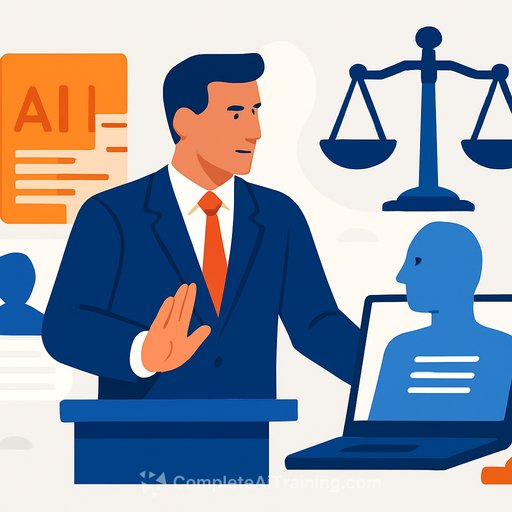
Legal and ethical guardrails
Core issues in Germany: consent, licensing, and compensation for training on copyrighted works. Expect stronger transparency and rights mechanisms as policy solidifies. For context on upcoming obligations, see the EU's work on the AI Act here.
If you publish in German markets, keep an eye on collecting societies and guidance about remuneration and text use. Start with VG Wort for updates on author rights and distribution.
Risk checklist before you hit publish
- Consent: Don't upload unpublished manuscripts to public tools. Use local or enterprise options for sensitive drafts.
- Attribution: If AI materially contributed, align with your publisher's disclosure policy.
- Originality: Run human edits and a plagiarism check. Verify quotes and references yourself.
- Contracts: Add clauses that forbid training on your manuscript without written permission.
- Records: Keep your AI-use log. It's proof of process if questions arise.
- Terms of service: Read data retention and training policies before using any tool.
A simple workflow that scales
- Draft by hand. Use AI to surface structure gaps and tighten language.
- Batch tasks: idea sprints on Monday, outline cleanup Tuesday, micro-edits Wednesday.
- One constraint per pass: clarity, then rhythm, then compression. Don't mix goals.
- Maintain a voice bank: 10 sample paragraphs that sound like you. Compare AI edits against it.
- Review rights monthly: tools change policies; your contracts should keep pace.
Tools and training for writers
If you're testing AI for drafting, editing, or marketing copy, explore curated toolsets for authors here. For role-specific learning paths (including creative and editorial workflows), see courses by job.
Bottom line
Use AI where it buys back time. Keep final prose, decisions, and accountability in your hands. Push for clear consent and fair pay. That's how you protect your voice-and your rights-while still shipping great work.
Your membership also unlocks: