How AI is changing HiEnd Accents' product design and marketing
Dallas - HiEnd Accents says AI has sped up research, sharpened product direction, and exposed market gaps. President Jonathan He put it simply: the work that took weeks now takes seconds, and the signal is stronger.
The team leans on large language models for trend reads and portfolio analysis. If you work in product, think of it as having a fast, unbiased strategist scanning your catalog and the market in parallel.
From harsh photos to styled mockups
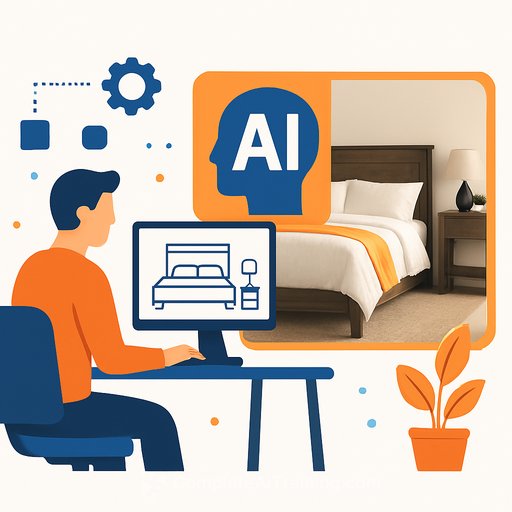
Traditional track-lit product shots can feel flat. AI mockups now place the same bedding set inside a styled scene-warm light, context, and mood-so buyers see how it lives, not just how it looks. That makes early reviews and sell-in smoother.
Where AI delivers the most value right now
- Trend sensing: LLMs flag what's rising, fading, and where your line is thin.
- Portfolio gap calls: "You've got these looks, but you're missing this one" is the exact kind of nudge the team acts on.
- Concept sprints: Quick idea boards and briefs that give designers a head start.
- Mockups in seconds: Visuals good enough to pitch the concept and "sell the romance of the bed."
He summed it up: "We primarily use it for ideation, especially on the marketing and Design side… AI will look at our portfolio and say you're missing this one thing which will be trendy this season."
Why final images still come from a camera
AI isn't precise enough for final advertising photography in home textiles. Pattern scale and print accuracy must be exact. "If we are advertising a pattern, the print has to be 100% accurate… Also, it can come out looking a little bit fake," said He.
So the flow is simple: AI for concept mockups, traditional shoots for go-to-market assets.
Offense and defense: the competitive stance
He's blunt about the stakes: companies skipping AI are already behind. He compared the shift to the industrial revolution-opt out and you might survive as a niche player, but scale will be hard.
"A sword because it lets smaller companies compete with big ones. A shield because if we are not using it, others will come bashing us with their swords."
Tool stack they like
- LLMs for research and ideation: ChatGPT, Claude, Gemini.
- Image generation: Nana Banana Pro for interiors; Midjourney as a specialty add-on.
- Everyday software with AI inside: SAP, Canva, Norton, PowerPoint-use the built-in features to speed approvals, formatting, and reviews.
AI is self-taught: how their team learned fast
The team used free videos, tutorials, and walkthroughs-mostly on YouTube. "One of the fun things about AI is that you can ask AI how to learn AI. You can ask for a structured plan, and it will give it to you."
- Ask your LLM for a 30-day learning plan by role (designer, merchandiser, PD lead).
- Watch 2-3 targeted videos per skill, then apply on a real SKU or concept board the same day.
- Set guardrails: accuracy for specs, disclaimers on AI visuals, handoff points to photography.
- Measure speed: track time-to-first-concept, time-to-internal-yes, and hit rate by trend call.
Practical playbook for product development teams
- Weekly trend scan: Use LLMs to summarize macro trends and retail signals; keep a running "bets" list.
- Portfolio audit: Ask AI to map styles, materials, price bands, and colorways; highlight gaps.
- Concept sprint: Generate 3-5 directions with names, copy hooks, and mood boards.
- Mockup pass: Produce styled room scenes for each direction; label them as AI concepts.
- Designer review: Human refinement on construction, materials, and feasibility.
- Validation: Quick buyer feedback or small A/B tests on imagery and copy.
- Finalize: Traditional photography for launch assets; keep AI mockups for internal use and early sell-in.
Risk notes to keep you out of trouble
- Accuracy first: Never use AI imagery where pattern scale, print, or texture must be exact.
- Disclosure: Clearly mark concept visuals as AI-generated in client decks.
- Data hygiene: Avoid feeding confidential specs or unreleased designs into public tools.
The takeaway
Use AI to think faster and show ideas earlier. Keep your final visuals camera-true. That blend-speed in concept, precision at launch-is how HiEnd Accents is moving product from hunch to shelf with less friction.
Want a structured way to upskill your team?
Browse role-based AI upskilling paths here: Complete AI Training - Courses by Job. If your team learns best by watching and doing, see curated options here: Video-based AI courses.
Your membership also unlocks: