HII and GrayMatter Robotics Partner to Automate Shipyard Work
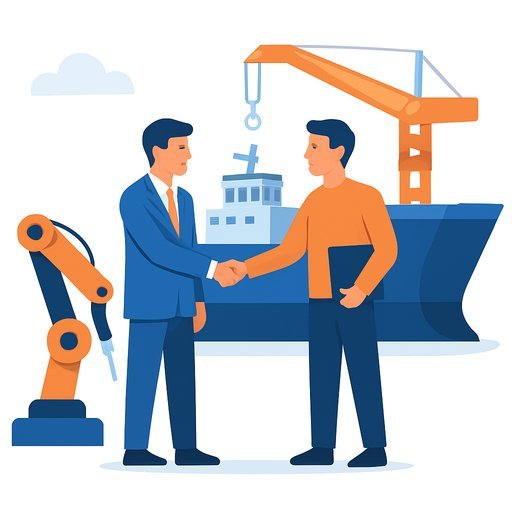
HII and GrayMatter Robotics have signed a memorandum of understanding to integrate autonomous robots into shipbuilding operations, targeting a 15% production increase in 2026.
The partnership will focus on automating surface preparation, coating, and inspection-tasks that currently require skilled workers to follow strict Navy specifications. HII's shipbuilding throughput grew 14% in 2025, and the company is pushing to accelerate further.
What the Partnership Covers
HII and GrayMatter Robotics will explore four areas:
- Autonomous shipbuilding capability development
- Integration of GrayMatter's technologies with existing shipbuilding systems
- Workforce training to support automation
- Production scaling for unmanned systems
The work will feed into HII's High-Yield Production Robotics (HYPR) initiative, which applies physical AI to shipbuilding processes.
The Operations Challenge
Navy shipbuilding involves complex, repetitive work. Sandblasting, grinding, and coating must meet exacting standards, but much of the process remains manual and labor-intensive.
Robots can reduce repetitive tasks and improve consistency, which helps accelerate delivery timelines without cutting corners on quality. Eric Chewning, HII's executive vice president of maritime systems and corporate strategy, said the partnership allows the company to "further augment our workforce and speed up U.S. Navy shipbuilding production."
HII currently combines digital tools, modernized facilities, and skilled craftsmanship to build the Navy's most complex vessels. Adding autonomous systems for surface preparation and inspection could free workers for higher-skill tasks.
Why This Matters for Operations Leaders
This partnership reflects a broader shift in manufacturing: automating specific, repetitive processes while keeping human expertise where it's needed most. For operations teams, the lesson is that AI for Operations works best when targeted at specific bottlenecks, not as a wholesale workforce replacement.
Understanding how to integrate AI Agents & Automation into existing workflows-and how to train teams to work alongside them-is becoming essential for operations professionals in manufacturing and defense sectors.
Your membership also unlocks: