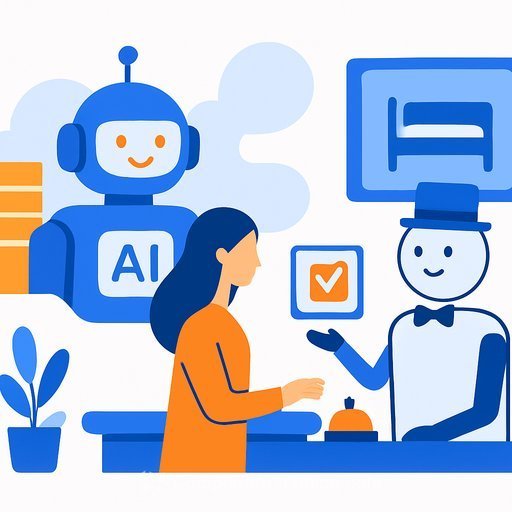
Hilton's CEO on AI: Plans End at First Punch
"Everybody has a plan until you get punched in the face." The line Mike Tyson made famous is the mindset Hilton Worldwide CEO Chris Nassetta brings to AI. Plans are useful. Adaptability wins.
Nassetta has led Hilton through the Great Recession and COVID-19 and still pushed major growth. His stance on AI is clear: it's challenging, but the upside for productivity and guest experience is bigger than the fear.
Where AI Moves the Needle in Hospitality
- Corporate efficiency: automate reporting, forecasting, and vendor workflows; free teams to solve higher-value problems.
- Property operations: dynamic staffing, maintenance prioritization, and smarter inventory to cut waste and downtime.
- Guest experience: make requests, preferences, and on-property services easy, fast, and customizable from a phone.
- Revenue: targeted offers, better demand signals, and faster experimentation on pricing and packages.
- Service quality: instant answers to routine questions and guided support that shortens time-to-resolution.
The Data Advantage: 200-300M Guests a Year
Hilton has "gobs of data." That's a moat-if you use it. AI can turn fragmented inputs into decisions at the moment of need.
Focus on three layers: clean, unified profiles; real-time feedback loops (requests, stays, support); and a privacy-by-design foundation. With that in place, you can personalize without creeping out guests or breaking trust.
Jobs: The Hard Facts Leaders Must Face
Yes, some work will get automated. A study cited by Nassetta's team noted roles can decline by double digits when AI can perform much of the job. The World Economic Forum estimates this decade could see 170 million new roles created and 92 million displaced.
The point isn't doom. It's planning. Model task-level impact, reskill early, and design teams where humans handle judgment and relationships while AI handles speed and scale.
Leadership Mindset: From A→B Is Not B→C
A common trap: the playbook that got you from A to B won't get you to C. AI raises the bar on speed, experimentation, and feedback.
Set short cycles. Ship small. Learn fast. Treat AI as a capability you compound, not a one-off tool you install.
A 90-Day AI Plan for Executives
- Pick two high-leverage use cases: one corporate (e.g., monthly reporting automation), one property-level (e.g., guest request triage).
- Form a tiger team: business owner, ops lead, data engineer, privacy/compliance, and a frontline champion.
- Audit data: identify sources, access, quality, and consent. Define the minimum viable dataset.
- Pilot with guardrails: human-in-the-loop, clear escalation paths, and visible "why" behind recommendations.
- Change management: train for workflows, not just tools. Set expectations on what AI will and won't do.
- KPIs and scorecards: measure cycle time, cost per task, guest satisfaction, and error rates. Review weekly.
- Risk review: bias, privacy, vendor lock-in, and model drift. Write it down; revisit monthly.
- Scale or stop: expand what clears thresholds; sunset what doesn't. Roll savings into the next bet.
What "Good" Looks Like
- Time-to-resolution down 30-60% on routine tasks.
- Higher conversion on personalized offers without discount addiction.
- Fewer service misses because preferences and context are visible at the moment of service.
- Employees report less busywork and more time with guests.
Risks and Guardrails
- Hallucinations and bias: require human review on guest-facing outputs until error rates are proven low.
- Privacy and consent: make data use obvious and valuable to the guest; allow easy opt-out.
- Operational brittleness: keep manual paths during outages; design for graceful degradation.
- Vendor dependence: avoid one-way doors. Favor modular tools and data portability.
Final Take
AI won't run your hotels for you. But it will expose slow decisions, messy data, and fragile processes. Leaders who accept the "punch," learn fast, and keep moving will gain the compounding benefit.
Start with a few high-impact workflows, prove value, protect trust, and reinvest the wins. Repeat.
Next steps for executives
Your membership also unlocks: