HIMSS26 Attendees Embrace AI While Questioning Its Trustworthiness
Healthcare leaders at HIMSS26 see artificial intelligence as essential to hospital operations and staff productivity, but significant concerns about the technology's reliability and potential for misuse are surfacing at the conference.
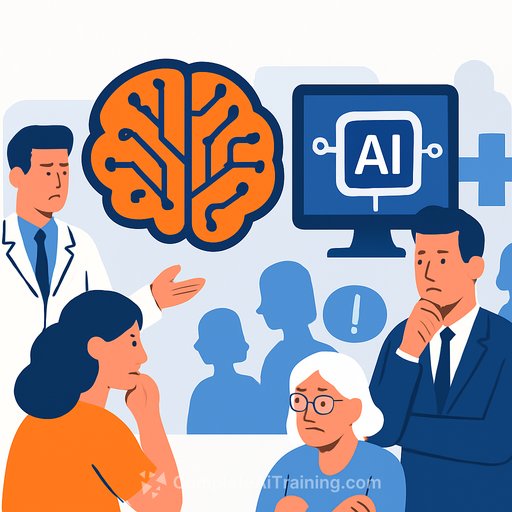
The divide reflects a broader tension in healthcare: AI systems are already reshaping clinical workflows and administrative tasks, yet many practitioners remain uncertain about whether they can trust the systems making recommendations that affect patient care.
Three concerns dominate the conversation
- Trustworthiness. Attendees question whether AI systems produce reliable outputs consistently and whether vendors can explain how their tools reach specific conclusions.
- Misuse risk. Healthcare workers worry about deploying AI in ways that exceed its proven capabilities or using it to replace human judgment where human expertise remains necessary.
- Decision-making authority. Conference participants expressed concern that AI recommendations could sideline clinician input or override established medical judgment without proper oversight.
These concerns reflect real gaps in how AI systems are currently deployed. Many healthcare organizations lack clear protocols for when AI should inform decisions versus when it should make them independently.
The productivity gains are real
Despite reservations, HIMSS26 attendees acknowledge that AI is delivering measurable benefits. Staff report reduced time on administrative tasks, faster data analysis, and improved access to clinical information-gains that free clinicians to focus on patient interaction.
Hospital systems are using AI to streamline scheduling, flag potential adverse events, and assist with documentation. These applications have shown returns on investment and staff adoption rates that suggest the technology is genuinely useful when properly implemented.
Governance and transparency emerge as priorities
Attendees emphasized that healthcare organizations need clear frameworks for AI deployment. This includes understanding how algorithms work, establishing human oversight mechanisms, and defining which decisions require human approval before implementation.
The conversation at HIMSS26 suggests that healthcare's path forward with AI depends less on the technology itself and more on how organizations choose to govern it. The question is no longer whether to use AI, but how to use it responsibly.
Healthcare professionals looking to understand these systems better can explore AI for Healthcare and Generative AI and LLM resources to build foundational knowledge on how these tools function.
Your membership also unlocks: