NY Appellate Court Issues First Sanctions Decision on Misuse of Generative AI in Litigation
The Appellate Division, Third Department, in Deutsche Bank National Trust Company v. LeTennier, affirmed a foreclosure judgment and issued the first appellate-level New York decision sanctioning misuse of generative AI in court filings. Hinshaw partners Ellis Oster and Robert Bailey represented the lender on appeal.
Key facts
- The court affirmed the lender's judgment and rejected the borrower's post-judgment challenges as meritless or abandoned.
- Court found more than 20 fabricated, AI-generated case citations and misstatements of law across multiple filings.
- Sanctions: $7,500 against borrower's counsel and $2,500 against the borrower.
- Basis: frivolous conduct under 22 NYCRR 130-1.1.
Background
The foreclosure action had already gone through extensive motion practice. In 2020, the Appellate Division affirmed summary judgment for the lender, resolving standing. Despite that, the borrower continued filing to vacate or relitigate settled issues, then appealed several adverse orders. The Third Department held those challenges were either meritless or abandoned.
What the court said about AI misuse
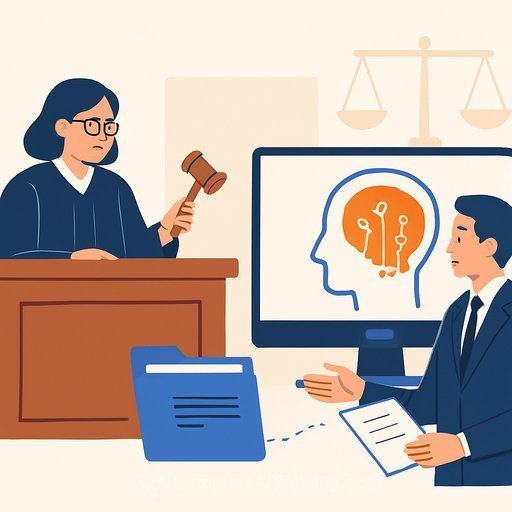
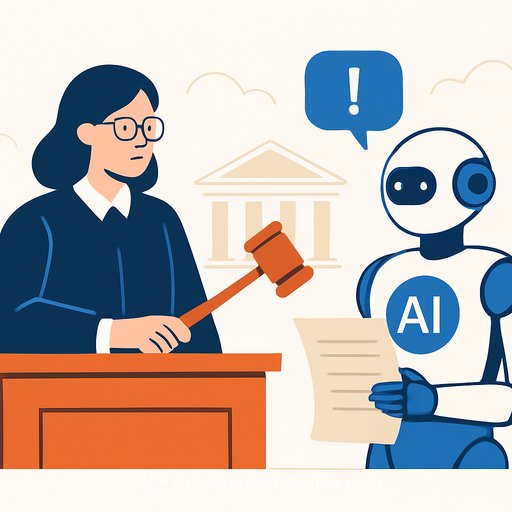
The court detailed pervasive reliance on fabricated authorities: more than 20 non-existent citations and misstatements pulled from real cases. Generative AI, which raises issues discussed in AI for Legal, may have legitimate uses, but it does not replace a lawyer's duty to verify that cited authorities exist and accurately state the law. Responsibility for what goes into a brief remains squarely with counsel.
One aggravating factor: counsel increased use of fake citations even after being alerted to the problem. That persistence weighed heavily in the sanctions analysis.
Sanctions imposed
- $7,500 against borrower's counsel.
- $2,500 against the borrower.
The court found the conduct frivolous under 22 NYCRR 130-1.1 and responded accordingly.
Why this matters for legal teams
This opinion puts New York's appellate courts on record about AI misuse in litigation. It sets a clear expectation: use AI if you choose, but validate every citation and statement of law. It also reinforces finality in foreclosure matters-prior standing rulings stand, and repeated attempts to relitigate can invite sanctions.
Practical steps to stay compliant
- Ban unverified authorities: require attorneys to pull every cited case from trusted databases (see Research) and attach copies where appropriate.
- Adopt an "AI-assist" protocol: document whether AI tools were used, who reviewed outputs, and how verification was done.
- Train your teams: refresh on duties under 22 NYCRR 130-1.1 and professional conduct rules; emphasize citation verification and accuracy.
- Spot-check before filing: run a pre-submission audit to confirm every citation exists, the quotes match, and the holdings are not misstated.
- Respond fast to red flags: if an opposing party or court flags an issue, re-check the record immediately and correct the filing.
Impact on foreclosure litigation
For lenders, servicers, and financial institutions, the ruling maintains the stability of established standing determinations and discourages repetitive motion practice. Courts are signaling a willingness to impose costs on frivolous tactics-especially those amplified by unreliable AI outputs.
Download
Download Decision PDF
Need to strengthen your AI practice policy?
If your team is formalizing guardrails for AI use in drafting, research, or e-discovery, structured training can help. See curated options by role here: Complete AI Training - Courses by Job.
Hinshaw & Culbertson LLP is a U.S.-based law firm with offices nationwide. The firm serves the insurance industry, financial services, professional services, and other regulated sectors, providing litigation, business advisory, transactional, and regulatory services.
Your membership also unlocks: