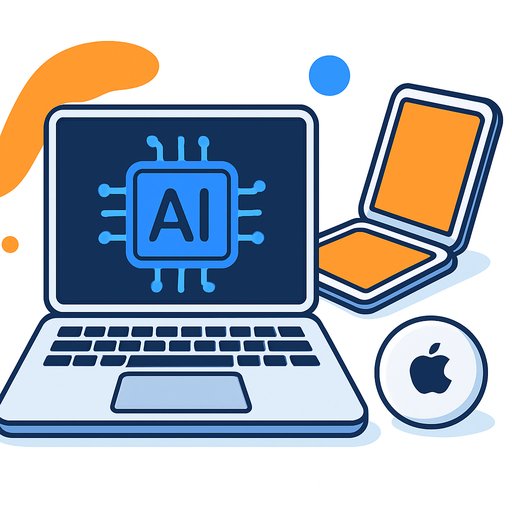
Apple's Historic Quarter Doesn't Remove the AI Deadline
Apple just posted a massive holiday quarter. That's great for the balance sheet, but it doesn't change the clock on AI. Strong sales don't solve product gaps. They buy time. Spend it wisely.
If you build products, there's a clear takeaway: momentum from hardware doesn't offset missing AI capabilities. The user standard is being reset by assistants that reason, remember, and act across apps. Apple knows this-and the next 12 months will show how they plan to close the gap.
What's reportedly next from Cupertino
- Two updated versions of Siri are planned, with a tiered approach that uses on-device intelligence and a cloud model (reportedly Gemini) for heavier tasks.
- A new MacBook Pro is slated for the macOS 26.3 release cycle, signaling a predictable release train and tighter OS-hardware coupling.
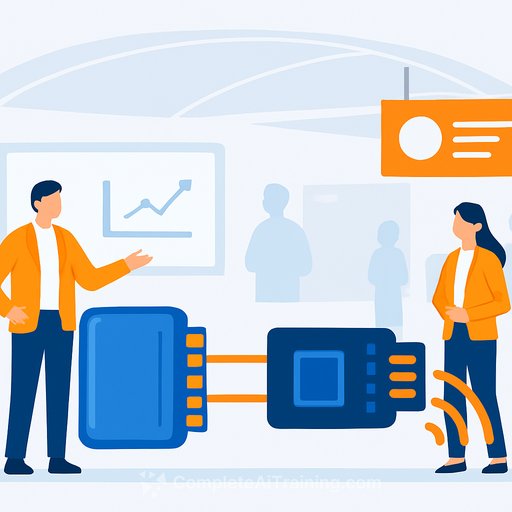
- An updated AirTag is rolling out, likely with improvements to radio performance, anti-stalking features, and Find My integration.
- Apple is exploring a clamshell follow-up to its upcoming foldable phone-an iteration path that suggests they're serious about new device categories, not one-offs.
Read these as signals: Apple is aligning devices, OS versions, and AI services on a tighter cadence. That's not just a feature roadmap. It's an operating model.
The AI reckoning: what it means in product terms
Two-tier assistants are becoming standard. A lightweight, private, on-device model handles quick tasks. A heavier cloud model steps in for reasoning, planning, and multistep actions. Users shouldn't need to think about the switch-it should feel seamless.
This pattern creates real product constraints. You'll juggle capability differences, privacy promises, battery/thermal limits, and latency. But if you get it right, you deliver trust and speed without neutering the experience.
Five lessons product teams can apply now
- Set a clear assistant charter. Define the 10 tasks your assistant should handle end-to-end this year. Be ruthless. Shallow breadth loses to deep competence.
- Adopt a hybrid AI stack. On-device for fast, private operations; cloud for complex reasoning and tool use. Design graceful fallbacks and explain the handoff to the user in plain language.
- Decouple releases. Ship AI capabilities and datasets on a service cadence, not tied to OS majors. Reserve OS minors (like 26.3) for performance enablers, APIs, and model runtimes.
- Make privacy a feature, not a footnote. Offer local processing by default for sensitive tasks. Allow opt-in for cloud enhancements with transparent controls and receipts.
- Evaluate like you mean it. Don't ship on vibes. Use task-level evals, red teaming, and regression suites. Track containment (tasks solved without human override) as a primary KPI.
A practical architecture that actually ships
- Intent router: Classify requests and decide on-device vs. cloud.
- Context builder: Structured retrieval from calendar, messages, files, and app state. Keep a rolling, user-visible memory.
- Tooling layer: Deterministic actions via APIs for mail, notes, home, payments, and third-party apps. Use schemas and strong auth.
- Policy and safety: PII masking, rate limits, data retention rules, and enterprise controls. Log decisions for audit.
- Eval and telemetry: Task success rate, time-to-first-token, hallucination flags, handoff frequency, battery/thermal impact.
Keep the model swappable. You will change providers, versions, or quantization strategies. Don't bake your app logic into prompts. Treat prompts like code: version them, test them, and roll back when needed.
Release strategy: how Apple's signals translate to your roadmap
- OS cycles for enablement: Use minor updates to ship model runtimes, privacy controls, and APIs developers can target.
- Service cycles for capability: Push model upgrades, new tools, and memory improvements without waiting for OS updates.
- Hardware cycles for differentiation: Lean on NPUs, UWB, and sensor fusion to deliver features competitors can't match via software alone.
Metrics that move the needle
- Task success rate (TSR): Percentage of tasks completed as intended, measured against a labeled test set and live shadow evals.
- Containment rate: Sessions resolved without human correction or app switching.
- Latency profile: Time-to-first-token and time-to-action, especially on-device.
- Hallucination index: Frequency and severity of unsupported claims, scored on your domain-specific evals.
- Energy cost per task: Battery/thermal impact by model path.
- Equity checks: Performance parity across languages, accents, and accessibility modes.
30/60/90-day plan for product leaders
- Days 0-30: Pick 3 assistant use cases with clear success criteria. Stand up an intent router, minimal context builder, and two model paths (local + cloud). Start a daily eval ritual.
- Days 31-60: Add tool use for one core workflow. Ship privacy controls and user-visible memory. Run a closed beta with red team prompts and targeted edge cases.
- Days 61-90: Lock metrics gates (TSR, containment, latency). Finalize roll-out strategy with feature flags and staged cohorts. Prepare a post-ship regression plan.
What the device hints tell us
- MacBook Pro on 26.3: Expect model runtime updates and NPU utilization improvements tied to OS minors. Plan your own service updates to land near these cycles.
- Updated AirTag: Better radio, better safety. For your roadmap: invest in spatial context and presence as primitives-useful for automation, security, and handoff logic.
- Foldable clamshell exploration: New form factors create new inputs and states. Design assistant behaviors that adapt to posture (open/closed/half-open) without user friction.
Risks to manage
- Model dependency: If you lean on a partner model, build a fallback and a plan B. Abstract now or pay later.
- Privacy and policy: Different regions, different rules. Ship with data minimization and clear audits from day one.
- Thermals and battery: On-device is great until it isn't. Budget per-task energy and back off proactively.
For further reading and upskilling
- NIST AI Risk Management Framework - practical guidance for governance and shipping responsibly.
- Apple Machine Learning Research - insights into on-device techniques, privacy-preserving methods, and system design.
- AI courses by job role - find focused tracks for product managers, engineers, and design leads.
- Certification: AI automation - structure your team's core skills and evaluation habits.
- AI Learning Path for Project Managers - a focused curriculum for product leadership, roadmap delivery, and release planning.
Bottom line: the market rewarded Apple's hardware machine. The next win will come from assistants that truly get work done. Set the bar, ship on a service cadence, and let the metrics decide what survives. The quarter bought time-use it to build the AI layer your users will actually rely on.
Your membership also unlocks: