Hollywood Assistants Grapple With AI Tools-and the Risks of Relying Too Heavily on Them
Assistants across Hollywood are using AI to draft emails, summarize scripts, and manage sensitive client information. The technology is spreading through the industry as budgets shrink and workloads expand. But veterans warn the approach carries real costs: missed emotional nuance in storytelling, security vulnerabilities, and the erosion of judgment that comes from hands-on work.
Stephen Galloway, dean of Chapman University's Dodge College of Film and Media Arts and a former script reader, put it plainly: "While AI is a useful tool, it should be used in conjunction with human expertise, not as a replacement."
Where the friction lies
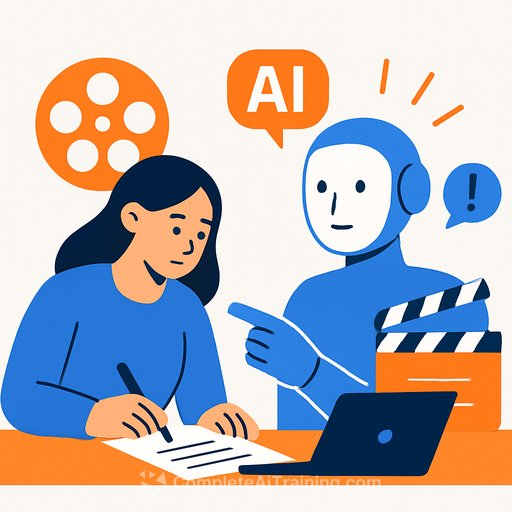
Gen Z assistants, accustomed to AI tools in their personal lives, are adopting them at work without formal training or institutional guidance. They're using AI to generate script coverage summaries-condensing unpublished work into digestible briefs for executives. The efficiency gains are real. The problem is subtler.
AI can miss what makes a story stick. It can flag plot mechanics but not the emotional truth that separates memorable work from forgettable material. A script's originality, its voice, its unexpected moments-these are exactly what algorithms struggle with.
Job security adds another layer of anxiety. As studios cut costs and headcount, assistants worry that the very tools meant to help them could accelerate their own obsolescence.
What's actually at stake
The risks extend beyond individual careers. Script coverage has long been a training ground where junior staff develop taste and critical thinking. If that work gets outsourced to AI, the industry loses a pipeline for developing future executives and producers who understand storytelling.
There's also the matter of what gets fed into these systems. Unpublished scripts, deal terms, client schedules-these are confidential materials. Feeding them to third-party AI services creates exposure that studios may not fully understand.
Learn more about AI for Creatives and how to use these tools effectively in your workflow.
The path forward
The industry hasn't settled on clear guidelines. Studios continue to monitor the impact, but formal policies remain sparse. What's becoming clear is that the question isn't whether to use AI-it's how to use it without surrendering the judgment and human insight that drive creative work.
For assistants, that means understanding not just how to prompt an AI tool, but when to ignore its output entirely.
Your membership also unlocks: