
AI news ·
Hollywood's secret AI talks go public with framework for human-controlled workflows
Hollywood's AI working group released its first public framework after three years of talks, proposing a three-tier classification separating artist-controlled "Human Generative Workflows" from machine-only output.
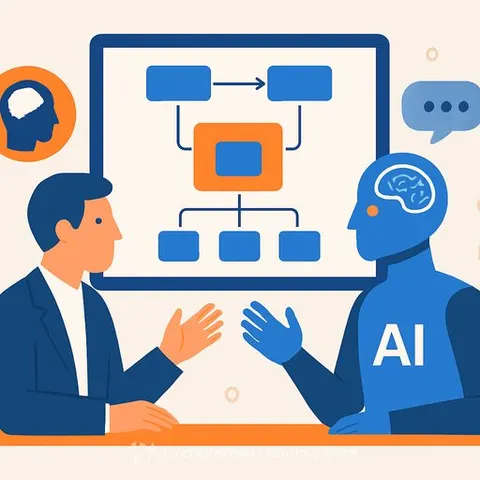
After more than three years of private, off-the-record meetings, a working group of Oscar-winning filmmakers, actors, studio executives, and Silicon Valley technologists has released its first public framework for how Hollywood should approach artificial intelligence. The group's central argument: the industry must stop treating all AI use as the same thing.
The conversations began in November 2023, organized by producer Kathleen Kennedy and Susan Ruskin, dean of the American Film Institute. They grew out of a recognition that Hollywood's AI debate had become paralyzed by a single word being used to describe everything from noise reduction tools inside editing software to machine-generated performances that replace actors entirely. The group's newly published framework, called "Human Generative Workflows" (HGW), proposes a classification system that separates these uses - and argues that artist-controlled, iterative workflows with generative models are copyrightable in a way that pure machine output is not.
Three categories for AI use
The proposed system sorts AI use in production into three categories. First, utility techniques and embedded AI, which include denoising, upscaling, rotoscoping, and audio separation - tools already inside standard post-production software. The group describes these as copyrightable and routinely used but rarely flagged as AI.
Second, Human Generative Workflows are artist-controlled pipelines that integrate specialized generative models inside professional tools like Nuke, Unreal, After Effects, and DaVinci Resolve. The group frames these as primarily human-authored: the artist defines parameters, provides inputs, evaluates outputs, and iterates. These, it argues, should be copyrightable.
Third, machine generative use - purely prompt-based generation that replaces human creative work - "likely not copyrightable" under current law. The distinction, the document argues, is not a technicality; it is the difference between tools that serve human creative vision and tools that replace it.
From secret rooms to public conversation
The group's meetings, held at artist Refik Anadol's Los Angeles studio and later at the AFI campus, were designed to build a shared vocabulary where none existed. "We are dealing with a Tower of Babel," one participant said. "Nobody can talk about AI because the word carries too much meaning, too much ambiguity, way too much fear."
The framework establishes this vocabulary in production:
- Connie He's animated short Dear Upstairs Neighbors, made by roughly 45 artists, is held up as an example of HGW done right.
- The team hand-painted concept art, fine-tuned custom models on their own artwork, then painted over and retrained when results didn't match their intent.
- While no frame was hand-drawn, the group says every frame was human-authored - the human hand visible at every step.
Kennedy and Anadol made waves at MoMA and other institutions, connecting AI to creativity at the intersection of human and machine. Their sessions were an effort to discuss AI understanding in ways the broader industry - still treating generative AI primarily as a threat - was not yet ready.
Why the distinction matters
The distinction matters most for copyright and for the contracts that follow, and one of the working group's core arguments is that the industry can't negotiate these distinctions until it can articulate what they are.
The U.S. Copyright Office supports the group's framework's key points, saying copyright extends only to human-authored expression, not the AI-generated material itself, and that prompts alone do not provide sufficient control. "Human-authored expression that remains perceptible in an AI-assisted output may be protected by copyright, as may sufficiently original human modifications or the human selection, coordination, and arrangement," as the working group noted in its published document.
The market is already moving without waiting for standards. A24's 2024 Heretic ended with "No generative AI was used in the making of this film," and Vince Gilligan's 2025 Pluribus closed with "This show was made by humans." Yet the standard tool usage of generative automation within productions - the embedded category the group describes - remains massively under-label. Sales companies and rights groups have started pressing for industry-wide certification standards, and the working group is trying to unify them.
Workflow accountability
For working creatives, the stakes are precise in the way, and closer to home, than "AI taking your job." The working group's classification system matters for contracts, for credits, for copyright protection, and for negotiating things like rights and residual structures with employers and technology partners. If you work in film and television, the term "AI" has been working against you: it conflated a color-grading assist in one category of work with a synthetic performance in another, and that conflation has made it difficult to build trust or liability into agreements.
The working group's "Human Generative Workflows" is, at core, a proposal for accountability. An artist involved in early meetings said HGW is "an evolution and extension of animation and CGI - requiring the same craft, precision, and skill as any other tools for filmmaking and storytelling in general."
Whether that framing holds up may come down to what goes into your contract at the bottom - not the label above it. If you're a creative professional and an employee who's been asked to disclose whether you used AI, the first reasonable question to ask is which category of use the person asking means. The group's answer is not so twisted as to be a universal standard yet - but it's the best one on the table.
The working group's broader point: HGW "is not a tool for replacing writers and actors, automating performances, or generating story without a human author," when AI is used that way, it is what the document calls Machine Generative, and the copyright and credit questions shift entirely.
"The way forward must involve collaboration, and the value of the- human in the AI Age will be essential," one working-group member. A shared, published framework is the starting place - separating the work of artmakers that use AI tools from the sloppy prompts that are rightfully called slop.
This article drew from a draft framework published by the AI working group on August 20, 2026, and was verified against the original public-release document.
Why this matters for creatives
For those working in illustration, animation, or editing daily, the distinctly practical outcome is enforceable, in-contract language about how your work product is (or isn't) corporate data. "Human Generative Workflows" is publicly available terminology for what you do when you hand-draw keyframes that, with AI assistance, form the basis for final video footage - versus when a studio simply machine-generates anything from a prompt and doesn't hire you at all.
To carve out authorship and keep your credit, you'll need to describe your process in the contract terms now. The category, in other words, isn't just a motivated by sentimentality; it's a legal fixer, one that the copyright office has already begun acting on.