Hotels Face Margin Squeeze as Room Rate Growth Stalls
Hotel operators are caught between rising labor, energy, insurance and food costs while room rate growth has plateaued. The result: profit margins compressed from both sides.
Many hoteliers respond by cutting costs aggressively or chasing blind revenue growth. Both approaches backfire. Slashing amenities and staff erodes the guest experience and damages the brand. Chasing revenue without discipline burns acquisition dollars faster than it generates profit.
The better path combines strategic cost allocation with AI-driven commercial technology. This approach protects profitability without sacrificing service quality.
Five Strategies to Protect Profit Margins
1. Reduce Operating Costs Without Cutting Service
Energy management. IoT-powered systems adjust heating, cooling and lighting based on actual room occupancy. Hotels can cut utility spending by up to 20% without affecting guest experience.
Staff flexibility. Cross-training front desk and food and beverage staff to float between departments during peak periods reduces reliance on expensive agency labor and stabilizes payroll.
AI-powered guest service. Generative AI integrated with your property management system handles routine inquiries-Wi-Fi passwords, breakfast hours, room service questions-across multiple channels. Front desk staff focus on high-value interactions instead of queues of routine requests.
Predictive maintenance. Building management systems detect when equipment like HVAC units or plumbing is degrading before failure. Maintenance happens during low-occupancy periods, eliminating expensive emergency repairs and weekend labor premiums.
Housekeeping routing. AI-optimized systems route cleaning staff based on real-time check-out data and guest priority status. Rooms turn faster. Labor is deployed where it has the highest impact on guest satisfaction.
2. Capture Revenue Through AI Visibility
Most hotel commercial teams have data but lack time to analyze and act on it. Traditional tools show problems but leave execution to already overstretched staff. By the time an insight surfaces, the revenue opportunity has passed.
Agentic AI works differently. It scans billions of data points daily, identifies pricing opportunities and demand spikes, and executes pricing and distribution decisions within guardrails you set. The system acts autonomously-recommending and executing tasks across pricing, distribution and marketing in real time.
This shifts your tech stack from decision support to active execution. Commercial teams focus on strategy while the AI handles the work.
3. Price Dynamically Instead of Adding Hidden Fees
Guest surveys identify hidden fees as a primary driver of negative sentiment. Passing rising costs to guests through surcharges weakens brand loyalty and damages perception.
Instead, use dynamic pricing tied to market demand. Adjust room rates based on forward-looking demand signals, competitor pricing and AI-powered recommendations. This captures maximum revenue without the friction of junk fees.
You remain competitively priced against comparable hotels while protecting your bottom line. Guests see transparent pricing instead of surprise charges.
4. Grow Revenue Beyond Room Rates
Ancillary services-early check-in, premium Wi-Fi, spa treatments, local experiences-carry high margins and are often overlooked as a revenue source.
Generic pre-arrival offers convert poorly. Personalized offers work better. Send targeted upsells at the moment of highest intent-during the booking flow. If guest data shows interest in wellness, trigger a pre-arrival offer for an in-room yoga kit.
Research shows 60% of guests willingly pay more for amenities tailored to them. These feel like enhancements, not sales pitches. The result: higher Total Revenue Per Available Room and improved guest satisfaction.
Attribute-based selling unbundles rooms further. Instead of selling a Deluxe Room, guests select a base room and add specific features-high floor, ocean view, proximity to elevator-as separate line items. Hotels can increase average daily rate by up to 12% this way. Guests get transparency. Hotels capture the maximum value of their assets.
5. Unify Your Tech Stack
Commercial teams fight on multiple fronts: shortened booking windows, internal data silos hiding profit leaks, unauthorized OTA channels bleeding revenue through rate parity violations, and high guest acquisition costs wasted on websites that fail to convert.
A unified platform synchronizes external market signals with internal performance data, distribution health and on-site personalization. Demand is visualized 365 days ahead. Pricing is optimized and parity-protected. The guest journey is weighted toward high-margin channels. Revenue performance is benchmarked continuously.
This consolidation turns market volatility into a more predictable revenue stream. Every acquisition dollar is optimized. Every booking is steered toward the highest-margin channel. Revenue growth translates directly to bottom-line profit.
The Real Tradeoff Isn't Cost Versus Revenue
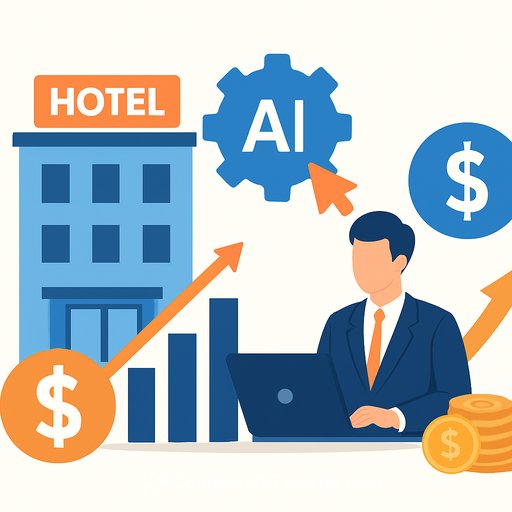
The choice between cutting costs and growing revenue is a false one. The most resilient operators pull both levers simultaneously-reducing waste through smarter operations while investing in AI tools that actively generate revenue.
In a high-inflation, unpredictable environment, a high-performance tech stack powered by AI acts as a buffer for gross operating profit. The return on investment is immediate: rising overhead is offset by new revenue sources and thousands of hours reclaimed from manual work.
This agility lets you capture market share while competitors erode brand value through blunt-force cost-cutting.
Learn more about AI for Hospitality & Events and how Generative AI and LLM applications can support your commercial strategy.
Your membership also unlocks: