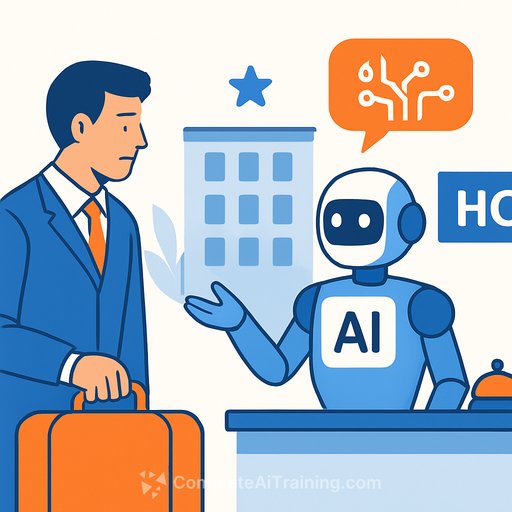
Hotels Are Replacing Concierges With AI. Here's What Gets Lost.
Hilton Worldwide, Marriott International, and Hyatt Hotels Corporation are investing heavily in artificial intelligence to automate hotel operations. Check-ins happen via smartphone. Chatbots answer questions instantly. Room temperatures adjust before guests arrive. The result is operational efficiency. But efficiency alone does not create the moments that define hospitality.
For hospitality professionals, the shift carries immediate consequences. Automation reduces demand for front desk agents, concierges, and call center staff. For those entering the industry, career paths are becoming less certain. The question is not whether jobs will change-it is whether enough will remain.
What Human Service Actually Requires
A front desk agent notices a guest arriving exhausted and offers early check-in without being asked. A concierge recommends a neighborhood café because it matches the guest's personality, not because it ranks highest online. A housekeeper sees a guest reading a particular book and later leaves a handwritten note suggesting a local bookstore.
These gestures require observation, intuition, and emotional intelligence. They also require time-something automation is steadily reducing. A machine can identify that a guest is celebrating an anniversary. It cannot decide how to make that moment meaningful.
The Cost of Removing Friction
Large hotel groups frame technology as a tool for empowerment. Staff freed from repetitive tasks can focus on meaningful interactions. In some cases, this is true. In others, automation simply removes the role entirely.
A perfectly efficient stay can feel empty to guests. No waiting. No interruptions. No human presence. The trade-off between speed and connection is becoming visible to travelers who notice the difference.
Where Independent Hotels Have an Edge
Smaller, independent hotels cannot match the digital ecosystems of global brands. They lack the data, scale, and resources. But they offer something increasingly rare: genuine recognition.
A guest might be greeted by name because the owner remembers them. A recommendation comes from lived experience, not algorithmic ranking. A mistake is handled with accountability, not a scripted response. These moments are imperfect and unpredictable. That is precisely why they matter.
The Real Question for Your Career
The future of hospitality will not be fully automated or purely human. It will be defined by how well the two are combined. For large brands, the challenge is ensuring technology enhances emotional service rather than replacing it. For independent operators, the challenge is adopting enough technology to stay competitive without losing authenticity.
Travelers are not all looking for the same thing. Some prefer speed and consistency. Others seek connection and character. Your role-whether at a large property or independent hotel-will depend on which guests you serve and how your employer chooses to use the tools available.
For professionals working in hospitality, staying relevant means understanding both sides of this shift: how to use technology effectively, and why the human elements it cannot replicate still matter to the guests who will remember them.
Learn more about AI applications in hospitality and events, or explore AI for customer support to understand how automation is changing service delivery across industries.
Your membership also unlocks: