Digital governance and AI move to the center of legislative reporting in Nigeria
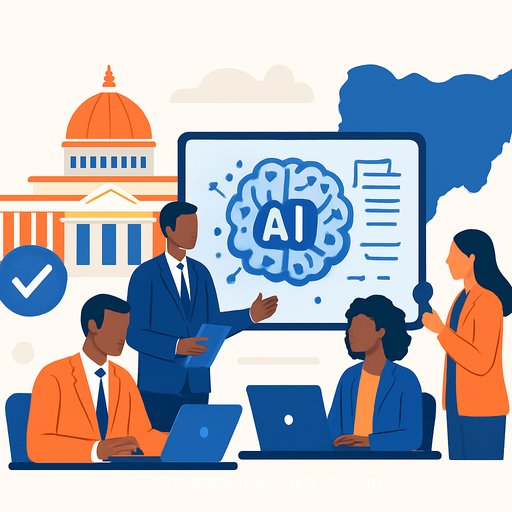
At a one-day retreat in Abuja, House Spokesman Akintunde Rotimi put it plainly: digital governance, data protection, cybersecurity, artificial intelligence, and digital rights now sit at the core of democracy and accountability in Nigeria.
For PR and communications teams around Parliament, this isn't a trend piece. It's a mandate. Your work now directly affects how citizens trust institutions and understand policy.
Why this matters for PR and communications
Legislative reporters and parliamentary media teams carry the burden of translating complex digital issues into clear, accurate, and timely public information. That translation shapes civic participation and institutional credibility.
Rotimi's vision for the Tenth Assembly is "The People's House"-trusted, responsive, and results-driven. That requires disciplined communication: factual, accessible, and audience-first.
What the retreat underscored
- Digital topics are no longer niche. They're central to rights, markets, and public trust.
- Coverage of digital bills demands context, technical literacy, and balance-guesswork won't cut it.
- The committee's values: transparency (accuracy and clarity), engagement (collaboration between journalists and parliamentary communicators), and accessibility (processes citizens can follow).
- Sessions focused on digital rights, the state of digital freedoms, legislative interpretation, and hands-on simulations.
- Paradigm Initiative supported the program; participants were urged to treat this as applied training, not theory.
Practical playbook for comms teams
- Stand up a policy desk: pair a policy lead with a tech/privacy analyst and a legal reviewer for digital bills and hearings.
- Publish faster with accuracy: create explainer templates (What changed, Why it matters, Who's affected, Timeline, How to engage) and a 30-minute fact-check cycle.
- Adopt a shared glossary for AI, data protection, encryption, and content moderation. Keep it public and searchable.
- Build an AI use policy for your newsroom: disclosure on AI-assisted outputs, audit trails for prompts/edits, and human accountability on final copy. See the OECD AI Principles for baseline guardrails.
- Anchor privacy work to law: align briefings and messaging with the Nigeria Data Protection Act and guidance from the regulator.
- Make accessibility non-negotiable: plain language summaries, simple visuals, alt text, and short audio recaps for key updates.
- Prepare for speed mismatch: information moves faster than legislation. Pre-draft Q&A cards for high-interest bills so you can respond within minutes, not hours.
- Run misinformation drills: define triggers, spokesperson tiers, and update cadence. Measure time-to-clarity and correction reach, not just impressions.
- Track trust signals: readability scores, source citations, correction transparency, and public feedback loops. Report them monthly.
- Upskill continuously: short, focused AI and data-literacy sprints for press officers and spokespeople. For structured options, see AI courses by job.
Voices from the room
Rotimi emphasized that communications must match the complexity of digital policy without losing clarity. The expectation is practical: timely, factual, and useful to citizens.
Press Corps Chairman Gboyega Onadiran noted that information often outruns policy. His call to action: go beyond reporting proceedings-make Parliament's work understandable, credible, and relevant.
What to watch next
More digital-focused bills are coming. Expect higher demand for context, verification, and plain-language explanations. Teams that build repeatable processes now will keep public confidence when debates heat up.
Event snapshot
Venue: National Assembly Library, Abuja. Host: House Committee on Media and Public Affairs, with support from Paradigm Initiative. Audience: House Press Corps and parliamentary media teams. Format: expert sessions, legislative interpretation, and practical simulations.
Your membership also unlocks: