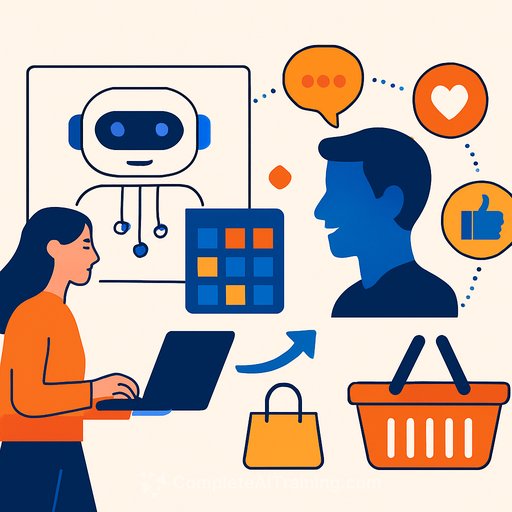
The Impact of Agentic AI on Marketing
The recent surge in artificial intelligence (AI) adoption has brought excitement and change, but we are still early in this AI era. As of July 2024, 78% of organizations use AI, with 71% employing generative AI in at least one function, according to McKinsey’s March 2025 State of AI report. Marketing and sales lead AI usage alongside IT, showing AI’s growing importance in business value creation.
However, a new wave of AI technology—agentic AI—is set to reshape marketing. This next-generation AI can operate independently, make decisions, and act without human intervention. Its arrival promises not just increased profitability but also a new level of personalized customer experience that many companies have struggled to achieve.
Why Personalization Has Been Elusive
True personalization requires more than rules-based systems or traditional machine learning. It demands a deep understanding of each customer’s unique needs and desires, which involves processing vast amounts of both structured and unstructured data. Agentic AI can analyze this data at scale, offering personalized recommendations that drive monetization throughout the customer journey.
For marketers, agentic AI brings a holistic perspective on customer behavior, including buying patterns and preferences. This allows businesses to anticipate what customers want—and don’t want—more accurately, improving engagement and sales over the next two years for those who prepare accordingly.
Vectors: The Backbone of Agentic AI
If you haven’t encountered the term “vectors” in AI yet, it’s time to get familiar. Vectors are numerical representations that summarize unstructured data, such as product descriptions, customer reviews, social media posts, and even audio from customer calls. These vectors are stored in specialized databases called vector stores.
For example, a car manufacturer might collect vectors from various data sources to create a comprehensive profile of their customers. Agentic AI uses these vectors to understand context—like identifying a customer with young children looking for a “great family car”—and then quickly suggest suitable options such as sedans, SUVs, or minivans rather than two-seater models.
Beyond customer queries, agentic AI can analyze complex datasets and uncover insights previously too detailed or time-consuming to extract. This might include identifying opportunities to upgrade an insurance customer’s policy cost-effectively or alerting retail customers to current sales based on recent pricing trends.
The Role of Vector Stores
Vector stores are multi-dimensional databases that not only store vectors but also track relationships between them over time. They are essential for scaling AI solutions to tackle complex, large-scale problems. As AI usage grows, the speed and accuracy of these vector stores become critical.
When selecting vector store technology, consider these key questions:
- Which AI agents will benefit your marketing and business the most? Identifying the right AI applications, such as virtual assistants for customer service, can enhance strategies and customer experiences.
- What context should your agentic AI understand? This includes user preferences, behavior, demographics, and interaction history, as well as ensuring the AI’s output is relevant, accurate, and clear.
- Is the vector store integrated with your existing databases? Separate vector stores may be faster but can limit scalability and increase costs due to managing multiple vendors.
- How quickly do you need results? For real-time or near-real-time responses, choose solutions that integrate vector stores with unstructured data to reduce search times.
Preparing for the Next Phase
Agentic AI is poised to significantly affect marketing within the next two years. The foundation of this impact lies in choosing the right vector store and AI infrastructure. Prioritizing scalable, fast, and user-friendly vector store solutions will help organizations unlock the full potential of agentic AI and stay ahead of future AI advances.
For marketers interested in deepening their AI expertise and preparing for these changes, exploring structured AI education can be valuable. Resources like Complete AI Training’s latest courses offer practical guidance on AI tools and technologies relevant to marketing professionals.
Your membership also unlocks: