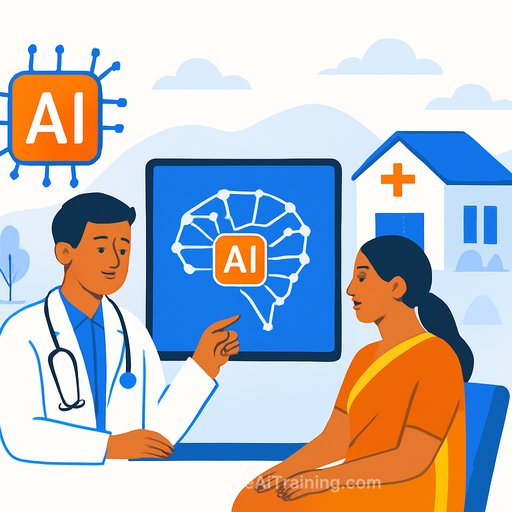
AI in Small Clinics: Quiet Wins That Save Lives
It's late evening in a small Indian town. The main hospital is shut for the day. A middle-aged man walks into a clinic with chest discomfort. The closest cardiologist is 70 kilometres away.
The clinic runs an ECG and plugs it into an AI tool. Within minutes, the system flags a high-risk event. The patient is stabilised, transport is arranged, and a near miss becomes a save. It looks like a small incident - but moments like this are changing care across India's interiors.
The Backbone: Healthcare SMEs
Healthcare in India isn't built only on big, urban hospitals. It's the clinics, diagnostics labs, telemedicine startups, and community health centres that carry most of the day-to-day load - especially in underserved areas.
These SMEs deliver close to 80% of outpatient care and anchor diagnostics and pharmacy access. They're close to the community and move fast. They're also stretched: lean teams, tight budgets, and limited specialist access. That's where AI is starting to help in practical ways.
AI on the Ground - Less Hype, More Help
AI isn't replacing doctors. It's extending their reach - especially when time and specialists are scarce. Adoption is growing across tier-2 and tier-3 towns, not just corporate networks.
- Decision support: Assistive reads for X-rays, ECGs, and lab reports when a specialist isn't around.
- Risk stratification: Early flags for diabetes, cardiac risk, dengue, and other conditions that benefit from timely intervention.
- Virtual assistance: Basic patient queries, triage, and follow-ups handled by simple chat interfaces.
- Ops automation: Scheduling, reminders, and data entry running quietly in the background.
As one clinic owner outside Bengaluru put it: "AI doesn't replace what I do - it helps spot things I could miss when I'm stretched thin."
Trust, Validation, and Fit-for-India Tools
For clinicians, trust is earned through validation, not marketing. The Centre of Excellence for AI & IoT - set up by MeitY, states, and NASSCOM - helps startups and SMEs build, test, and refine AI with local data, clinical partnerships, and regulatory guidance. That's how tools become reliable at the point of care.
If you want to track policy and ecosystem updates, see the IndiaAI Mission and recent NASSCOM reports.
The Bigger Picture
For many patients, quality care still means long travel and long waits. Cloud-based AI tools change the math: a modest clinic can access decision support that used to live only in large hospitals.
It's not a magic fix. It's a margin of safety for overworked teams. Faster triage. Fewer misses. Better use of scarce specialist time.
The Hurdles Are Real
Adoption isn't universal. Only about 22% of healthcare SMEs have even started trying AI tools. Many aren't aware of what's available. Others worry about data privacy, unclear rules, or cost.
The IndiaAI Mission is pushing awareness, trials, simpler tooling, and SME support - alongside policies for safe, transparent use and health data platforms with strong privacy controls. Public-private partnerships are making tools more affordable.
What To Do Next: A Practical Checklist for SMEs
- Pick one high-impact use case to pilot (ECG triage, chest X-ray reads, dengue/malaria screening support, or no-show prediction).
- Run a 60-90 day trial with clear metrics: turnaround time, sensitivity/specificity vs. standard practice, referral rates, and staff time saved.
- Set clinical guardrails: AI is assistive. Define when to escalate, when to override, and how to document decisions.
- Protect data: consent at registration, minimal data use, encryption in transit and at rest, role-based access, and a clear retention policy.
- Vet vendors: evidence from Indian cohorts, on-site/off-site validation, uptime SLAs, audit logs, and explainability options.
- Integrate workflows: embed into existing EMR/LIS/PACS where possible; avoid apps that force staff to juggle screens.
- Train the team: 1-hour practical sessions beat thick manuals. Teach failure modes, double-checks, and escalation paths.
- Plan for downtime: define manual fallback, data export, and referral playbooks.
- Communicate with patients: simple, honest explanations of how AI assists their care and how their data is protected.
- Start small, scale carefully: move from one site/use case to many only after you've proven value and reliability.
Where This Helps Most
- Primary care clinics needing quick triage and risk flags.
- Diagnostics centers dealing with high volumes and variable specialist access.
- Telemedicine networks coordinating referrals and follow-ups across distances.
- Community health programs running screenings under resource constraints.
Closing Thoughts
India's healthcare system is complex, and progress is built on small, steady improvements. Put capable tools in the hands of clinicians who serve the most people, and outcomes shift.
SMEs don't need flashy tech. They need dependable help: faster triage, earlier alerts, fewer misses, and lighter admin. AI - used responsibly - is already doing that.
Helpful Resources
- IndiaAI Mission for policy and program updates
- NASSCOM publications for adoption insights and sector reports
Your membership also unlocks: