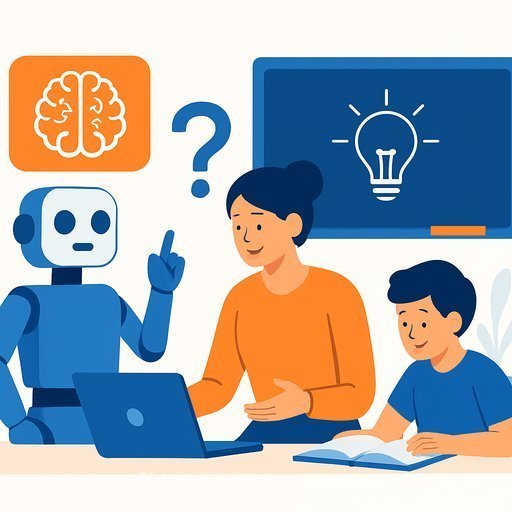
The Future of Learning in Sri Lanka: How AI Is Changing Education
AI has moved from buzzword to practical tool across Sri Lanka's classrooms, staff rooms, and university offices. Used well, it improves teaching time, closes learning gaps, and connects education to real jobs. Used poorly, it deepens inequity. The work now is clear: build capacity, set guardrails, and roll out what helps students learn.
Personalised Learning That Fits Sri Lanka's Diversity
Students learn in Sinhala, Tamil, and English, across urban and rural settings, with very different access to resources. Adaptive platforms can adjust difficulty, pace, and content, so each learner progresses without getting stuck or bored. For rural schools, this can reduce reliance on expensive tuition and provide consistent practice outside class.
Practical steps: start with adaptive quizzes in core subjects, enable offline access where possible, and use bilingual content with teacher review - see the AI Learning Path for Primary School Teachers for classroom-aligned approaches. Set clear usage windows so AI supplements, not replaces, structured lessons.
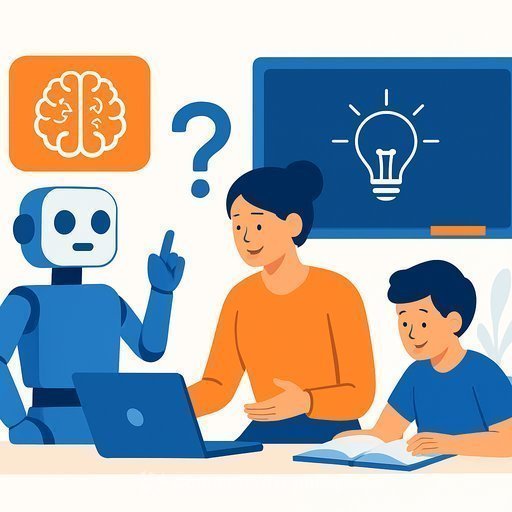
AI as a Teaching Assistant-Not a Replacement
Large classes and limited time make feedback hard. AI can handle objective grading, draft feedback, track attendance, and surface who needs help. That frees teachers for mentoring, discussion, and social-emotional support-the human work that truly moves learning forward.
Practical steps: pilot auto-grading for MCQs and short answers, use AI to generate varied practice items, and build prompt templates for lesson planning and remediation. Keep teacher oversight on all AI outputs.
Strengthening Online and Blended Learning
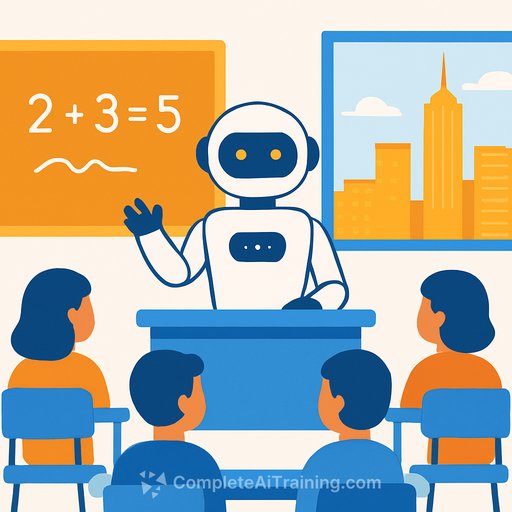
Online and blended models are here to stay in universities and vocational institutes. AI-enabled LMS features-content recommendations, early alerts for disengaged students, and interactive virtual classrooms-can keep quality consistent across cohorts and campuses.
Set minimum standards: low-bandwidth delivery, weekly touchpoints, clear grading rubrics, and early risk flags so advisors can intervene before students drop off.
Reducing Administrative Load
Scheduling exams, compiling reports, and producing analytics absorb staff time. AI can streamline timetables, automate routine reports, and highlight patterns that matter, especially in public institutions with staff shortages.
Connect tools to your SIS where feasible, and document every workflow change. If a process touches student data, run it through your data protection checklist first.
Data-Informed Decisions That Improve Outcomes
Move from gut feeling to evidence. Use AI to analyze performance trends, dropout risk, attendance patterns, and skill gaps. Then adjust curricula and support services accordingly, especially for high-demand fields like IT, Data Analysis, healthcare, and engineering.
Define a small set of KPIs-course completion, mastery growth, absenteeism-and review them monthly. Build simple dashboards and train staff to question the results, not just read them.
Preparing Students for Tomorrow's Jobs
Sri Lanka wants stronger participation in AI and knowledge services. That starts with AI literacy in schools and deep skills in universities-data analysis, prompt design, model limitations, and ethics.
- Primary: digital basics, safe use, simple pattern recognition.
- Secondary: data literacy, AI-assisted research, bias awareness, project work.
- Tertiary/TVET: data science foundations, automation workflows, AI ethics, domain projects tied to industry needs.
Key Challenges to Solve
- Digital divide: uneven access to devices and stable internet.
- Teacher training: ongoing, structured professional development.
- Ethics and privacy: clear policies for data protection and transparent use.
- Language and context: strong support for Sinhala and Tamil with local relevance.
A 12-Month Roadmap for Schools and Universities
- Form a cross-functional AI working group (academic, IT, legal, student reps).
- Pilot three use cases: adaptive practice in one subject, auto-grading for quizzes, early alerts for absenteeism.
- Adopt an AI use policy: purpose, acceptable use, human oversight, incident response.
- Stand up a basic data governance framework: consent, retention, access control, audit trails.
- Run monthly teacher PD: short sessions with live classroom examples and office hours.
- Prioritize Sinhala/Tamil support; require human review for machine translations.
- Set a connectivity plan: device-sharing schedules, offline-first apps, content caching.
- Create a procurement checklist: security, privacy, bias testing, language support, TCO.
- Track impact: time saved, feedback cycle speed, mastery gains, and attendance.
- Partner with industry and universities for projects, mentors, and internships.
Quick Wins You Can Launch This Term
- Auto-grade objective items to return same-day results.
- Early-warning flags for students with low activity or attendance dips.
- Generate lesson variants for mixed-ability groups; share as printable packets.
- Translate micro-lessons into Sinhala and Tamil with teacher edits.
- Create parent-friendly progress summaries in simple language.
Guardrails That Keep Trust
- Student data stays within approved systems; no uploading sensitive files to public tools.
- Human review on all high-stakes outputs (grading, placement, discipline).
- Document model limitations; avoid automated decisions without appeal.
- Age-appropriate use; stronger restrictions for younger learners.
For policy guidance and classroom use cases, see UNESCO's resources on AI in education here.
Upskill Your Staff Efficiently
If you're organizing PD or building a course map for educators, explore role-specific pathways and current programs on Complete AI Training: AI Learning Path for Training & Development Managers.
The Way Forward
Balanced adoption wins-pair smart tools with human judgment, local language support, and clear safeguards. With steady pilots, teacher development, and strong coordination between government, universities, and industry, AI can help Sri Lanka build a more equitable, higher-quality system. Keep it practical, measurable, and student-first.
Your membership also unlocks: