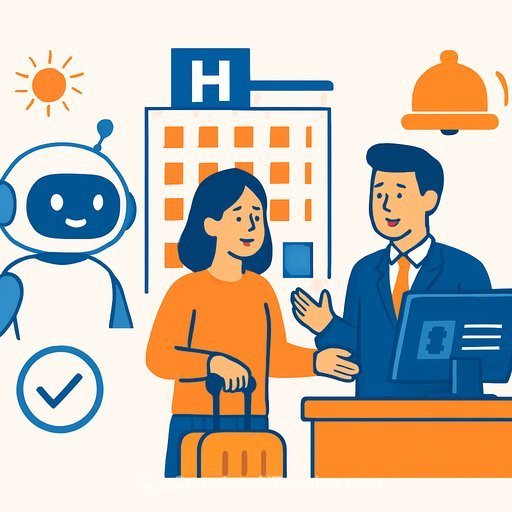
How Smart Hotels Are Using AI to Attract Corporate Clients
Corporate travel is won on speed, consistency, and trust. Smart hotels use AI, automation, and IoT to deliver those three without friction-across check-in, rooms, meetings, and service. The result: higher occupancy from business accounts, stronger loyalty, and better margins.
This isn't theory. It's practical hospitality built on data and operations discipline; learn more about AI for Operations.
What Corporate Travelers Actually Buy
- Fast Wi-Fi, quiet rooms, and work-ready spaces
- Frameless check-in/out and late flexibility
- Reliable service with quick resolution when something breaks
- Secure access and clear compliance standards
- Confident meeting and event execution
AI That Guests Feel: Personalization and Control
AI systems use past stays, preferences, and behavior to set the basics before arrival-room type, floor, pillow choice, even workspace layout. Guests land, open the app, and everything feels familiar.
Smart rooms adjust lighting, temperature, and noise by profile. Voice or app control keeps interruptions low, which matters when back-to-back calls start at 7 a.m.
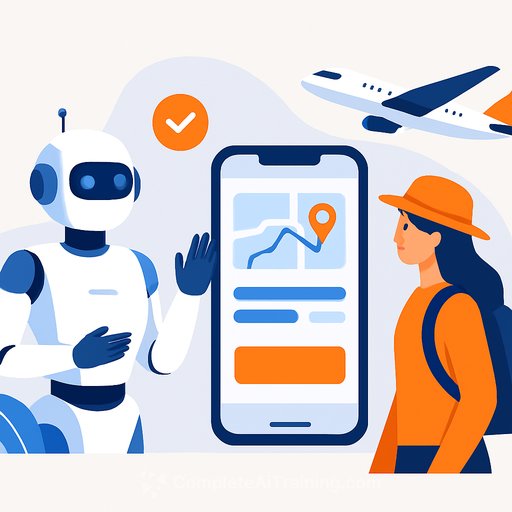
Virtual concierges handle meeting room bookings, transfers, and quick dining suggestions. Response times drop from minutes to seconds, and staff step in for higher-value requests.
Data-Driven Targeting for Corporate Accounts
AI-driven analytics makes your corporate strategy precise. No guesswork-just segments and offers that match behavior.
- Segmentation: Group by travel frequency, industry, spend, and amenity usage. Build rate plans and perks that speak to each segment.
- Behavioral insights: Track booking windows, room mix, late checkout demand, and meeting space usage to tune operations.
- Predictive demand: Forecast peak periods, citywide events, and contract utilization to optimize pricing, staffing, and inventory.
Operational Speed: Where AI Pays for Itself
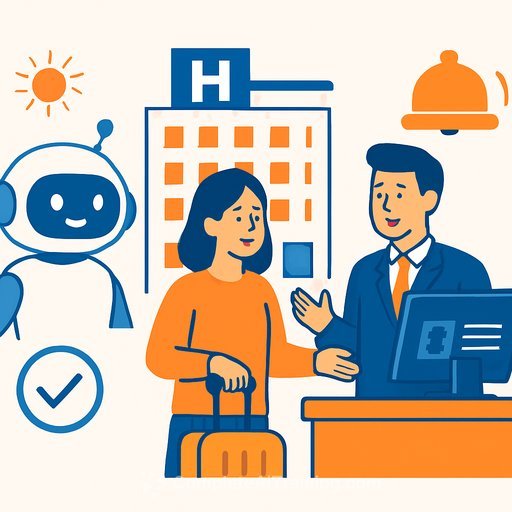
Mobile and kiosk check-in cuts lobby queues and fatigue after long flights. Digital keys reduce friction and shrink front-desk load.
Use forecasting tools - or follow the AI Learning Path for Production Planners - to predict occupancy, housekeeping needs, and amenity demand. You'll keep service consistent without overstaffing.
AI assistants resolve routine requests 24/7-extra towels, invoices, wake-up calls-while your team focuses on VIPs, issues, and group arrivals.
Security That Builds Trust
Biometric access (facial or fingerprint) tightens control and speeds entry. It also removes keycard headaches for large teams.
AI-enabled surveillance flags unusual behavior in real time and supports rapid response. Add external signals-weather, local events, protests-to keep guests informed and safe.
Meetings and Events: Higher Certainty, Less Chaos
MICE revenue grows when planning is fast and execution is predictable. AI helps allocate rooms, staff, and AV based on historical data and event profiles.
Menu, layout, and tech setups can be recommended and priced automatically. Chatbots keep organizers updated on changes without email back-and-forth.
For procurement, inventory, and event logistics, consider the AI Learning Path for Supply Chain Analysts.
What Leading Brands Are Doing
- Marriott: AI assistants and machine learning personalize stays and streamline bookings-driving repeat business from corporate travelers.
- Hilton: Dynamic pricing models align rates with real demand patterns and pair well with smart room features during peak business periods.
- Hyatt: AI-supported event planning speeds proposals and custom setups, improving win rates in the MICE segment.
Implementation Playbook (Start Here)
- 1) Data foundation: Clean guest profiles, standardize PMS/CRM fields, and connect stay data with folio and feedback.
- 2) Quick wins: Roll out mobile check-in, digital keys, and a trained chatbot for FAQs and simple requests.
- 3) Corporate segmentation: Build 4-6 segments by industry, frequency, and spend. Set rates, perks, and SLA targets for each.
- 4) MICE engine: Use AI to generate proposals, layouts, and staffing plans from event briefs. Shorten quote-to-close cycles.
- 5) Security and compliance: Define data retention, biometric consent, and audit trails. Train staff on escalation paths.
- 6) Continuous tuning: Review weekly metrics and retrain models on new stays, seasons, and feedback.
Metrics That Matter to Corporate Buyers
- Average check-in time and first-response time (chat/requests)
- Wi-Fi uptime and average room issue resolution time
- Corporate RevPAR, length of stay, and repeat booking rate
- Event quote-to-close rate and on-time event start percentage
- NPS/CES for business travelers and organizers
Future Moves You Should Be Planning
- Deeper personalization: Profiles that travel across properties for consistent experiences.
- Energy and ESG: AI-driven energy management cuts cost and supports corporate sustainability goals.
- Predictive maintenance: Fix issues before guests notice, protect ratings, and avoid room downtime.
- Privacy-first AI: Clear consent flows, data minimization, and auditability build corporate trust.
- Interoperability: Smooth integrations across PMS, CRS, CRM, and event platforms to reduce manual work.
Bottom Line
AI gives smart hotels a clear edge for corporate travel: faster service, reliable operations, safer stays, and events that run on time. Build the data layer, ship quick wins, and keep refining based on metrics.
Do that, and your property becomes the default choice for business travel managers and event planners.
Want to upskill your team on practical AI for hospitality? Explore focused programs at Complete AI Training.
Your membership also unlocks: