Financial AI is Discriminating and Exploiting Consumers, Warns Advocacy Group
Artificial intelligence (AI) is increasingly shaping decisions in credit, insurance, and financial services—often behind the scenes and without consumers fully aware. Finance Watch, a Brussels-based advocacy group, highlights serious risks tied to AI in finance, calling for tighter oversight, stronger data protections, and enforceable human accountability to prevent discrimination and exclusion.
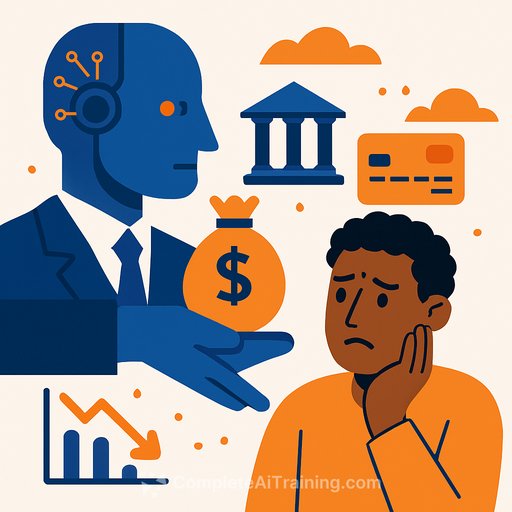
Decisions about who gets a loan, how much insurance costs, or whether a bank account is approved are frequently delegated to AI systems. Yet, many consumers don’t know AI is involved, let alone understand what data drives these outcomes or how to challenge them.
Widespread Use of AI in Retail Finance
AI adoption is growing rapidly across retail financial services. It’s used in credit assessments, insurance pricing, investment advice, and customer onboarding. According to the European Insurance and Occupational Pensions Authority, half of non-life insurers and nearly a quarter of life insurers in the EU already rely on AI. Key applications include customer due diligence, creditworthiness checks, insurance risk pricing, and robo-advisory services.
While AI can boost efficiency and speed up services, these gains come with significant risks if left unregulated. AI can lead to exclusion, mis-selling, and discrimination without proper safeguards or clear liability frameworks.
Benefits and Risks of AI in Finance
Proper regulation could unlock benefits such as faster onboarding, 24/7 chatbot assistance, and better alignment of financial products with consumer needs. However, without adequate guardrails, risks escalate. Finance Watch’s recent report identifies five major dangers:
- Financial exclusion
- Mis-selling
- Price optimisation that exploits consumers’ willingness to pay
- Unfair denial of insurance claims
- Opaque AI outputs that make redress almost impossible
These issues aren’t theoretical—they are already affecting consumers. AI controls who gets loans, determines insurance costs, and can restrict access to bank accounts, often without proper transparency or safeguards.
Transparency and Consumer Awareness
Current sectoral rules often fall short on requiring full disclosure. Consumers rarely know AI is involved in key financial decisions or understand the data used. Even when transparency is mandated, it typically doesn’t equip consumers with meaningful ways to challenge or appeal decisions.
Regulatory Gaps in the EU
Most existing financial regulations, like Mifid II and the Insurance Distribution Directive (IDD), predate widespread AI use and don’t fully address its specific risks. The EU’s AI Act categorizes only a limited set of AI applications as “high-risk,” leaving many financial AI uses unregulated. This patchwork approach creates dangerous loopholes.
Finance Watch recommends expanding the high-risk category in the AI Act to cover all retail financial AI systems, including investment advice, KYC processes, and general insurance—not just credit scoring and life or health insurance.
Essential Safeguards for AI in Finance
Protecting consumers requires:
- Human oversight of AI decisions
- Clear rules on permissible data use
- The right for consumers to request human review
- Banning exploitative price optimisation
- Preventing AI-driven exclusion from essential financial services
Accountability and Liability
Financial firms deploying AI must be held accountable. But with AI’s complexity and opacity, placing the burden of proof on consumers is unrealistic. The report calls for an EU-wide liability regime that reverses this burden, making it easier for harmed consumers to seek redress. Previous efforts like the AI Liability Directive were withdrawn, leaving a critical gap.
Urgent Regulatory Priorities
To ensure AI serves the public interest in finance, three key steps are vital:
- Classify all retail financial AI systems as high-risk under the AI Act
- Update sectoral laws like Mifid II and the IDD to address AI-specific risks
- Introduce an EU-wide AI liability regime that makes redress accessible
Enforcing existing AI Act obligations on time is also crucial. Any delay or weakening of rules will leave consumers vulnerable as AI adoption continues to grow.
For finance professionals interested in understanding AI’s role and risks in the sector, exploring targeted education can be valuable. Resources like AI tools for finance offer practical insights into AI applications and challenges in financial services.
Your membership also unlocks: