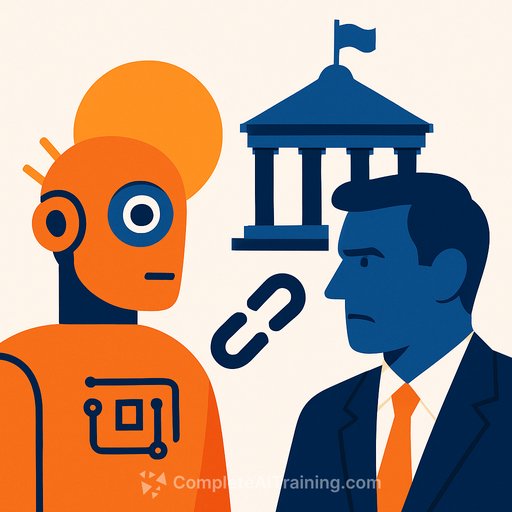
How Government Use of AI Could Hurt Democracy
Many governments are eager to implement AI to automate processes like tax returns, welfare approvals, and risk assessments. The promise: faster and more efficient public services. But this push comes with serious risks that could undermine citizens’ trust and their sense of democratic control.
A study involving around 1,200 UK participants reveals a gap between government enthusiasm for AI and public comfort with it. When people were informed only about AI’s efficiency benefits, their trust remained relatively stable. However, once they learned about the risks—such as opaque decision-making, increasing government dependence on AI, and limited ways to contest AI decisions—trust dropped sharply.
Why Trust Declines
- AI decisions can be difficult to understand, leading to confusion and suspicion.
- Dependence on AI systems can become irreversible, reducing flexibility in governance.
- Citizens often lack clear routes to challenge or correct AI-generated outcomes.
In scenarios where AI dependency grew, 81% of participants felt a loss of democratic control, compared to 45% in baseline cases. Similarly, demands for less AI in government rose from under 20% to over 65% when risks were highlighted.
The High Stakes of AI Errors
Failures in AI-driven government systems are not hypothetical—they have real consequences. For instance, automated processing of public benefits in some US states led to tens of thousands of wrongful fraud charges. Many affected individuals faced bankruptcy or homelessness as a result.
Such errors illustrate how government mistakes in AI deployment can have long-lasting, severe impacts on people’s lives.
Balancing AI Use and Democratic Values
Despite these challenges, there is potential for governments to implement AI responsibly without losing public trust. Transparency, clear accountability, and avenues for citizens to question AI decisions are crucial. Without them, AI may do more harm than good in democratic contexts.
For government professionals looking to understand AI's practical applications and risks, ongoing education is key. Resources like Complete AI Training’s courses for government jobs offer targeted insights to navigate AI integration thoughtfully and ethically.
As AI continues to enter public service domains, prioritizing democratic trust and control will be essential to avoid unintended damage to governance and citizen rights.
Reference: arXiv DOI: 10.48550/arXiv.2505.01085
Your membership also unlocks: