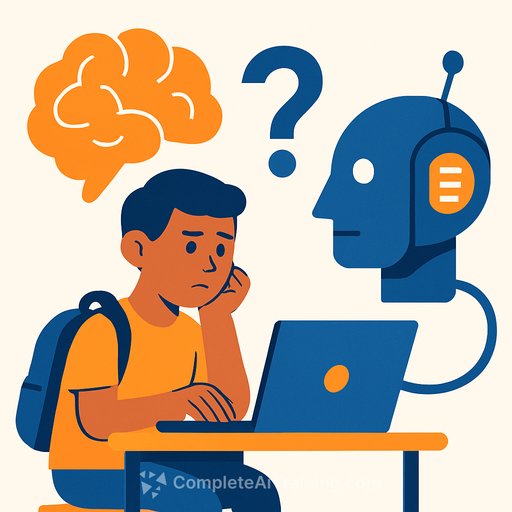
A.I. Threatens Critical Thinking in K-12 Education
Artificial intelligence is rapidly finding its way into classrooms from kindergarten through high school. While the push for incorporating A.I. aims to prepare students for a tech-driven workforce, it raises serious concerns about the impact on critical thinking and trust in education.
Some middle schoolers already express skepticism about A.I. involvement in grading, sensing that automated systems lack the care and attention human teachers provide. This early distrust could erode the foundation of learning from the very start of a child's education.
Policy Push and Practical Concerns
Recently, an executive order called for the integration of A.I. across all grade levels, emphasizing the need to develop an "A.I.-ready" workforce and innovators. It also directs funding toward teacher training programs that include A.I. fundamentals, aiming to embed the technology within all subjects.
However, the rush to adopt A.I. in schools often overlooks important factors like data privacy, adequate funding, and thoughtful implementation. Experts warn that schools are being pressured to accept A.I. tools without sufficient context or resources to evaluate their true value.
Risks to Student Development
Using A.I. carelessly, especially with very young children, might stunt essential skills like critical thinking and literacy. Students could become overly reliant on technology that sometimes provides inaccurate information, undermining their confidence in the learning process and in each other.
Studies show mixed results. For example, a study involving Turkish high school students found that while those using A.I. tools performed better on practice tests with A.I. assistance, they underperformed compared to peers on exams taken without A.I. support. This suggests that A.I. may encourage dependence rather than mastery.
Voices from Parents and Educators
Parents nationwide often express resistance to A.I. use in elementary schools, even when they embrace it for creative projects at home. Concerns include a lack of transparency about data use and insufficient safeguards in A.I. programs already deployed.
- Social and spiritual impact: One parent described integrating A.I. into education as a potential disaster on multiple levels, fearing that robotic teaching could erode essential human connections.
- Technology overload: Another recalls her child’s entire early education revolving around screens and software, which did not translate into better critical thinking but fostered cynicism and superficial perfectionism.
Uncertain Job Market and the Value of Human Thinking
The promise that A.I. education will prepare children for future jobs remains uncertain. The job market itself is still adjusting to how A.I. reshapes work, and there is concern that relying too heavily on machines could dampen creativity and innovation.
Given these risks, students might benefit more from exercising their own cognitive abilities than outsourcing thinking to machines. Developing resilience and problem-solving skills remains crucial regardless of technological advancements.
Human Connection Matters Most
The pandemic highlighted the importance of social interaction in education, especially for young children. Yet, policymakers continue to underestimate this, pushing more screens instead of fostering meaningful human engagement.
According to a recent Gallup poll, nearly half of parents believe their children’s social skills suffered due to the pandemic, with many still facing ongoing difficulties. Introducing more A.I. tools without addressing these social deficits could worsen the problem rather than solve it.
Call to Action
Simply adding technology to classrooms will not guarantee smarter or better-prepared students. Parents and educators need to demand transparency, thoughtful implementation, and a clear focus on nurturing critical thinking and social skills.
Decisions about A.I. in education are made by humans, and there is still time to steer these choices wisely. The focus should remain on supporting children’s development holistically—balancing technology with the irreplaceable value of human connection and guidance.
Further Reading
Your membership also unlocks: