Demonstrating AI's Value in Lung Cancer Diagnosis: Insights from Samir Shah, MD, MMM, FACR
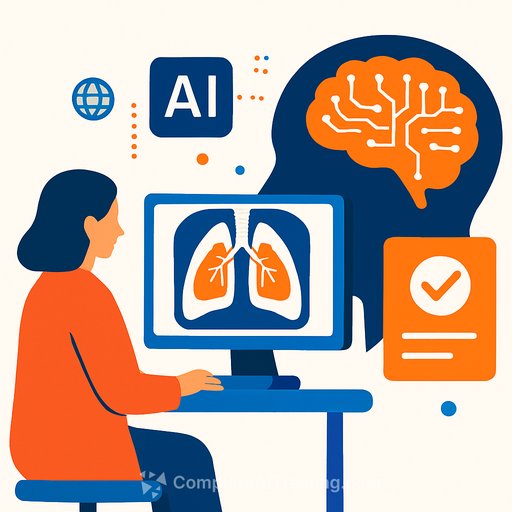
Detecting lung cancer nodules early can significantly improve treatment outcomes. However, these nodules sometimes go unnoticed during routine scans. Artificial intelligence (AI) offers a practical solution by assisting radiologists in identifying potential nodules promptly.
Samir Shah, MD, MMM, FACR, chief medical officer of Qure.ai, shares how his team collaborates with healthcare professionals to integrate AI tools that enhance lung cancer detection and follow-up care.
Bringing AI Solutions to Healthcare Systems
Qure.ai works closely with radiologists, pulmonologists, and thoracic surgeons to ensure AI tools fit seamlessly into clinical workflows. Their approach involves educating all relevant clinical stakeholders, so they understand the benefits and champion the technology.
Beyond the clinical teams, hospital administration and IT departments are also involved in the implementation process. This ensures smooth integration and supports the sustainability of AI use in medical imaging.
Addressing the Follow-Up Gap
One major challenge in lung cancer screening is patient follow-up. When a nodule is incidentally found—say, in an emergency room patient being scanned for another reason—the communication chain often breaks down.
Studies show that less than half of these findings effectively reach the primary care providers who could ensure timely monitoring or intervention. This leads to missed opportunities for early treatment.
AI can alert radiologists in real time when a suspicious nodule appears, prompting immediate attention. This reduces the risk of losing critical diagnostic information and improves patient tracking across care teams.
Seamless Integration Into Radiology Workflow
The AI system works quietly in the background, without slowing down radiologists. When the AI detects a potential nodule, it provides an audible and visible alert, allowing the radiologist to review the finding immediately.
This instant feedback loop supports better decision-making at the point of care, rather than relying on after-the-fact reviews or manual follow-ups.
Why Early Detection Matters
Early identification of lung cancer nodules translates directly into more patients receiving timely treatment. This benefits not only individual patients but also the overall health system by improving outcomes and reducing costly late-stage care.
Hospitals that adopt AI-assisted lung cancer screening can better manage their patient populations, reducing the chance of patients slipping through the cracks.
For healthcare professionals interested in expanding their knowledge of AI applications in medicine, exploring specialized training can be valuable. Resources like Complete AI Training’s healthcare courses offer practical insights into AI tools that support clinical practice.
Your membership also unlocks: