AI Is Reframing Healthcare in Canada: Faster Diagnoses, Smarter Systems, Healthier Populations
Artificial intelligence is moving healthcare in Canada from fragmented systems to connected, insight-driven care. With integrated data platforms, clinical decision support, and advanced analytics, hospitals and public agencies are diagnosing sooner, coordinating better, and planning smarter.
"Healthcare systems today generate extraordinary amounts of data," said former Ontario Ministry of Health Chief Architect Hugo Raposo. "Artificial intelligence gives us the ability to transform that data into insights that help clinicians deliver better care, support public health decision-making, and ultimately improve outcomes for millions of people."
Building the Digital Foundations of Intelligent Healthcare Systems
AI only works at scale when the digital plumbing is in place. That means secure interoperability, standardized data, and platforms that connect hospitals, clinics, labs, and public health programs without friction.
During provincial digital health modernization in Ontario, Raposo contributed to enterprise architectures that improved data exchange and enabled analytics at scale. Large digital engagement platforms also helped providers coordinate care, automate patient communications, and maintain access during periods of system strain.
"Enterprise architecture plays a critical role in enabling healthcare systems to operate as connected ecosystems rather than isolated institutions," Raposo said. "Once that digital foundation is in place, AI technologies can begin delivering meaningful value."
Advancing Public Health Intelligence and National Health Insights
Integrated platforms unlock population-level analytics. By aggregating data from hospitals, laboratories, and public health programs, leaders can monitor utilization, detect emerging risks, and understand needs across diverse communities.
These capabilities strengthen national resilience and enable earlier, targeted interventions. "Artificial intelligence allows public health leaders to move from reactive decision-making to proactive health management," Raposo noted. For context on national health metrics and trends, see the Canadian Institute for Health Information (CIHI).
AI in Clinical Practice: Supporting Physicians and Improving Diagnostics
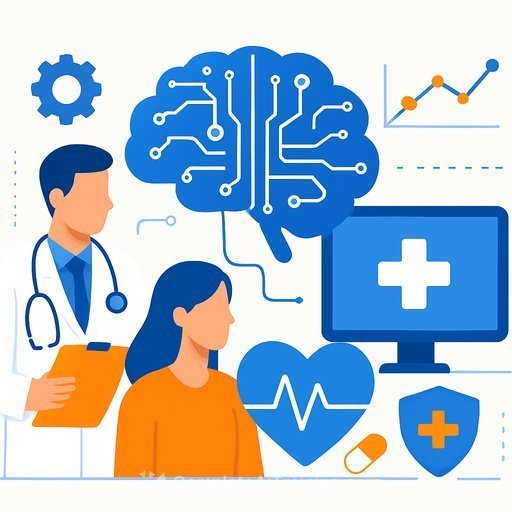
Machine learning can analyze imaging, labs, and clinical histories to surface patterns that accelerate diagnosis and improve consistency. Raposo's work has informed diagnostic frameworks across ophthalmology, oncology, and pulmonary medicine-supporting earlier detection and faster triage.
These systems help prioritize urgent cases and reduce delays across overburdened services. "Artificial intelligence should augment clinical expertise, not replace it," he explained. "The goal is to provide clinicians with intelligent tools that enhance their ability to interpret complex medical information and deliver timely care."
Expanding Access and Equity Across Canada
Distance is a real barrier in rural and remote regions. AI-enabled telehealth, remote diagnostics, and cloud-connected analytics can bring specialist-level insight to smaller communities and northern sites.
Raposo has emphasized building technology that widens access-not deepens gaps. "Technology must serve all communities," he said. "Artificial intelligence has the potential to bring advanced healthcare capabilities to regions that historically faced limited access to specialized services."
Improving Operations and Reducing System Strain
AI isn't just clinical-it's operational. Predictive analytics can forecast demand, optimize bed management, streamline patient flow, and reduce administrative drag.
Raposo's architecture work supports real-time operational intelligence paired with predictive modeling, helping leaders allocate resources and respond sooner to change. "Healthcare systems operate under immense pressure," he noted. "Artificial intelligence provides the analytical tools needed to help healthcare organizations manage complexity and improve system-wide performance."
Responsible AI and the Importance of Trust
Trust is the non-negotiable. Healthcare AI must be secure, explainable, validated, and continuously monitored-across diverse populations and settings. That calls for clear governance, rigorous testing, and privacy by design.
Raposo has advocated for strong oversight and transparent operations so clinicians and patients can rely on AI with confidence. "Healthcare innovation must always prioritize patient safety and public trust," he stated. For Canadian guidance on privacy and interoperability, see Canada Health Infoway.
What Healthcare Leaders Can Do Now
- Strengthen data interoperability: Standardize data models and APIs, enable event-driven exchange, and establish consent and identity management that works across institutions.
- Stand up a unified data platform: Centralize high-value datasets, implement data quality controls, and enable governed self-serve analytics for clinical and operational users.
- Start with high-impact use cases: Imaging triage, readmission risk, no-show prediction, throughput optimization, surge forecasting.
- Build clinical safety and ethics governance: Pre-deployment validation, bias testing, model explainability, monitoring, and incident response procedures.
- Integrate AI into workflows: Embed into EHR and diagnostic systems, define escalation paths, and measure impact on time-to-diagnosis, throughput, and outcomes.
- Upskill teams and align procurement: Train clinicians, analysts, and operations leaders; require vendors to meet security, privacy, and interoperability standards.
For practical training and updates on clinical AI, see AI for Healthcare.
A Vision for Canada's AI-Enabled Healthcare
Predictive analytics, decision support, and precision medicine will help detect disease earlier, personalize treatment, and improve long-term outcomes. The aim is simple: connect data, technology, and clinical expertise so care is timely, coordinated, and equitable.
"Artificial intelligence gives us the opportunity to rethink healthcare at every level," Raposo concluded. "By building intelligent, connected healthcare platforms, Canada can improve care delivery, strengthen public health resilience, and ensure that high-quality healthcare remains accessible to all Canadians."
About Hugo Raposo
Hugo Raposo is a technology strategist, enterprise architect, and digital health innovator with more than 27 years of international experience in large-scale transformation. He previously served as Chief Architect for the Ontario Ministry of Health, contributing to AI-enabled diagnostic frameworks, public health analytics platforms, and large-scale patient engagement systems.
His work focuses on applying artificial intelligence, advanced analytics, and cloud technologies to strengthen healthcare infrastructure and expand equitable access to services across Canada.
Your membership also unlocks: