
AI news ·
How AI is reshaping physical asset management through predictive analytics and automation
AI asset management uses machine learning and real-time sensors to predict equipment failures before they happen, cutting unplanned downtime and maintenance costs. Data quality and legacy system integration remain the biggest hurdles to adoption.
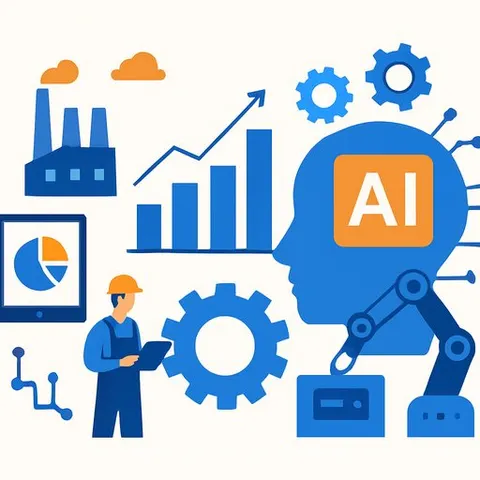
AI Asset Management: What Operations Managers Need to Know
Organizations are shifting from fixed maintenance schedules to continuous, data-driven oversight of physical equipment and infrastructure. AI-powered asset management integrates machine learning, automation and real-time monitoring to reduce unplanned downtime, extend equipment lifespan and lower maintenance costs.
The stakes are clear. Equipment failures remain one of the most expensive operational disruptions a team can face. Modern sensors generate more data than maintenance staff can process manually. Aging infrastructure and retiring workers create knowledge gaps that AI can help fill at scale.
How AI asset management works
The system relies on several interconnected technologies working together:
- IoT sensors and real-time data collection: Devices continuously capture vibration, temperature, pressure and other metrics that feed the analysis pipeline.
- Machine learning and anomaly detection: ML models learn what "normal" looks like for each asset and flag deviations before they become failures.
- Predictive analytics: Algorithms forecast remaining useful life and schedule maintenance based on actual asset condition rather than calendar dates.
- Natural language processing: NLP reads maintenance logs, technician notes and work orders to surface patterns buried in unstructured text.
- Generative AI: Generates work orders and reports, handling administrative tasks so technicians focus on hands-on maintenance.
Executives recognize the value. Seventy-one percent of executives say generative AI fundamentally changes how they will manage assets, according to recent research. Seventy-two percent say it increases the strategic value of physical asset management.
Real-world applications across industries
Manufacturing plants use AI to monitor production equipment continuously. Energy companies track power generation and distribution infrastructure. Facility managers optimize HVAC systems, lighting and elevators in commercial buildings.
Healthcare biomedical teams monitor medical equipment. Fleet managers reduce downtime across vehicle fleets. Government agencies maintain public infrastructure like water treatment systems.
Common use cases include:
- Analyzing total cost of ownership to determine when to repair, refurbish or replace equipment
- Identifying energy waste across facilities
- Detecting early warning signs before equipment fails
- Scheduling maintenance based on actual asset condition
- Tracking software licensing and compliance
- Monitoring safety conditions in real time
Concrete benefits
Predictive maintenance reduces unnecessary servicing and emergency repairs. Technicians spend less time on routine tasks and more time on complex problems. Capital planning becomes more accurate when based on actual asset lifecycle data rather than assumptions.
Unplanned downtime drops when failures are caught before they occur. Equipment lasts longer with timely intervention. Maintenance budgets shrink when work is scheduled by need rather than calendar.
Real obstacles to implementation
Data quality is the first hurdle. AI models are only as good as their training data. Incomplete or inaccurate maintenance records and sensor data produce unreliable results.
Integration with existing systems requires work. Connecting new AI tools to legacy computerized maintenance management systems (CMMS) and enterprise asset management (EAM) platforms is rarely plug-and-play.
Older equipment often lacks sensors or connectivity. Retrofitting legacy assets is expensive and time-consuming. Organizations must assess whether the investment makes sense for equipment nearing the end of its life.
How to get started
Begin by auditing your current data. Assess the quality of existing maintenance records, sensor data and equipment documentation. Identify gaps in accuracy and visibility.
Prioritize high-cost failure points. Trying to monitor everything at once creates overwhelming complexity. Start with the assets and systems where failures cost the most.
Evaluate your sensor infrastructure. Determine what's in place and where IoT retrofits are needed. Research options for legacy equipment.
Choose a platform from reputable providers that integrates with your existing systems and supports your specific asset types. Define where human oversight remains necessary. AI should guide decisions, not make high-consequence choices alone.
Set baseline metrics before deployment. Without data on maintenance costs per asset and unplanned downtime hours, you won't know whether the system is working.
What's coming next
AI Agents & Automation systems that operate autonomously across entire asset portfolios are gaining traction. Fifty-five percent of organizations are actively developing or deploying agentic AI operating models.
Digital twins-virtual replicas of physical assets-will allow teams to simulate performance and test maintenance scenarios before taking real-world action. Edge AI brings inference directly to assets without cloud dependency, processing data in milliseconds at the source.
Prescriptive maintenance goes beyond prediction to recommend exact actions, timelines and required technician skill levels. Sustainability integration uses AI to optimize energy use and reduce material waste as part of net-zero commitments.
The technology itself won't change your assets. How you manage them will.