AI in Banking: Enhancing Risk Assessment and Trade in Africa
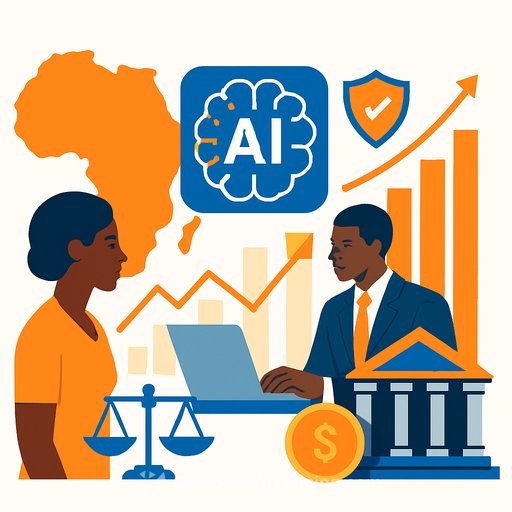
Artificial intelligence is transforming how banks in Africa assess risk and process payments in high-risk markets. By standardising fragmented data, AI enables banks to comply with local regulations without needing to overhaul existing systems. This approach increases transparency, doubles payment volumes, and opens up trade opportunities for small and medium-sized enterprises (SMEs) across less accessible African trade corridors.
The Need for Intraregional Trade
Intraregional trade in Africa has significant growth potential. Historically, trade between African countries and external partners, such as Cameroon and France, has been more substantial than trade among neighbouring African nations. This imbalance limits long-term growth. Increasing trade within the continent is widely recognized as necessary, yet obstacles remain.
Infrastructure challenges, especially in transport and payments, hinder smoother trade connections. For example, the Central African Republic (CAR) suffers from poor road infrastructure, worsened by political conflict in 2013, which isolated regions and stalled trade. Despite such challenges, banks emphasize that expanding intraregional trade benefits profitability and regional stability.
The Role of Technology
Technology alone won’t fix physical infrastructure gaps like impassable roads. However, AI can address other critical barriers, especially in compliance. Regulatory compliance often stops financial institutions from serving certain markets because of complex, fragmented data and high risk.
AI excels at processing large volumes of data quickly and generating meaningful context. This helps banks make informed decisions about clients and transactions. Importantly, AI can normalise unstructured data to fit within existing governance frameworks without replacing human judgment or established risk management protocols.
For example, banks located far from regions like CAR often struggle to verify whether a seller is legitimate. AI can gather public and historical data to estimate the likelihood that a business is genuine, supporting more accurate risk assessments. The technology’s focus should be on data collection, processing, and contextualisation.
Customer Experience and Competition
Market fragmentation has shifted attention toward customer experience. While traditional banks offer standard services, fintech companies gain traction by providing faster, more transparent, and user-friendly experiences. To stay competitive and avoid becoming just "money movers," banks must prioritise speed and transparency, using AI to enhance these areas within regulatory boundaries.
AI in Compliance: Transformation vs Optimisation
AI supports banks in managing complex regulatory requirements through flexible data workflows tailored to different jurisdictions. This adaptability helps banks enter new markets by scaling risk analysis in real time.
There are two main ways banks implement AI in compliance:
- Real-time risk assessment: AI evaluates the risk of corporates, individuals, payments, corridors, and invoices instantly, learning from historical data with minimal delay.
- Process optimisation: For banks without real-time integration, AI agents handle routine compliance tasks, automating up to 90% of standard investigations without disrupting existing systems.
These AI-driven workflows can accommodate regulatory differences. For instance, a $10,000 payment in the US may require reporting, but the EU has a €10,000 threshold. AI can apply the correct rules based on the transaction context, reducing false flags and improving efficiency.
Case Study: AI in Action
An African banking group aimed to increase payment volume and trade flow in challenging Central African markets such as Burkina Faso, Mali, and Nigeria. Traditional risk management, which reviewed transactions after processing, was insufficient for these high-risk environments.
The bank implemented AI-powered risk analytics directly within the payment process, shifting due diligence from post-transaction to real-time. This approach established clear risk standards upfront and gave payment originators immediate feedback on required documentation.
Contrary to fears that stricter controls might reduce transactions, the bank doubled payment volumes within six months. The system increased transparency, generated more fee income, and sped up issue resolution when additional information was needed.
Conclusion
Africa has shown a strong ability to turn challenges into opportunities. The mobile money sector is a prime example, with transactions exceeding $1 trillion in 2022—surpassing the GDP of many African countries. This leap directly into digital solutions bypassed legacy infrastructure limitations.
While AI cannot address all challenges, there is a clear opportunity to deploy it strategically across banking and trade. By lowering risks, improving market integrity, and enabling wealth creation, AI can support increased trade opportunities for SMEs across Africa.
For finance professionals interested in deepening their AI knowledge and its applications in banking, exploring targeted AI training courses can provide practical tools and insights. You can find relevant resources at Complete AI Training.
Your membership also unlocks: